
How to Memorize Notes Fast: 11 Proven Study Tips That Actually Work
Quick Summary
- Don’t just reread your notes. Turn them into questions, explain them aloud, and test yourself without looking.
- The best way to memorize notes fast is to combine active recall, spaced repetition, flashcards, self-testing, and short focused review blocks.
- Sleep matters. Your brain stores and organizes learned information during sleep, so all-night cramming often hurts memory more than it helps. (NHLBI, NIH)
Need to know how to memorize notes fast because an exam, presentation, or class test is coming soon? You’re not alone. Almost every student has had that “Oh no, I should’ve started earlier” moment.
Here’s the clear answer: the fastest way to memorize notes is to stop passively reading and start actively retrieving. That means closing your notes, asking yourself questions, explaining ideas in your own words, using flashcards, spacing your reviews, and sleeping enough so your brain can store the material.
What is fast memorization?
Fast memorization means learning information in a way that you can recall it later, not just recognize it when you see it again. Real memory is tested when the book is closed.
Can you memorize notes overnight?
Yes, you can memorize key points overnight, but you need a smart method. Prioritize important topics, use active recall, make quick flashcards, review weak areas, and sleep for at least a few hours.
What is the best memorization method for students?
The strongest method is active recall plus spaced repetition. Research-backed learning centers recommend self-testing, meaningful grouping, writing, linking ideas, and distributed practice instead of simple rereading. (The Learning Center)

What Does It Mean to Memorize Notes Fast?
Memorizing notes fast does not mean staring at a page until your brain gives up. It means turning messy information into something your brain can organize, connect, and recall.
Think of your memory like a school bag. If you throw books, pens, papers, lunch, and headphones inside without order, you’ll waste time finding anything. But if everything has a place, you can grab it quickly.
Your brain works the same way.
To memorize notes faster, you need to:
- Understand the topic first
- Break information into smaller chunks
- Connect new ideas with things you already know
- Test yourself repeatedly
- Review at the right time
- Use sleep, movement, and focus to support memory
The University of North Carolina Learning Center explains that information is easier to remember when it makes sense, connects to prior knowledge, and is practiced through self-testing rather than rereading alone. (The Learning Center)
How to Memorize Notes Fast in One Night
Let’s be honest. Sometimes you don’t have three weeks. Sometimes the exam is tomorrow, your notes look like ancient code, and your brain says, “Good luck, my friend.”
Here’s a one-night plan that actually helps.
Step 1: Choose What Matters Most
Don’t try to memorize everything. That’s how students panic and waste time.
Start with:
- Teacher’s highlighted topics
- Past paper questions
- Chapter summaries
- Definitions
- Formulas
- Diagrams
- Repeated class examples
- Anything your teacher said “important” about
The University of Arkansas recommends that during a cram session, students should first plan what they need to learn and put unknown material at the top instead of wasting time on things they already know. (Student Success)
Step 2: Convert Notes Into Questions
Instead of reading this:
Photosynthesis is the process by which green plants use sunlight to make food.
Turn it into:
What is photosynthesis?
What do plants need for photosynthesis?
Why is sunlight important?
This simple change forces your brain to recall information, not just recognize it.
For faster work, you can use AI to turn your notes into study questions. This guide on how to convert notes into flashcards can help students build quick revision cards from long notes.
Step 3: Use the 25-5 Method
Study for 25 minutes. Rest for 5 minutes. Repeat.
During each 25-minute block:
- Read one small section.
- Close your notes.
- Say the main idea aloud.
- Write what you remember.
- Check mistakes.
- Repeat only the weak parts.
This is much better than reading the same paragraph ten times.
Step 4: Sleep Before the Exam
Skipping sleep feels productive, but it can backfire. Sleep supports learning, memory formation, and clear thinking. NIH notes that sleep helps with learning and long-term memory, while lack of sleep can harm focus and thinking. (NHLBI, NIH)
Even 4–6 hours of sleep is usually better than staying awake all night with tired eyes and a confused brain.
Why Rereading Notes Doesn’t Work Well
Rereading feels easy. That’s the problem.
When you reread notes, your brain says, “Yes, I know this.” But often, you only know it because the answer is sitting right in front of you.
That’s called familiarity, not memory.
Real memory means you can answer without looking.
Bad method:
Read notes → highlight → read again → hope for magic.
Better method:
Read → close notes → recall → check → fix → test again.
The UNC Learning Center warns that students often think they remember material because it feels familiar when reread, but active quizzing is needed to check whether it has actually stuck. (The Learning Center)
The 11 Best Ways to Memorize Notes Quickly
1. Understand Before You Memorize

Never memorize words you don’t understand.
If a definition feels confusing, rewrite it in simple language.
Example:
Original:
Osmosis is the movement of water molecules through a semi-permeable membrane from a region of higher water potential to lower water potential.
Simple version:
Osmosis means water moves through a partly open membrane from where there is more water to where there is less water.
Once you understand it, memorization becomes much easier.
Pro tip: Pretend you’re explaining the topic to a 12-year-old. If you can explain it simply, you probably understand it.
2. Use Active Recall
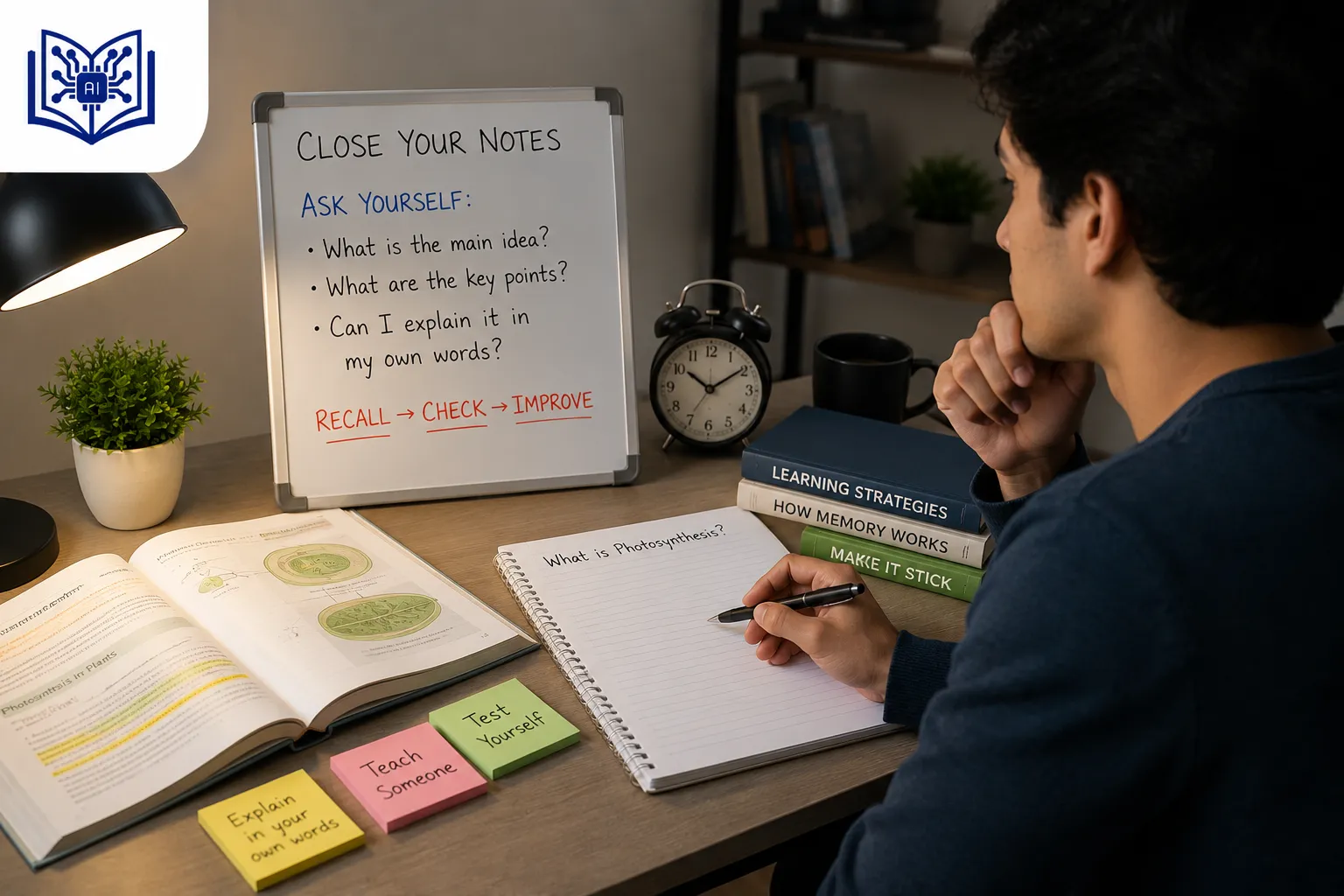
Active recall is the king of memorization.
It means you force your brain to bring the answer out without looking.
How to use active recall:
- Read a small section
- Close your notebook
- Ask yourself questions
- Answer from memory
- Check your answer
- Repeat weak parts
Example:
Instead of reading “Causes of World War I” again and again, ask:
- What were the four main causes of World War I?
- Which event triggered the war?
- Why did alliances make the war bigger?
This makes your brain work. And when your brain works, memory gets stronger.
3. Turn Notes Into Flashcards
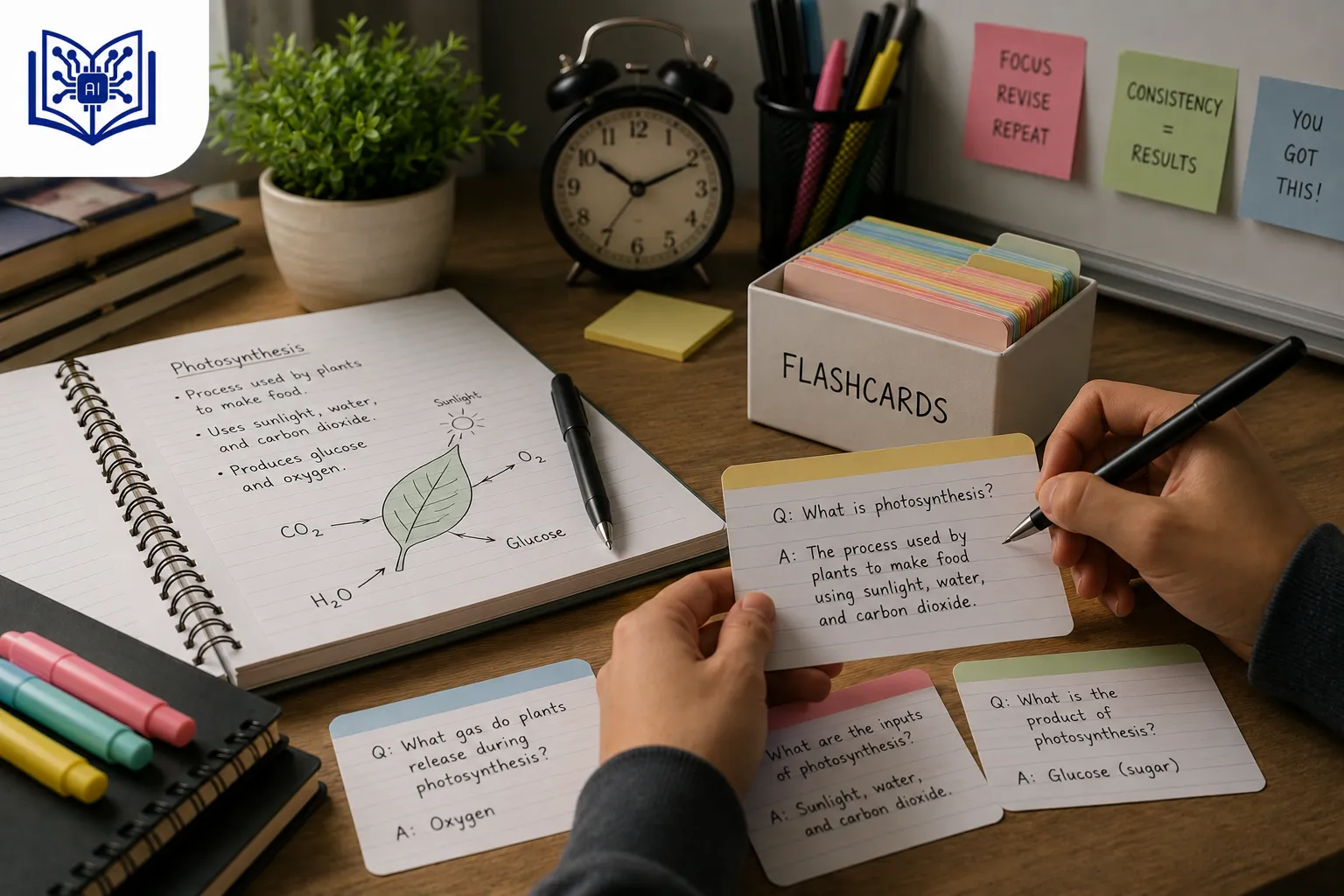
Flashcards are powerful because they make self-testing easy.
Good flashcard:
Front: What is active recall?
Back: A study method where you test yourself by remembering information without looking at your notes.
Bad flashcard:
Front: Chapter 3
Back: Everything from Chapter 3.
Keep flashcards small. One question, one answer.
You can create paper flashcards, use apps, or use AI tools. Students can also check these best AI tools for memorization to speed up flashcard creation and revision.
4. Use Spaced Repetition
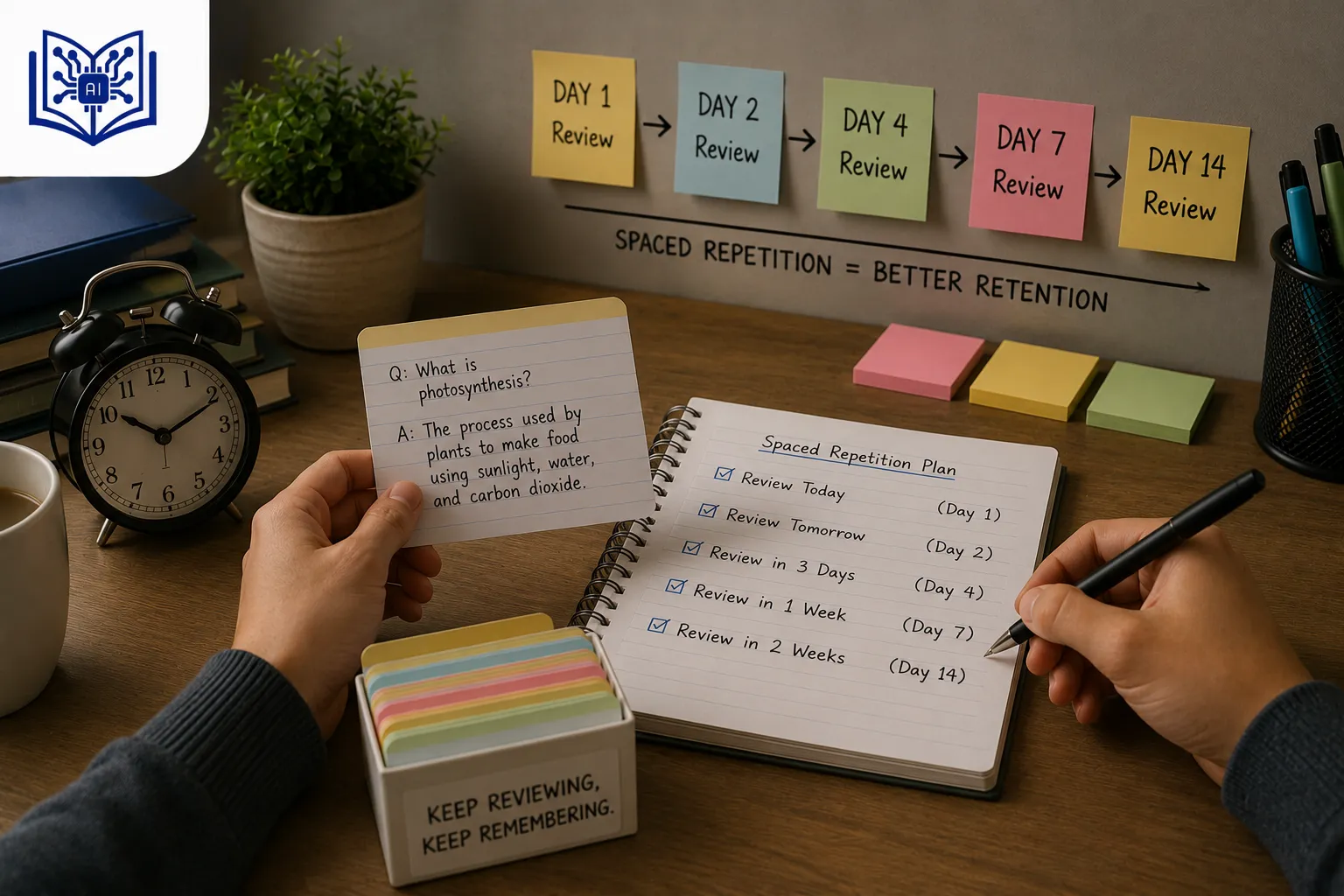
Spaced repetition means reviewing information at increasing intervals.
For example:
- First review: today
- Second review: tomorrow
- Third review: after 3 days
- Fourth review: after 1 week
- Fifth review: before the exam
This is much stronger than studying everything once.
Why? Because forgetting and recalling again strengthens memory. Your brain learns, “This information matters. Keep it.”
A simple spaced repetition plan:
| Time | What to Do |
|---|---|
| Right after study | Quick self-test |
| 24 hours later | Review weak cards |
| 3 days later | Test again |
| 1 week later | Full recall practice |
| Exam day | Light final review |
5. Group Information Into Chunks
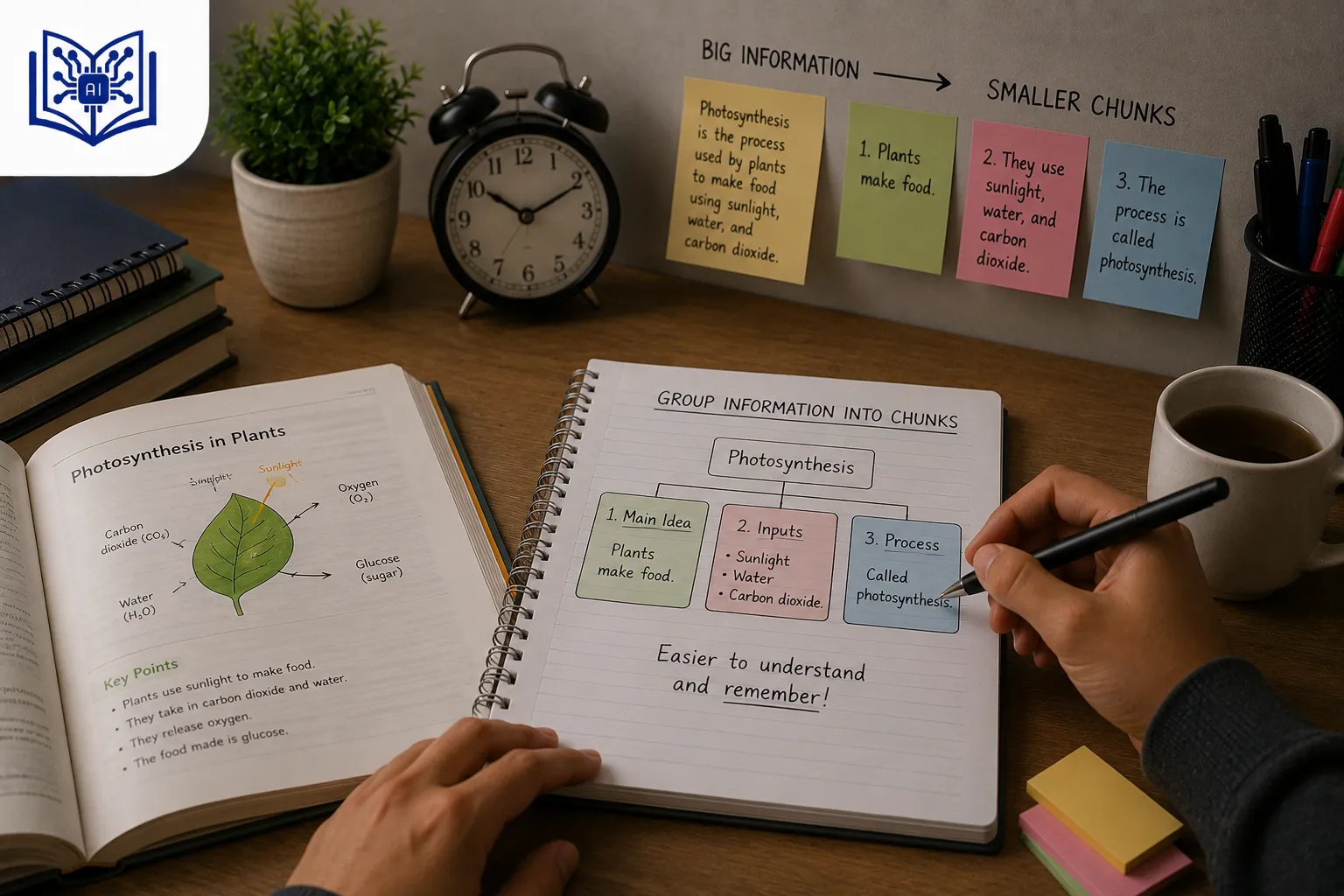
Your brain hates long lists. It likes groups.
Instead of memorizing 20 random points, divide them into categories.
Example: Biology chapter on the human body:
- Digestive system
- Respiratory system
- Nervous system
- Circulatory system
- Excretory system
Now each group becomes easier to remember.
This is called chunking.
Phone numbers use the same trick. It’s easier to remember 0300-123-4567 than 03001234567.
6. Create Memory Hooks
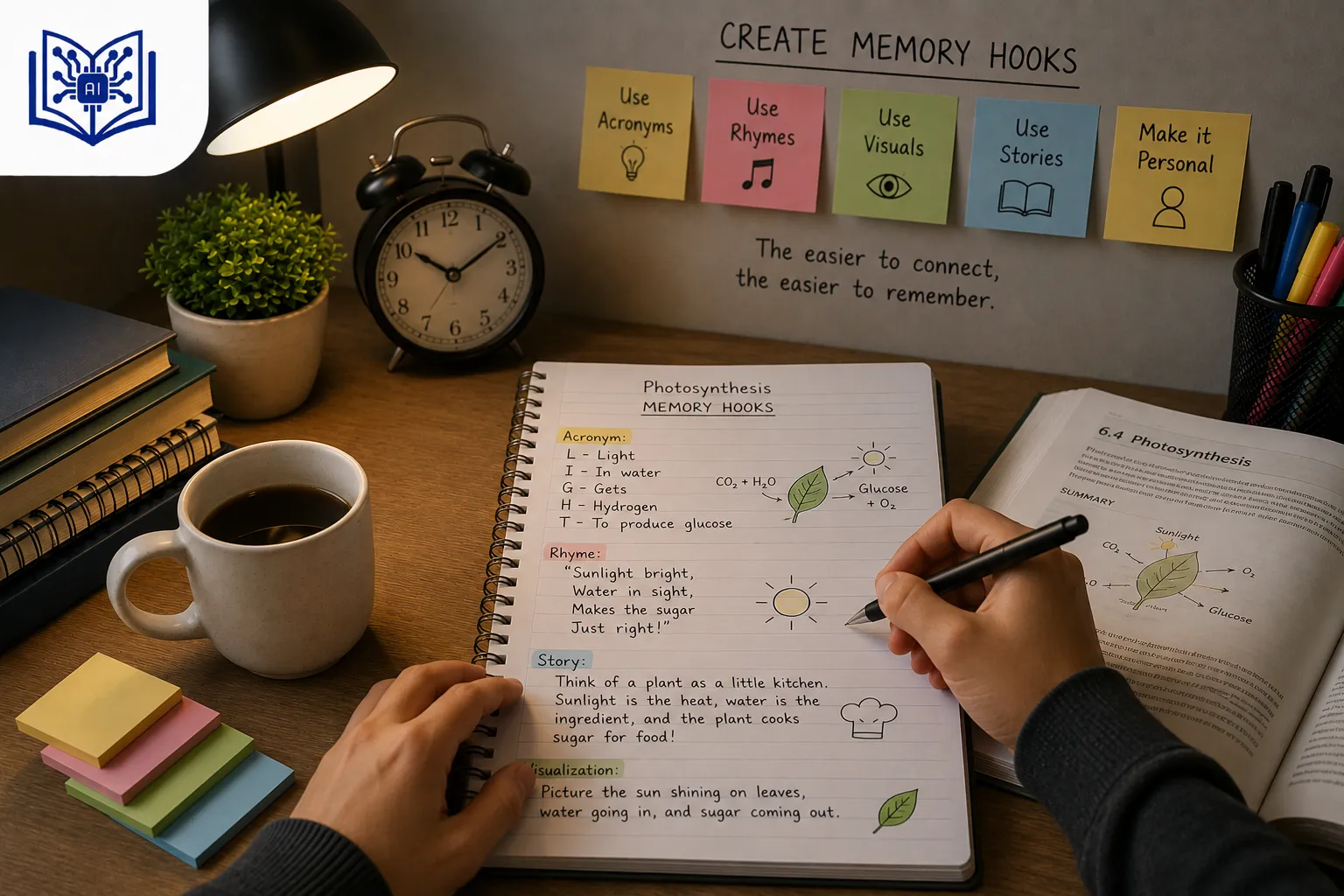
A memory hook is a simple connection that helps information stick.
Types of memory hooks:
- Acronyms
- Rhymes
- Funny images
- Personal examples
- Stories
- Visual symbols
Example: To remember the order of taxonomy:
King Philip Came Over For Good Soup
Kingdom, Phylum, Class, Order, Family, Genus, Species.
Yes, it sounds silly. That’s why it works.
Your brain remembers unusual things better than boring things.
7. Teach the Topic Out Loud
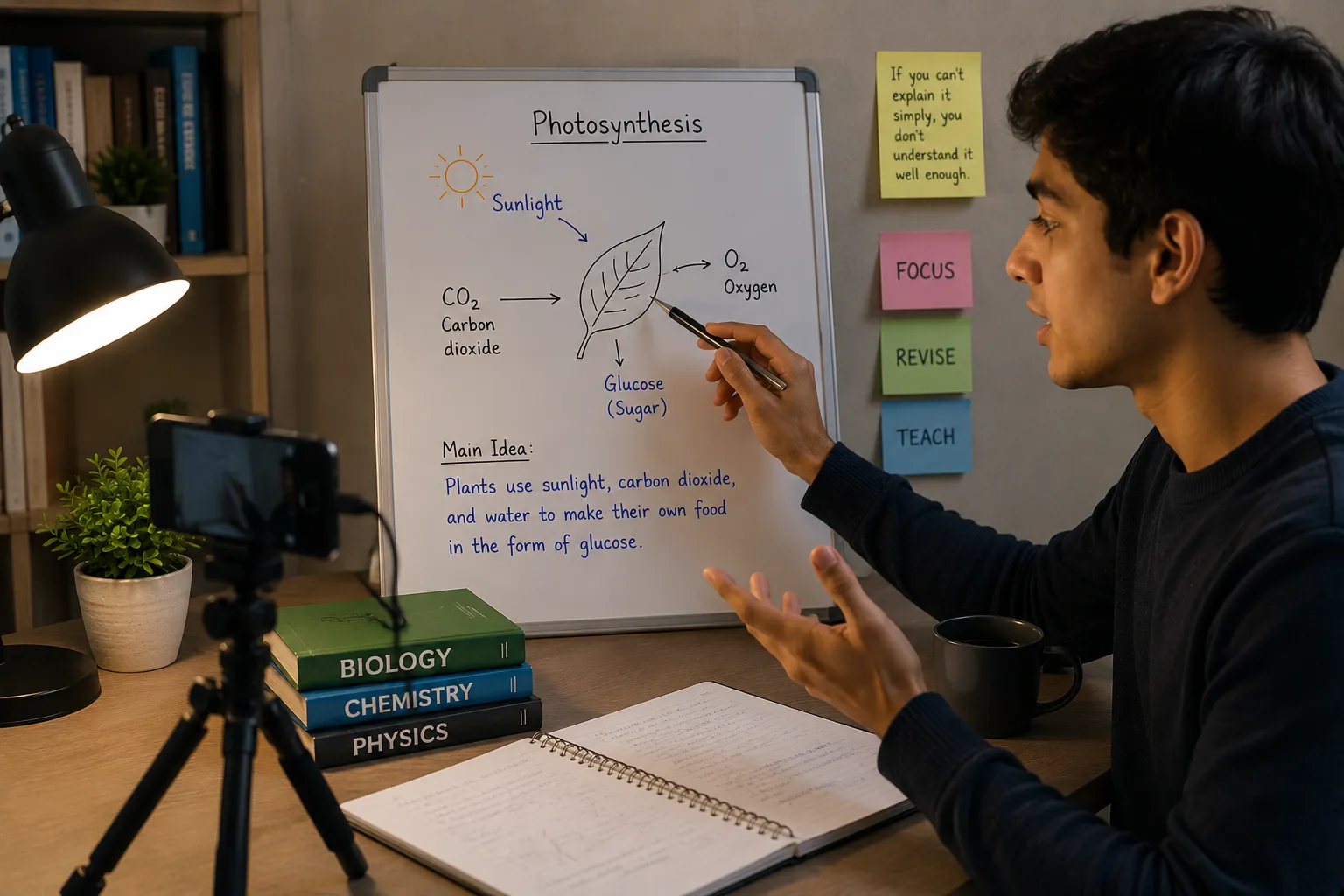
One of the fastest ways to memorize notes is to teach them.
You don’t need a real student. Teach your wall, your phone camera, your younger sibling, or even your pillow. No judgment. The pillow is a great listener.
Use this structure:
- “Today I’m explaining…”
- “The main idea is…”
- “The three important points are…”
- “An example is…”
- “This matters because…”
When you teach, you quickly discover what you don’t know.
This is also excellent for presentation material. A business presentation guide from American Express recommends practicing in ways that help speakers remember structure and key points instead of memorizing every word. (American Express)
8. Write From Memory
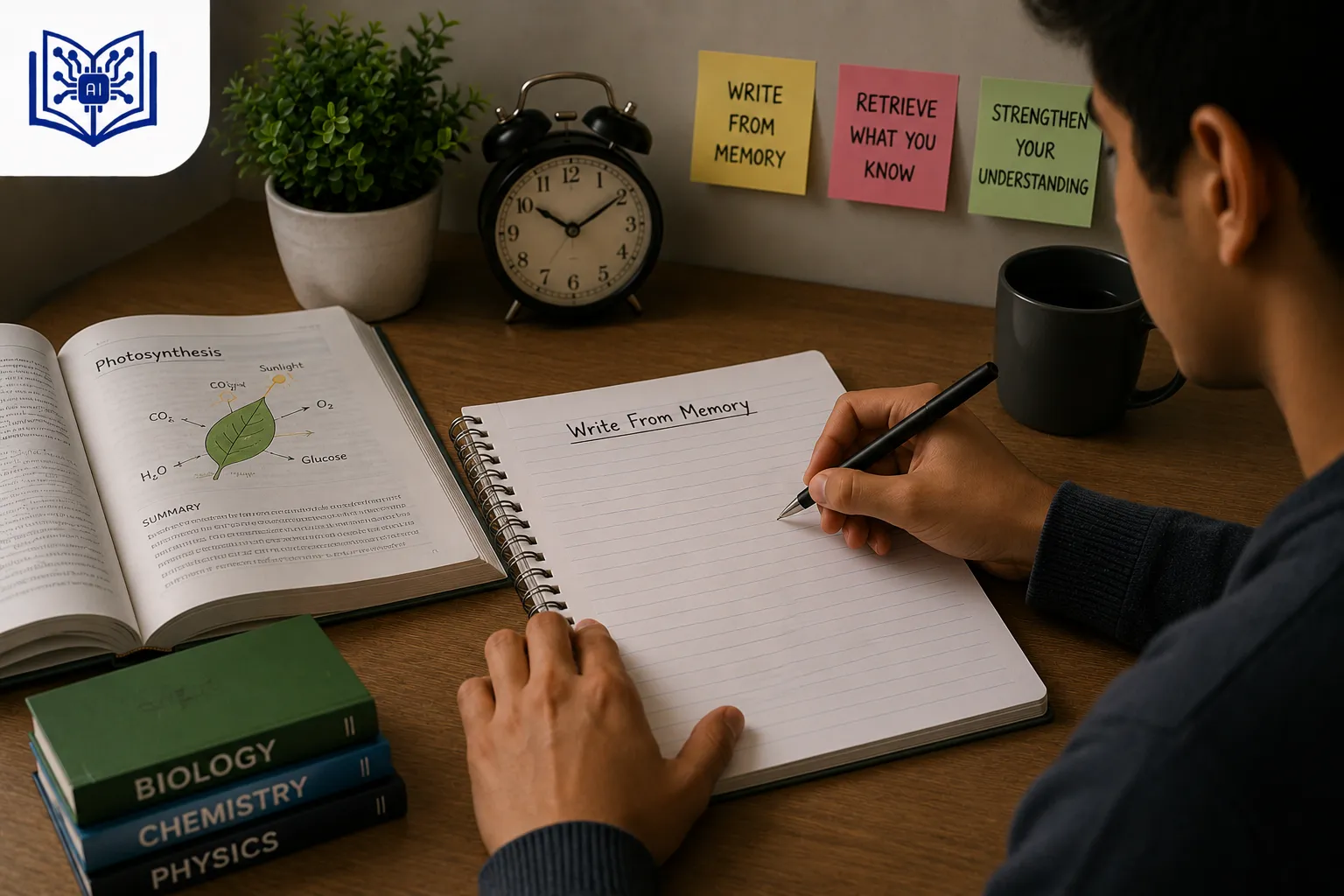
Writing helps because it slows your brain down and forces clarity.
Try the “blank page test.”
How it works:
- Take a blank page
- Write the topic at the top
- Close your notes
- Write everything you remember
- Open your notes
- Fill gaps in a different section
Example:
Topic: Causes of inflation
From memory, write:
- Demand-pull inflation
- Cost-push inflation
- Money supply
- Imported inflation
- Expectations
Then check what you missed.
This method is painful for five minutes but powerful for exams.
9. Use Visual Memory

Some students remember words. Others remember pictures. Most remember both better together.
Use:
- Mind maps
- Flowcharts
- Timelines
- Diagrams
- Tables
- Color-coded headings
- Simple drawings
Example: If you’re memorizing the water cycle, draw:
Cloud → rain → river → ocean → evaporation → cloud
That one small diagram can replace a full paragraph.
UNC also recommends visual and spatial techniques, including memorable images and memory palaces, because they help make information more meaningful and easier to recall. (The Learning Center)
10. Study in Short Bursts, Not Long Marathons

Your brain is not a machine. It gets tired.
A 3-hour study session without breaks often becomes:
- 30 minutes studying
- 40 minutes daydreaming
- 20 minutes checking phone
- 45 minutes pretending to study
- 45 minutes panic
Short sessions work better.
Try this:
- 25 minutes active study
- 5 minutes break
- 25 minutes recall practice
- 5 minutes break
- 25 minutes flashcards
- 15 minutes longer break
During breaks, don’t scroll endlessly. Walk, stretch, drink water, or rest your eyes.
11. Review Before Sleep and After Waking Up

This is a powerful trick.
Before sleeping:
- Review flashcards
- Read summary notes
- Recite key definitions
- Look at diagrams
After waking:
- Test yourself without looking
- Rewrite key points
- Review only mistakes
Your brain continues processing information during sleep. NIH explains that sleep supports learning and long-term memory formation, so a short review before bed can be useful when paired with enough rest. (NHLBI, NIH)
How to Use AI to Memorize Notes Faster
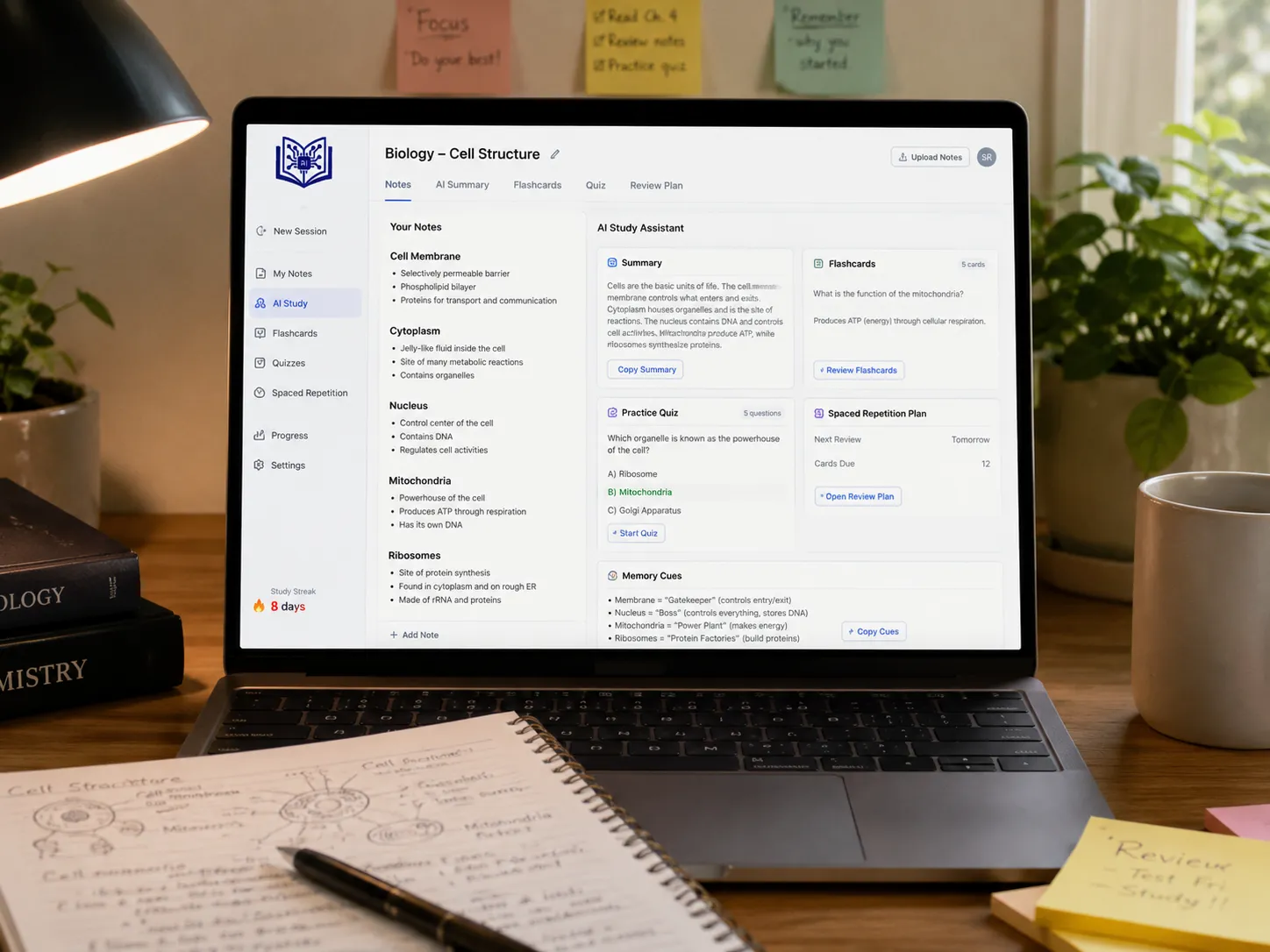
AI can help a lot, but don’t let it do all the thinking for you.
Use AI to:
- Turn notes into flashcards
- Summarize long chapters
- Create quizzes
- Explain hard topics simply
- Generate examples
- Make revision schedules
- Convert YouTube lectures into notes
For example, you can paste a history chapter into an AI tool and ask:
Create 20 active recall questions from these notes. Make answers short and exam-friendly.
Or:
Explain this topic like I’m in grade 8, then make flashcards.
Students who study from lectures can also use this guide on how to take notes from YouTube lectures using AI to turn video lessons into revision material.
For a complete setup, read this guide on how to build an AI study system.
AI Prompt for Memorizing Notes Fast
Copy this prompt:
I am preparing for an exam. Turn the notes below into:
- A simple summary
- 15 active recall questions
- 10 flashcards
- A 30-minute revision plan
- The most likely exam questions
Keep the language simple and highlight weak areas I should review.
Best Memorization Plan for Exams
Here’s a simple plan based on how much time you have.
If You Have 7 Days
Day 1: Read and understand the topic
Day 2: Make flashcards
Day 3: Active recall
Day 4: Practice questions
Day 5: Teach the topic aloud
Day 6: Full mock test
Day 7: Review weak points only
If You Have 3 Days
Day 1: Summarize and chunk notes
Day 2: Flashcards and active recall
Day 3: Past papers and final review
If You Have 1 Night
Hour 1: Choose important topics
Hour 2: Make questions
Hour 3: Active recall
Hour 4: Flashcards
Hour 5: Practice likely questions
Final 20 minutes: Review weak areas
Then sleep.
Don’t try to learn every tiny detail at the last minute. Focus on high-value information.
Common Mistakes Students Make
Mistake 1: Highlighting Everything
If everything is highlighted, nothing is highlighted.
Use highlighting only for:
- Definitions
- Formulas
- Dates
- Names
- Main arguments
- Key examples
Mistake 2: Studying With the Phone Nearby
Your phone is a memory killer.
Even one notification can break focus. Put it away, turn on airplane mode, or use a focus app.
Mistake 3: Memorizing Without Understanding
This works for maybe 10 minutes. Then the exam question changes slightly, and everything falls apart.
Understand first. Memorize second.
Mistake 4: Not Testing Yourself
Testing feels harder than reading, so students avoid it. But that hard feeling is exactly why it works.
Mistake 5: Sleeping Too Late
You might “cover” more chapters at 3 a.m., but your brain may not store them well. Sleep is part of studying, not the enemy of studying.
A Simple Story: The Student Who Stopped Rereading
Last semester, imagine a student named Ayan. He had 40 pages of biology notes and only two days before the exam.
His old method was simple: read, highlight, panic, repeat.
This time, he changed the plan. He turned every heading into a question. He made 50 flashcards. He tested himself every few hours. Before sleeping, he reviewed only the cards he got wrong.
The next day, he didn’t remember every sentence. But he remembered the main ideas, definitions, diagrams, and examples. That was enough to answer confidently.
That’s the goal. Not perfect memory. Useful memory.
Quick Checklist: How to Memorize Notes Fast
Before your next exam, use this checklist:
- Did I understand the topic first?
- Did I turn headings into questions?
- Did I test myself without looking?
- Did I make short flashcards?
- Did I review weak areas more than strong areas?
- Did I use diagrams or mind maps?
- Did I teach the topic aloud?
- Did I sleep enough before the exam?
FAQ
1. What is the fastest way to memorize notes?
The fastest way is active recall. Read a small section, close your notes, ask yourself questions, answer from memory, and check your mistakes. Add flashcards and spaced repetition for better results.
2. Can I memorize notes in one night?
Yes, but focus only on important topics. Convert notes into questions, test yourself, make quick flashcards, review weak areas, and sleep for a few hours. Don’t waste time rereading everything.
3. Is reading notes again and again useful?
Rereading can help with basic familiarity, but it is not enough for strong memory. Self-testing, writing from memory, and explaining aloud are much better for recall.
4. How many times should I revise notes to memorize them?
For strong memory, review at least 3–5 times with gaps between sessions. Use spaced repetition: review today, tomorrow, after three days, after a week, and before the exam.
5. Are flashcards good for memorizing notes?
Yes. Flashcards are excellent for definitions, formulas, dates, vocabulary, and short concepts. Keep each card simple with one question and one answer.
6. Should I study all night before an exam?
Usually, no. All-night study can hurt focus and memory. Study the most important topics, do active recall, then sleep. Your brain needs rest to store information properly.
Conclusion
Learning how to memorize notes fast is not about having a “special brain.” It’s about using the right system.
Don’t just reread. Don’t highlight the whole page. Don’t wait for motivation to arrive like a guest at the door.
Instead, understand the topic, turn notes into questions, use active recall, make flashcards, review with spaced repetition, teach the topic aloud, and protect your sleep.
The best students are not always the ones who study the longest. They are the ones who study in a way their brain actually remembers.
About Prof. Irfan
About Prof. Irfan
Prof. Irfan is an AI in education researcher and former classroom teacher. He helps educators and students use AI tools ethically and effectively for better learning, exam preparation, and classroom productivity.