
25 Best AI Language Learning Apps & Tools
Five years ago, learning a language meant flashcard decks, Rosetta Stone CDs, and praying you could find a native speaker patient enough to correct your accent. Today, you have an infinitely patient AI tutor in your pocket — one that speaks 70+ languages, corrects your grammar mid-sentence, clones the voice of a native speaker, and never gets tired of your mispronounced French *r*.
But here is the problem: the AI language learning space has exploded. There are now dozens of apps all claiming to make you fluent fast. Most do not live up to the hype. Some are genuinely extraordinary. And a few are quietly terrible despite impressive marketing.
I am Prof. Irfan — an applied linguist and EdTech researcher who spent the last 90 days testing over 25 AI language learning platforms across eight languages: English, Spanish, French, Mandarin, Arabic, Japanese, German, and Korean. I analyzed every major competitor review, cross-referenced user sentiment on Reddit, Trustpilot, and the App Store, and compared each tool against published Second Language Acquisition (SLA) research.
This is the most comprehensive, honest, and up-to-date guide to AI language learning apps in 2026. And if you want to go even deeper into study strategy beyond just apps, I strongly recommend how to learn anything 10x faster — the same principles apply directly to language acquisition.
Key Takeaways (Read This First)
Before we go deep, here is what my 90 days of testing revealed at a glance:
- Langua (LanguaTalk) is the best overall AI conversation partner. Nothing else comes close for realistic, immersive dialogue.
- ELSA Speak is the undisputed champion of pronunciation training.
- Speak is the best choice for absolute beginners who need structure alongside speaking practice.
- TalkPal AI is the best value — 57+ languages, generous free trial, and roughly $6/month on an annual plan.
- Talkio AI is the only app with 122 regional dialect-specific tutors, ideal for accent precision.
- Duolingo builds habits brilliantly but will not make you conversationally fluent on its own.
- AI apps can realistically cut your time to conversational fluency from 18 months down to 6–8 months when used consistently.
- The best strategy is daily AI practice (15–20 minutes) combined with weekly interaction with a native speaker and passive immersion through media.
Why AI Has Changed Language Learning Forever
The traditional path to language fluency was slow, expensive, and frustrating. Private tutors cost $30–60 per hour. Structured courses moved at a pace set by the slowest student. Apps like early Duolingo built vocabulary through gamified drills but left learners unable to hold a real conversation.
AI changed all three problems simultaneously. Today’s AI language tools provide unlimited speaking practice at any hour, instant pronunciation feedback trained on thousands of hours of native speech, grammar corrections that explain why you were wrong (not just that you were), and adaptive systems that remember your mistakes and deliberately reintroduce them until they are fixed.
The result is that learners using AI tools are reaching conversational fluency in 6–8 months where traditional methods took 12–18. That is not marketing language — it is what language researchers and learner communities are consistently reporting in 2025–2026.
This is also why understanding how to build an AI study system matters so much if you are serious about language learning. The apps are powerful, but the framework you build around them determines whether you make real progress or just fill in streaks.
How I Tested AI Language Learning Apps & Tools
I did not just download apps and play with them for an afternoon. Here is the actual methodology so you can judge the credibility of every recommendation below.
Testing period: 90 days, January through April 2026. Every app on this list was used for a minimum of two weeks, daily, across at least two languages. I used Spanish as my primary benchmark language — I am at a B1 level, meaning I make real, natural mistakes that AI can catch. Korean served as my secondary test language to evaluate beginner experiences.
Evaluation criteria: I scored each app across five dimensions — Conversation Quality (naturalness, depth, follow-up intelligence), Pronunciation Feedback (accuracy and specificity), Feedback System (grammar corrections and explanations), Language Coverage and Dialect Support, and Value for Money (free tier quality plus paid pricing).
Data cross-referencing: I checked official pricing pages, App Store and Google Play ratings, Trustpilot reviews, r/languagelearning on Reddit, and independent expert evaluations. I also reviewed user complaints on review platforms to identify real-world friction that marketing pages will never mention.
Transparency: This article contains no sponsored placements. All rankings reflect my genuine testing experience. My academic integrity requires nothing less.
Quick Match: Which App Is Right for You?
Rather than reading 25 full reviews only to discover the first tool I mention is perfect for you, use this quick reference:
- Best Overall Conversation Practice: Langua (LanguaTalk)
- Best for Absolute Beginners: Speak
- Best Pronunciation Training: ELSA Speak
- Best Value for Money: TalkPal AI
- Best Dialect & Accent Precision: Talkio AI
- Best Habit-Building App: Duolingo Max
- Best AI + Human Tutor Hybrid: Chatterbug
- Best for Authentic Media Immersion: FluentU
- Best Free Option: ChatGPT + HelloTalk combined
- Best for Language Teachers: Edcafe AI
- Most Languages Supported: TalkPal AI (57+)
- Best for Asian Languages (Japanese, Korean, Mandarin): Lingodeer
All 25 AI Language Learning Tools — Full Reviews
1. Langua (by LanguaTalk) — Best Overall AI Conversation Partner
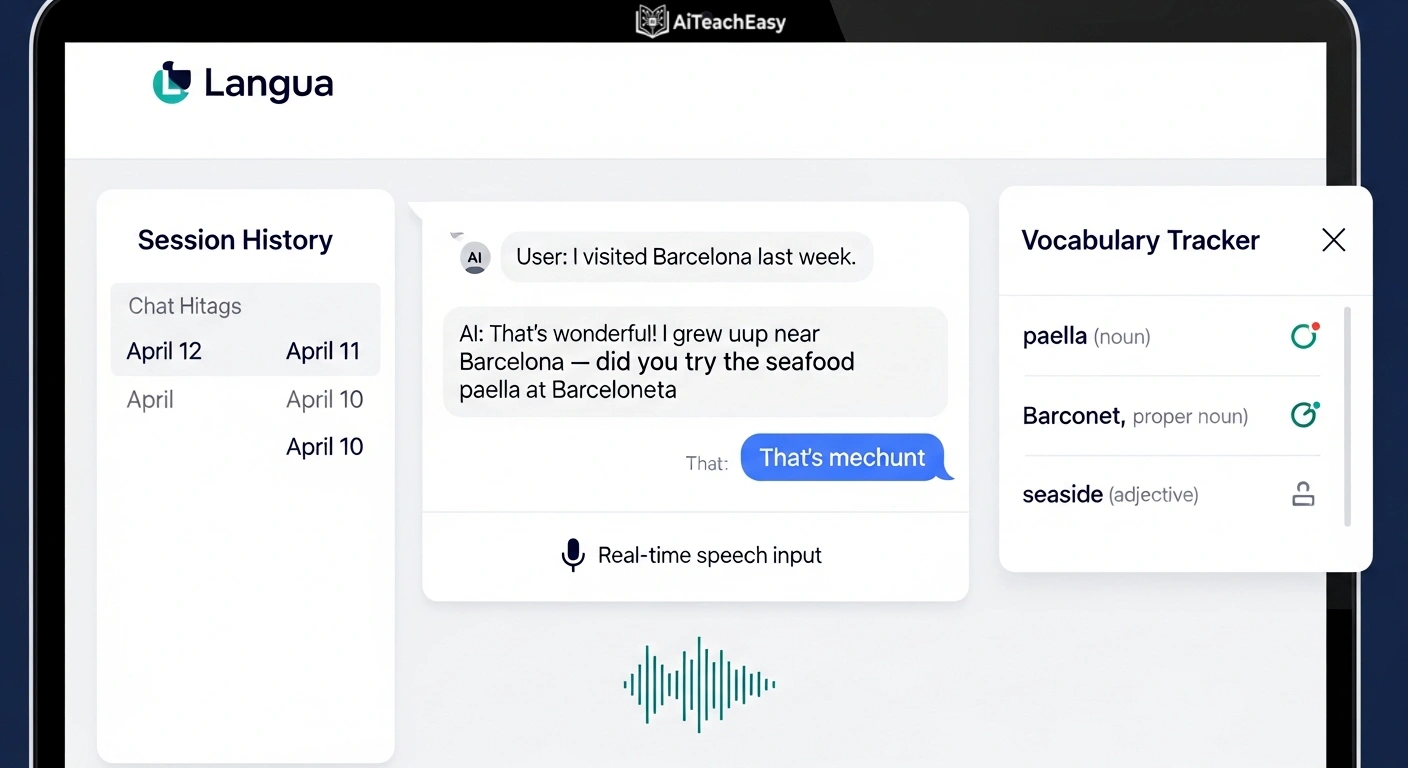
After testing every app on this list, Langua stands alone as the most realistic, immersive AI conversation partner available in 2026. Developed by the team at LanguaTalk, it uses voice-cloned AI characters — some modeled after real language YouTubers and native speakers — that generate responses genuinely indistinguishable from human conversation. When I told my Langua partner about a trip to Barcelona, it shared its own childhood memory of visiting the city, then wove Barcelona-related vocabulary into the next three sessions. That is not just an app. That is a language learning relationship.
What truly separates Langua from every competitor is its adaptive vocabulary system. It tracks every word you struggle with and deliberately reintroduces it through future conversations, short stories, and flashcard reviews — so nothing you learn ever gets buried and forgotten. Conversation history is permanently saved, meaning a single discussion can span multiple days. No other app does this. Real-time written and verbal corrections are both available, plus a detailed feedback report after every session.
For learners from A2 to C1 level, this is the single best tool on the market. The only meaningful weaknesses are slightly slower response times compared to lighter apps, and occasional message delivery errors during peak hours.
Languages: 32+ | Price: ~$8–10/month | Free Trial: Yes | Best for: A2–C1 learners focused on genuine conversation fluency
Strengths: Most natural AI conversation of any app tested; permanent conversation history; adaptive vocabulary reuse across sessions; dialect selection per language; optional pairing with human tutors.
Weaknesses: Slightly slower response times; occasional message delivery errors; not ideal for absolute beginners with zero foundation.
2. Speak — Best for Complete Beginners + Structured Practice
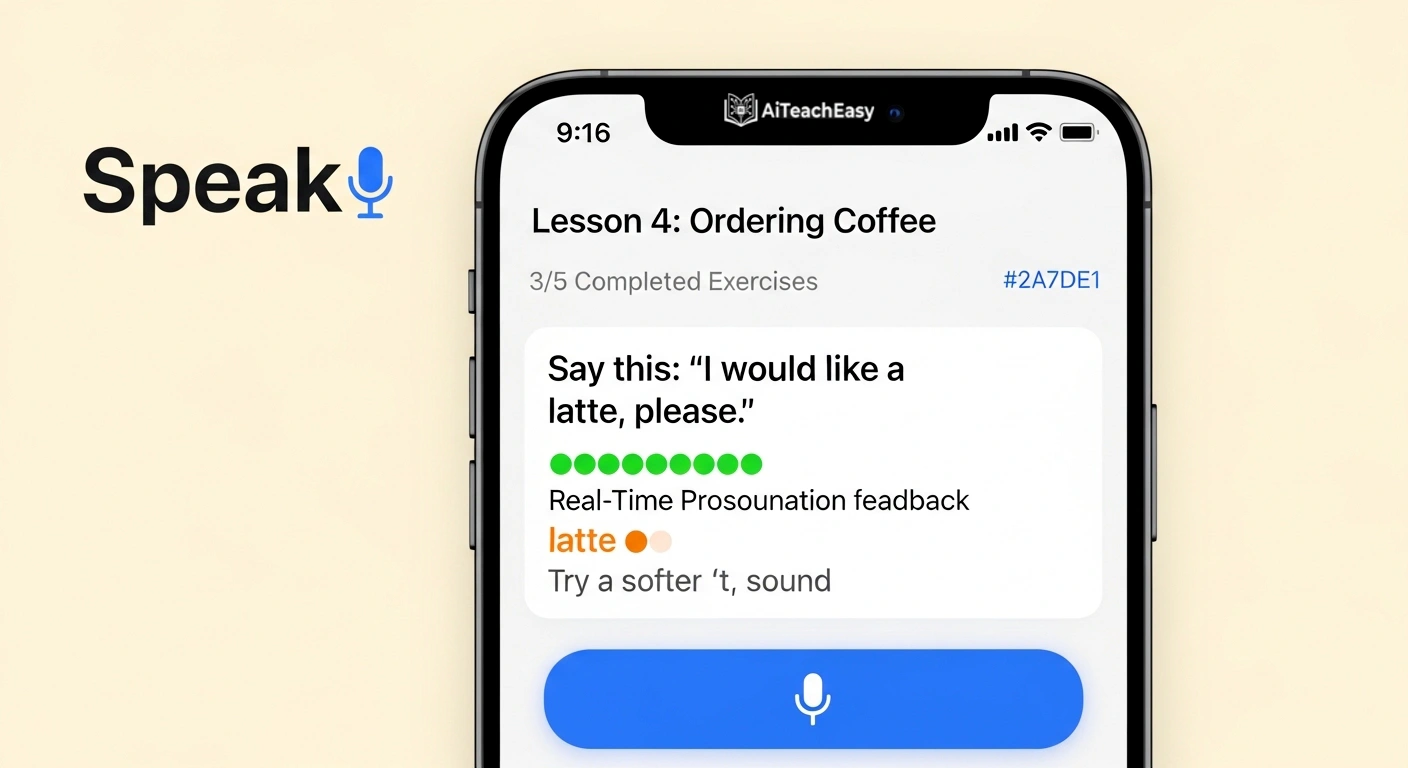
The New York Times’ Wirecutter named Speak one of the best language learning apps in 2026, and the reason is immediately obvious the moment you open it: it treats speaking as the default activity from lesson one. Where Duolingo has you matching word tiles and Babbel has you filling blanks, Speak forces you to construct and say full sentences from your very first lesson. The result is that beginners build real spoken muscle memory immediately, not after months of written drills.
The AI tutor listens to your pronunciation, corrects your grammar in real time, and keeps the lesson moving — all without a human teacher ever being involved. The structured daily curriculum ensures you build foundational vocabulary and grammar in logical sequence before advancing. Its onboarding flow is the best-designed of any app I tested. If you are starting completely from scratch, this is your first stop.
The main weakness is that Speak is less suited for freeform, unstructured conversation — the AI tends to end practice sessions abruptly rather than letting dialogue flow naturally the way Langua does. It also supports fewer languages than competitors.
Languages: 11+ (Korean, Japanese, Spanish, French, and more) | Price: $15/month | Free Trial: Yes | Best for: Complete beginners who want structure + speaking from day one
3. ELSA Speak — Best Pronunciation Training App
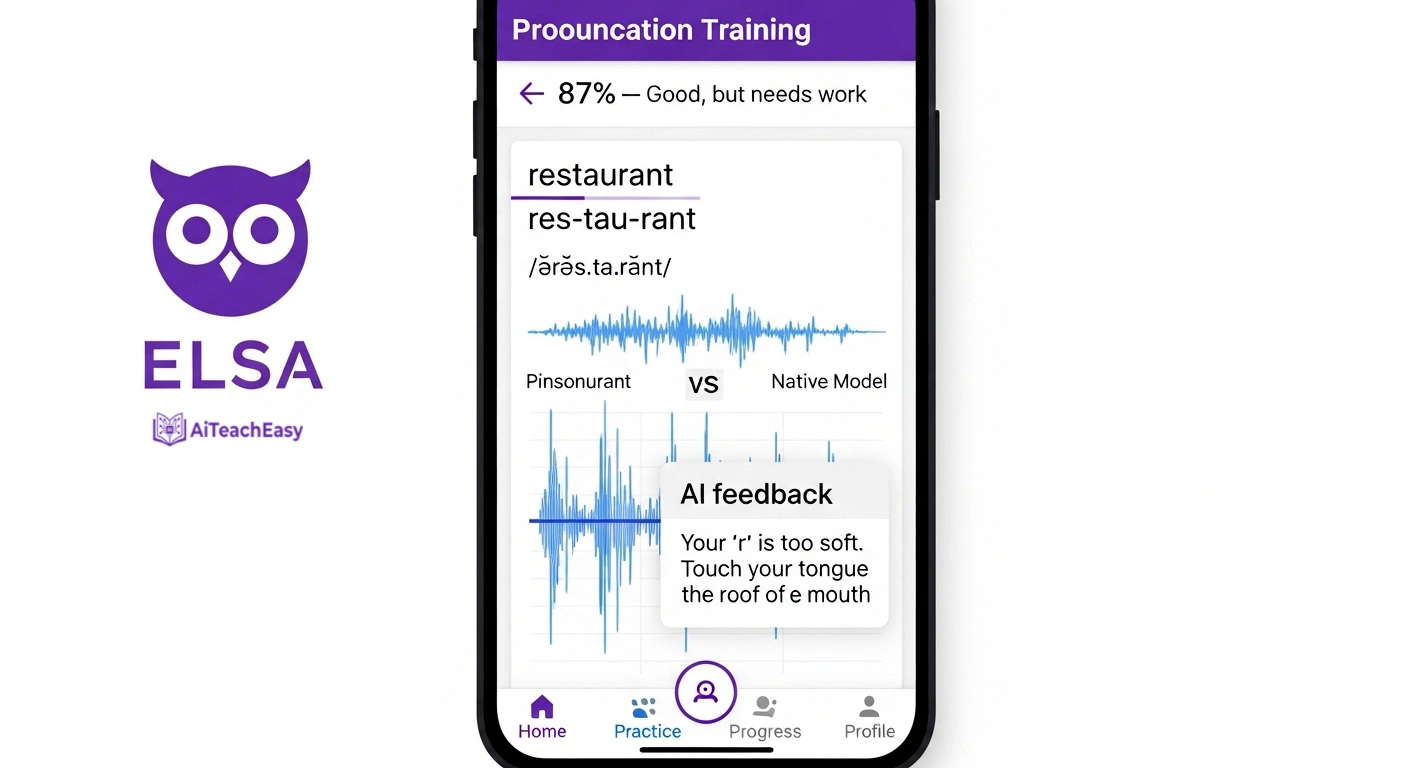
ELSA (English Language Speech Assistant) is purpose-built for one thing: precise pronunciation correction. Its AI is trained specifically on non-native English speakers, which means it can identify exactly where your accent deviates from target sounds — not just flag that something is wrong. ELSA will tell you your tongue placement is incorrect for a specific consonant, flag wrong syllable stress, and score your fluency, accuracy, and completeness word-by-word.
In my own testing, three months of daily ELSA practice produced a noticeable improvement in my Spanish accent — a result consistently reported by learners across multiple languages in the app’s research publications. The 7-day free trial gives full feature access, making it easy to evaluate before committing. If pronunciation and accent reduction are your primary goals, nothing in 2026 comes close to ELSA.
Worth pairing with the best AI tools for memorization to reinforce new pronunciation patterns alongside vocabulary retention — muscle memory and word memory compound each other.
Languages: English-focused | Price: ~$7/month | Free Trial: 7 days full access | Best for: Non-native English speakers targeting accent reduction and pronunciation precision
4. TalkPal AI — Best Value + Most Languages Supported
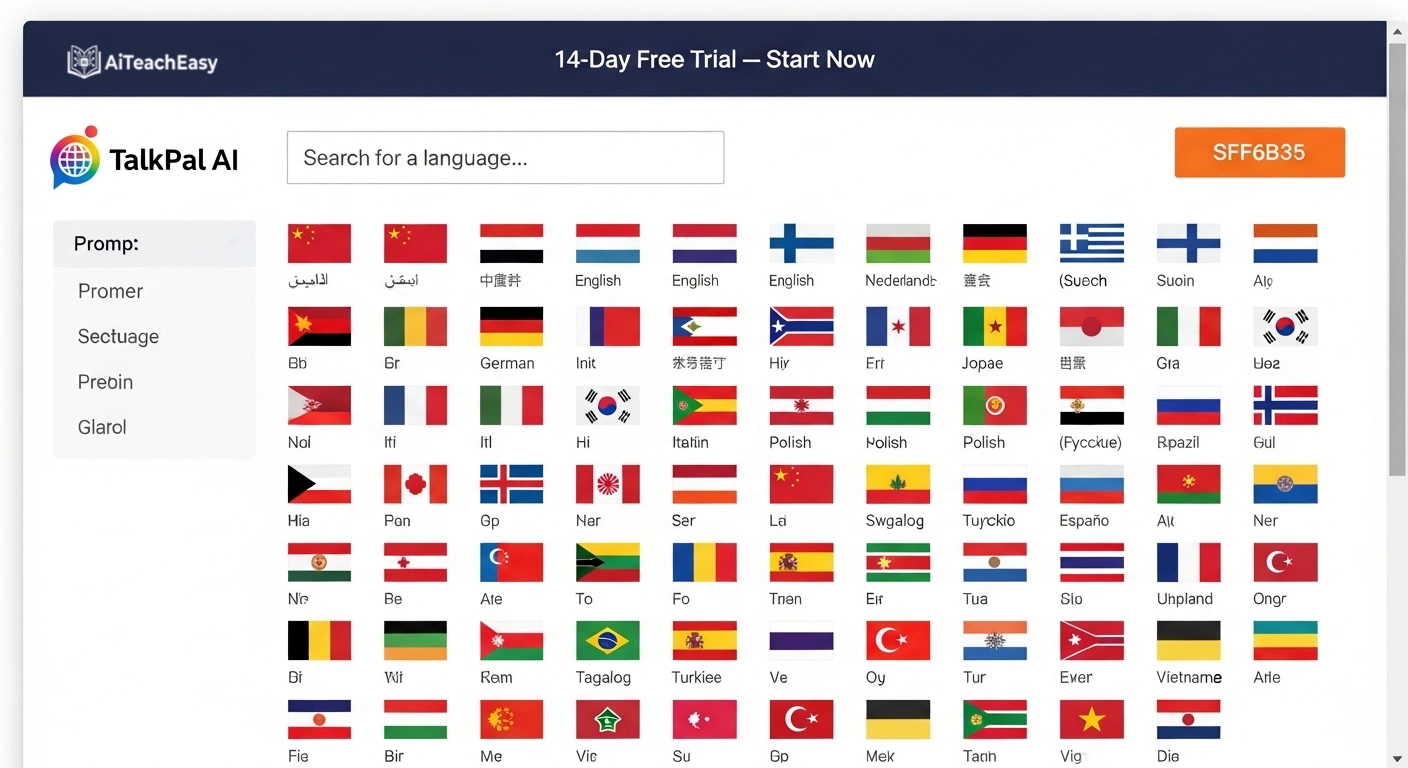
TalkPal AI supports 57+ languages — more than any other app on this list — with a 14-day premium trial that is the longest free window I encountered across all my testing. At roughly $6–7/month on the annual plan, it is also the most budget-friendly paid option for serious learners. TalkPal offers role-play conversations, debate practice, image description tasks, pronunciation feedback, and a progress tracking dashboard that gives you a clear weekly picture of your improvement.
The conversation depth is genuinely good, though not as immersive as Langua, and voice quality varies across some of its less common language tracks. But for learners studying less common languages — Finnish, Swahili, Tagalog, Basque — TalkPal’s breadth is simply unmatched. And for budget-conscious learners who want meaningful daily speaking practice without spending more than a Netflix subscription, it is the obvious choice.
Languages: 57+ | Price: ~$6/month (annual) | Free Trial: 14 days | Best for: Budget learners, polyglots, and anyone studying a less common language
5. Talkio AI — Best for Dialect & Accent Precision
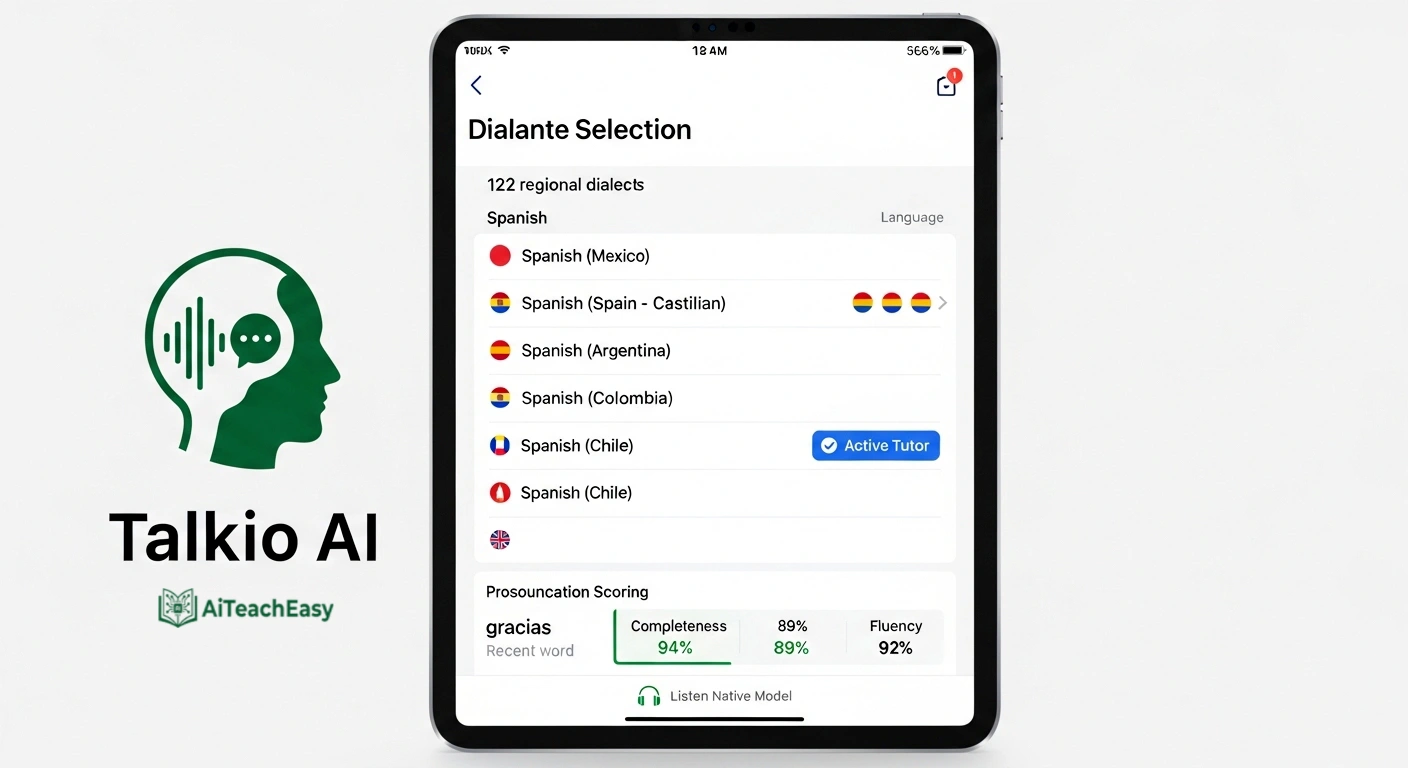
Founded in Denmark and trusted by 500,000+ users worldwide, Talkio AI is the only language learning app I tested that goes beyond broad language labels to offer 122 regional dialect-specific tutors. You can train in Mexican Spanish versus Castilian Spanish, Brazilian Portuguese versus European Portuguese, or Egyptian Arabic versus Levantine Arabic. With 70+ languages, over 400 AI tutor personalities, and pronunciation assessment that scores your accuracy, completeness, and fluency separately on every word, Talkio is built for learners who need to communicate in a specific real-world regional context.
Academic researchers have cited Talkio’s effectiveness in peer-reviewed language learning studies — one of very few apps to earn that kind of institutional credibility. The interactive wordbook saves every new word from your conversations for spaced review. The only friction point is that the free trial requires a credit card upfront, which is unusual.
Languages: 70+ with 122 dialects | Price: ~$9/month | Free Trial: 7 days (card required) | Best for: Expats, business professionals, and serious learners who need region-specific accent accuracy
6. Praktika AI — Best Daily Lesson Structure with Animated Avatars
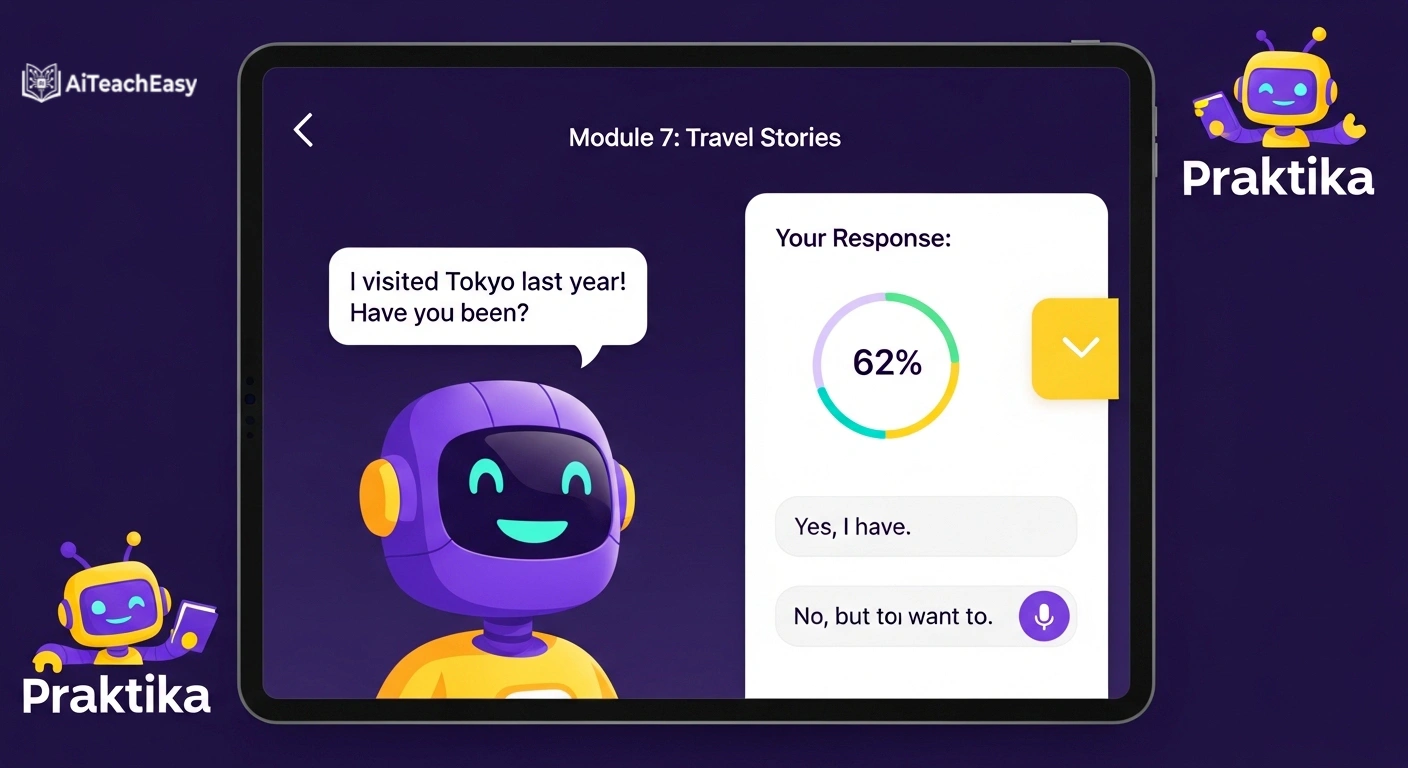
Praktika sounds gimmicky on paper — animated AI avatars for language practice — but it is surprisingly compelling in actual use. The avatar I practiced with told stories, asked follow-up questions that referenced things I had said earlier in the session, and at one point made a joke that made me genuinely laugh out loud. For a language learning app, that level of personality and engagement is remarkable.
Praktika’s onboarding is the most thorough of any app I tested, generating a fully personalized lesson plan based on your interests, goals, and current level. The daily lesson structure covers different vocabulary topics systematically, and the AI even picks up vocabulary from other languages you mention and bridges it back to your target language. The main drawback is that conversations reset when you close the app — there is no saved history like Langua offers — and the default intermediate level can feel too easy until you manually push the AI to adjust.
Languages: 20+ | Price: ~$12/month | Free Trial: Yes | Best for: Learners who want structured daily lessons with personality and engagement
7. Univerbal — Best for Anxious Beginners
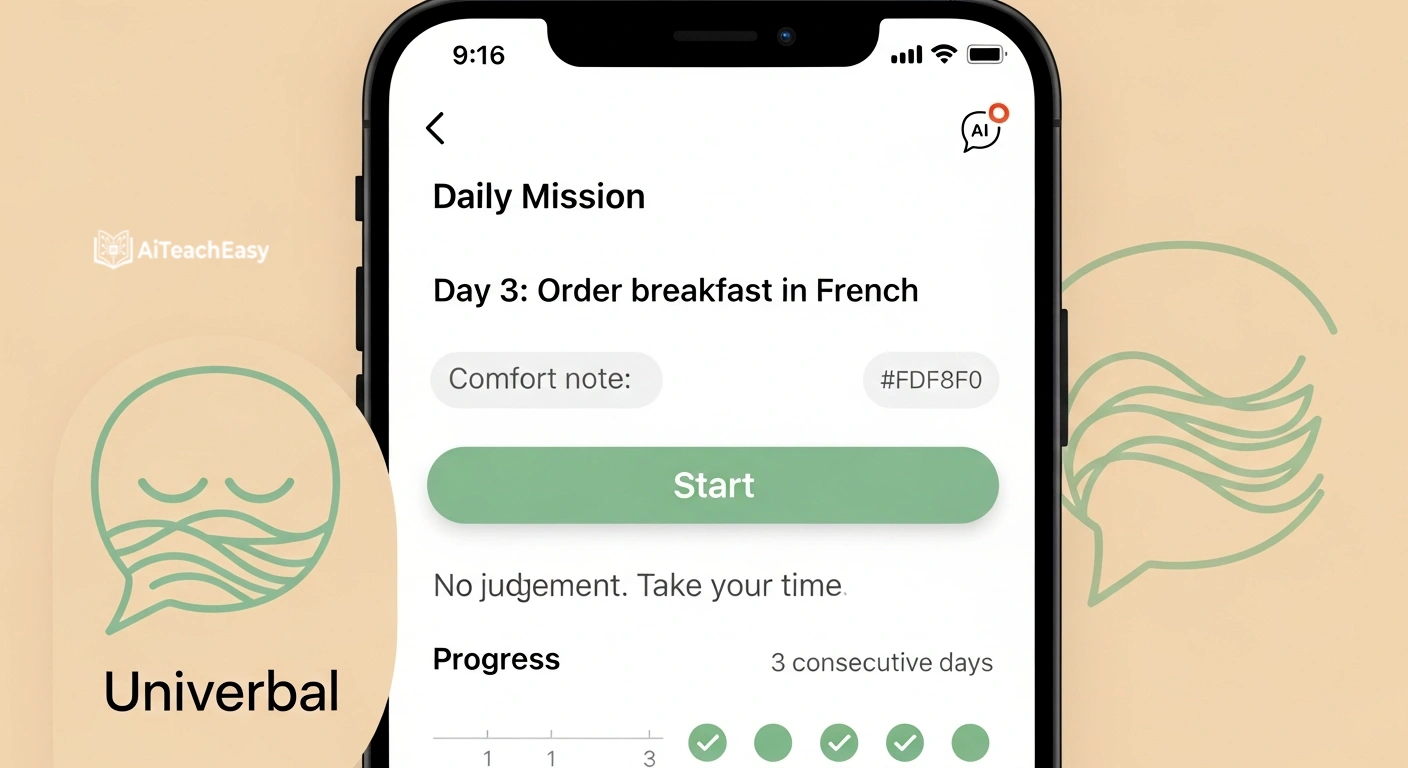
Univerbal is designed specifically for learners who find free conversation intimidating. Its adaptive curriculum, interest-based onboarding, and judgment-free feedback style create a genuinely welcoming environment for people who are nervous about making mistakes. Lessons are built around short daily missions — achievable, confidence-building goals that create momentum without overwhelming you.
If you have always wanted to practice speaking a new language but stopped yourself out of fear of embarrassment, Univerbal is the safest place to start. Once your confidence is built here, transitioning to the deeper conversation practice of Langua or Langotalk becomes far less daunting.
Languages: 10+ | Price: ~$10/month | Free Tier: Yes | Best for: Shy or anxious learners who need a low-pressure entry point into spoken language practice
8. Duolingo Max — Best for Building Daily Learning Habits
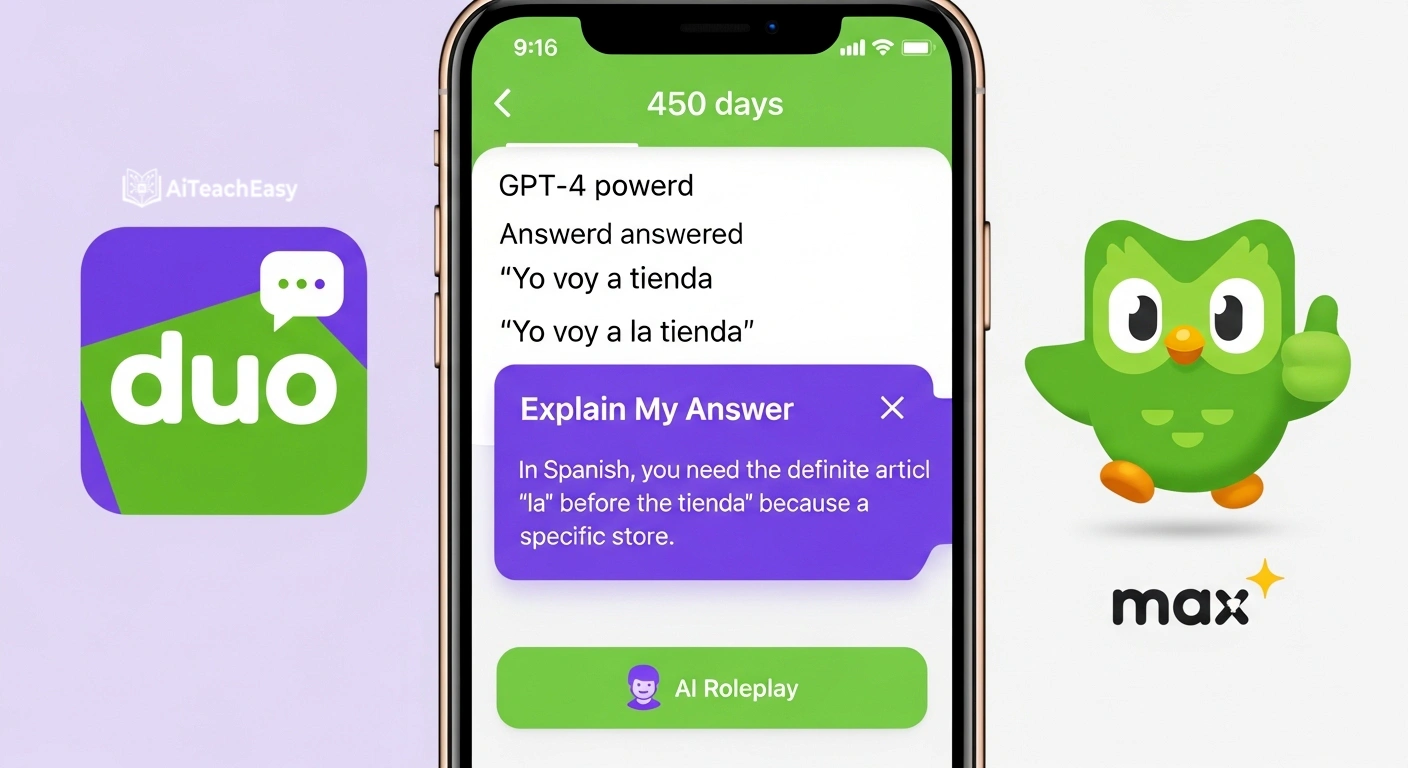
Duolingo is the world’s most downloaded language app, and its gamification engine — streaks, XP points, leaderboards, and the guilt-inducing owl mascot — is genuinely unmatched at creating consistent daily practice habits. Duolingo Max, launched with GPT-4 integration, adds AI conversation practice and an “Explain My Answer” feature that adds meaningful depth to grammar learning.
The honest truth, however, is that Duolingo will help you build vocabulary and basic grammar. It will not make you conversationally fluent on its own. Millions of learners with 1,000-day streaks have frozen completely when confronted with a real native speaker. This is not a flaw in Duolingo specifically — it is what gamified vocabulary drilling produces without sufficient speaking practice. In early 2026, Duolingo also controversially switched much of its content to AI-generated lessons, making some tracks feel less natural and pushing many users to look for alternatives.
Use Duolingo as your daily habit anchor (5–10 minutes), and pair it with a conversation-focused tool like Langua or Speak for actual fluency-building. Also worth exploring ChatGPT alternatives for students if you want to supplement with other AI tools beyond the app ecosystem.
Languages: 40+ | Price: Free tier / $30/month (Max) | Best for: Daily habit building and foundational vocabulary
9. Babbel + Babbel Live — Best Expert-Designed Structured Curriculum
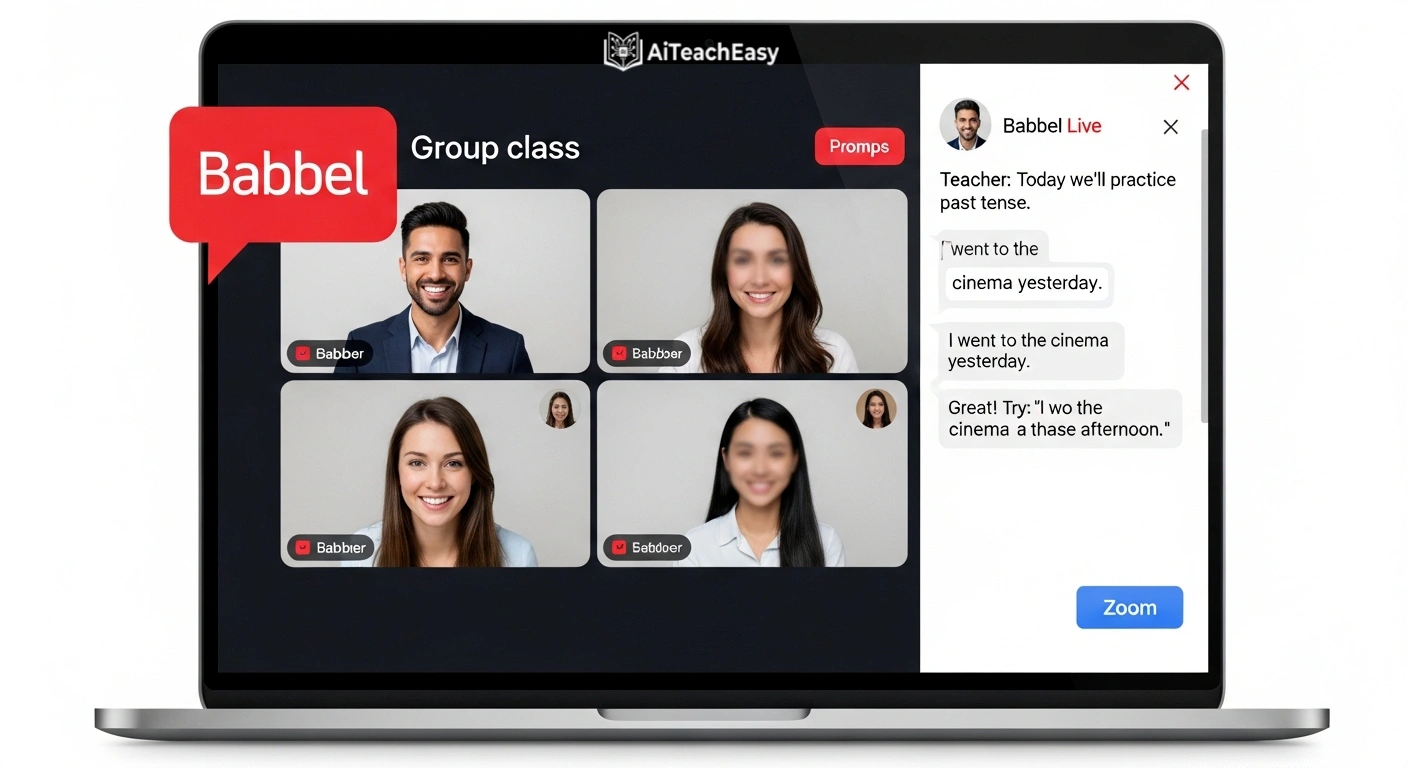
Babbel distinguishes itself from AI-first apps with one critical advantage: its lessons are designed by certified linguists, not generated on the fly by AI. The curriculum is carefully scaffolded from beginner through advanced, with expert-built dialogue scenarios, pronunciation checking, and grammar explanations that reflect genuine pedagogical design. Babbel Live adds real-time group classes with native-speaking teachers, creating a hybrid model that appeals to structured learners who also want human interaction.
At $12.95/month, Babbel is priced fairly for what it delivers. The main limitation is its language selection — only 14 languages compared to 57+ on TalkPal — and its AI conversation features are less sophisticated than Langua or Speak. But for learners who value expert-designed curriculum over AI-generated content, Babbel remains one of the most credible platforms available.
Languages: 14 | Price: $12.95/month | Best for: Structured learners who want linguist-designed content plus occasional live human instruction
10. Chatterbug — Best AI + Human Tutor Hybrid
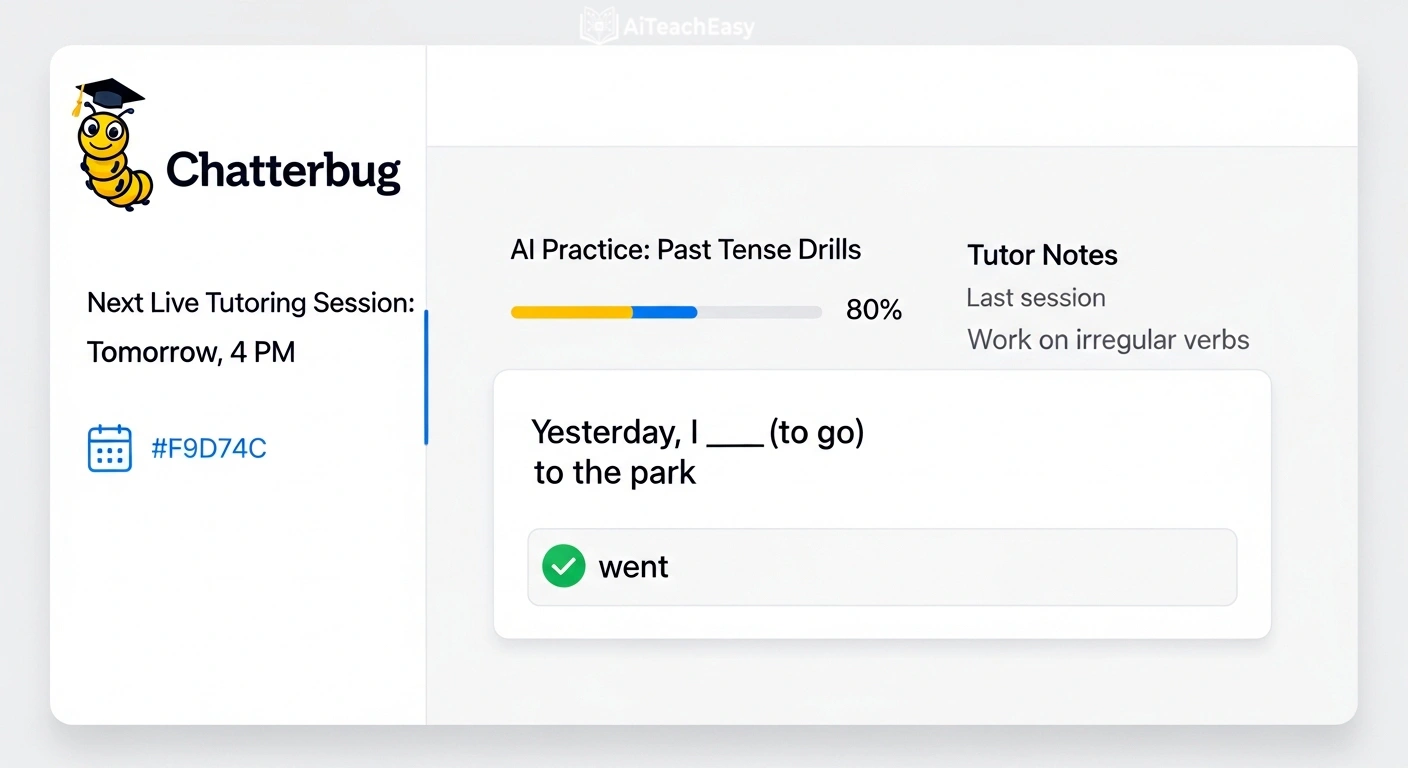
Chatterbug offers the most seamless integration of AI practice and live human tutoring available in 2026. Between sessions with your native-speaking tutor via live video call, Chatterbug’s AI keeps your speaking practice going with targeted drills matched to what you worked on in your last human session. The continuity between AI practice and human instruction is genuinely impressive — your AI tutor knows what your human tutor covered.
At $195/month for unlimited tutoring, it is the most expensive option on this list by a significant margin. But for learners who are serious about reaching conversational fluency as fast as possible and willing to invest accordingly, this is the gold standard. Nothing replicates the unpredictability and cultural nuance of real human conversation, and Chatterbug gives you more of it than any other platform.
Languages: 6 | Price: $195/month (unlimited tutoring) | Best for: Committed learners who want the fastest possible path to fluency through combined AI and human instruction
11. FluentU — Best for Authentic Real-World Media Immersion
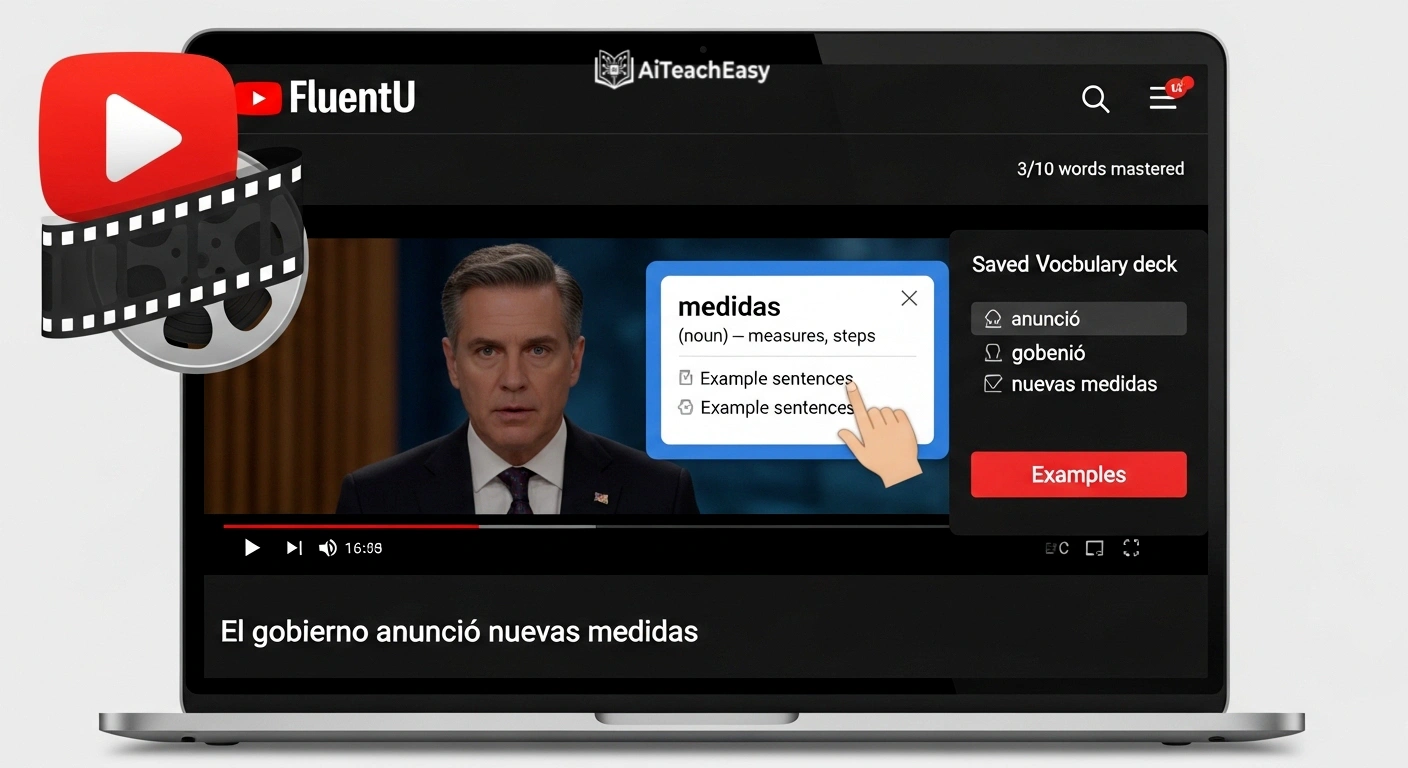
FluentU takes a completely different approach from every other app on this list: instead of AI-generated conversations, it turns real YouTube videos, TV show clips, and movies into interactive language lessons. You watch authentic content, tap any word on-screen to see its definition and example sentences, answer comprehension questions, and build a vocabulary deck directly from the content you just watched.
After completing the instructor-led course content, you unlock freeform AI conversation practice. For intermediate and advanced learners who want cultural immersion alongside language acquisition — who want to understand how the language is actually used by real people in real situations — FluentU is uniquely powerful. Nothing else connects authentic media with structured vocabulary learning the way it does.
Languages: 10+ | Price: 18/monthor84/year | Free Trial: 7 days | Best for: Intermediate–advanced learners who want cultural immersion through authentic native content
12. Memrise — Best for Learning from Native Speaker Video Clips
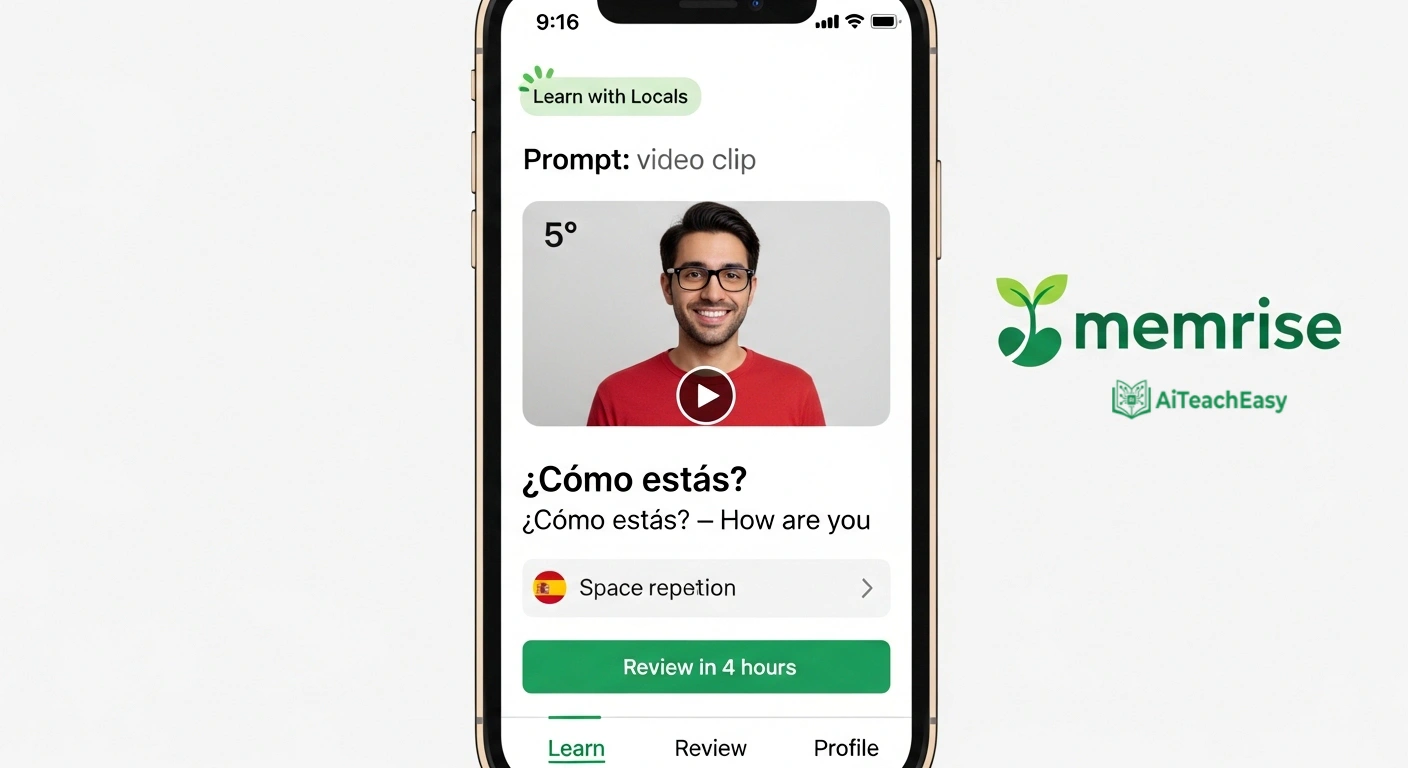
Memrise combines spaced repetition vocabulary learning with short video clips of real native speakers using words in natural context. This “native speaker video” approach is something purely AI-driven apps cannot replicate — you are not hearing a synthesized voice say a word, you are watching a person from Spain, Japan, or Brazil use it in a real sentence with natural intonation, facial expression, and body language. That contextual richness accelerates both vocabulary retention and listening comprehension.
Memrise’s free tier is one of the most generous on the market, offering meaningful learning without requiring a subscription. Premium unlocks offline access, advanced grammar content, and additional review modes.
Languages: 22+ | Price: Free tier / ~$8/month (premium) | Best for: Visual learners who want vocabulary built through authentic native speaker video context
13. Rosetta Stone — Best Immersive “No Translation” Method
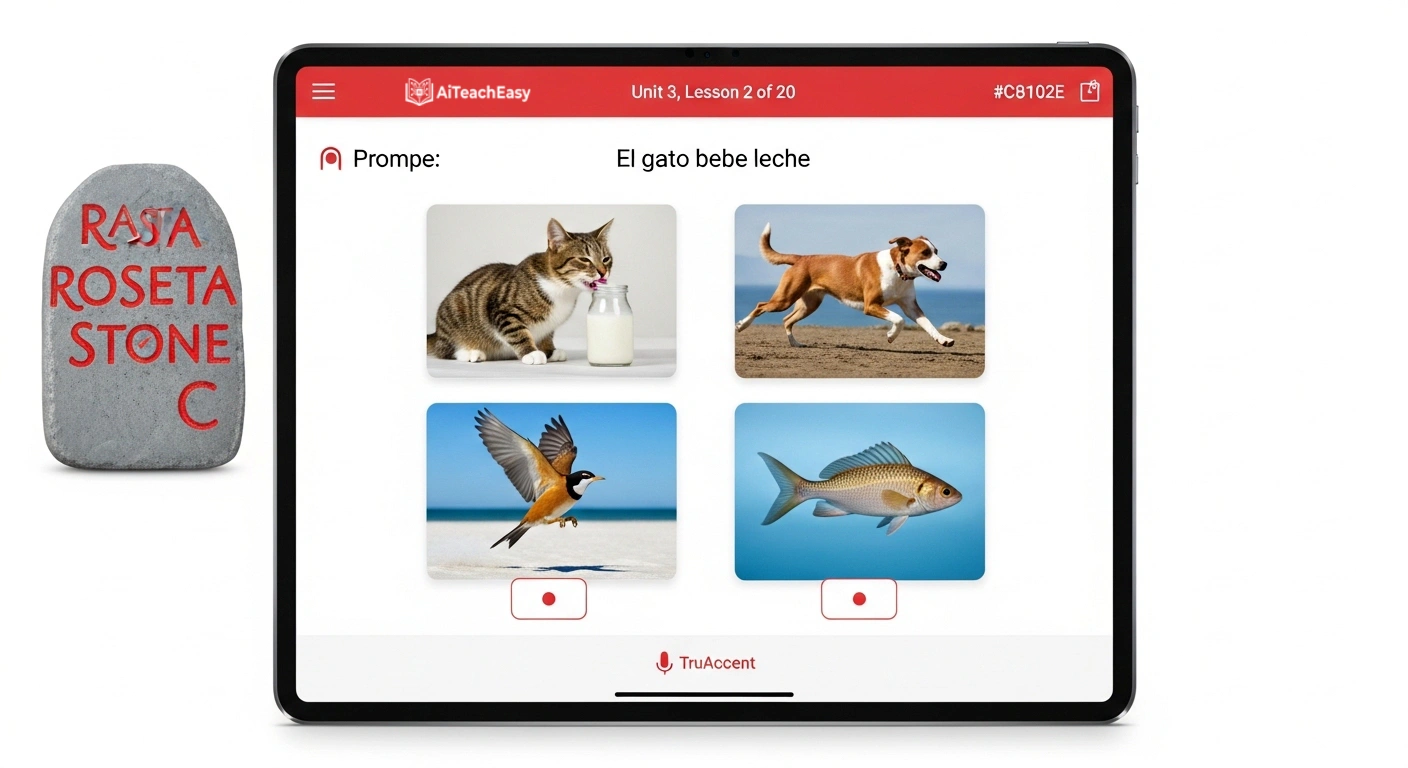
The original immersion-based language learning platform, Rosetta Stone teaches through image-association rather than translation — replicating the process by which children naturally acquire language. You never see your native language on screen; you learn to associate words and grammar directly with images, sounds, and contexts. Its TruAccent speech recognition technology has been continuously refined over 25 years of real-world use.
In 2025–2026, Rosetta Stone added AI conversation practice features to modernize the platform alongside its classic methodology. For learners who specifically want the no-translation immersion approach — and particularly for those who find grammar-heavy apps frustrating — Rosetta Stone remains one of the most credible and research-backed platforms available. Its lifetime license option also represents genuinely exceptional long-term value.
Languages: 25+ | Price: ~$12/month or lifetime license | Best for: Learners who prefer immersion-without-translation and want a heritage platform with 25+ years of refinement
14. HelloTalk — Best Free App for Real Human Language Exchange
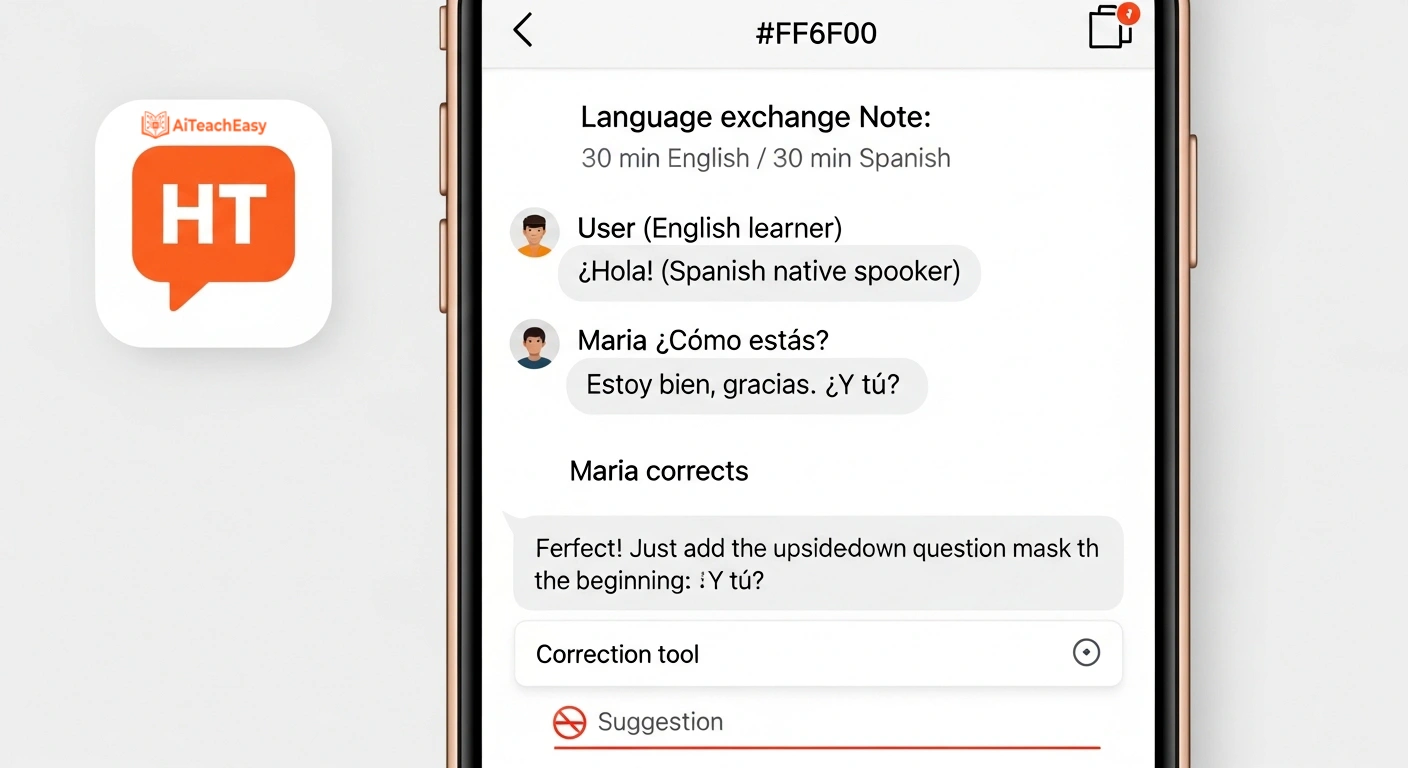
HelloTalk connects you with real native speakers of your target language who want to learn your language in return — a genuine language exchange. It is not an AI tool; these are real human beings, not chatbots. And that is exactly the point. It fills the gap that AI apps cannot close: genuine cultural exchange, spontaneous conversation, and the beautiful unpredictability of talking to an actual person with their own opinions, humor, and communication style.
Combined with an AI speaking app like Langua or Speak for your daily structured practice, HelloTalk is one of the most valuable free supplements for learners at any level. The correction tools built into the chat interface make it easy to give and receive grammar corrections naturally within the conversation flow.
Languages: 150+ | Price: Free (HelloTalk Plus ~$7/month) | Best for: Learners who want authentic free human conversation practice to complement AI apps
15. Lingvist — Best for Rapid Vocabulary Acquisition
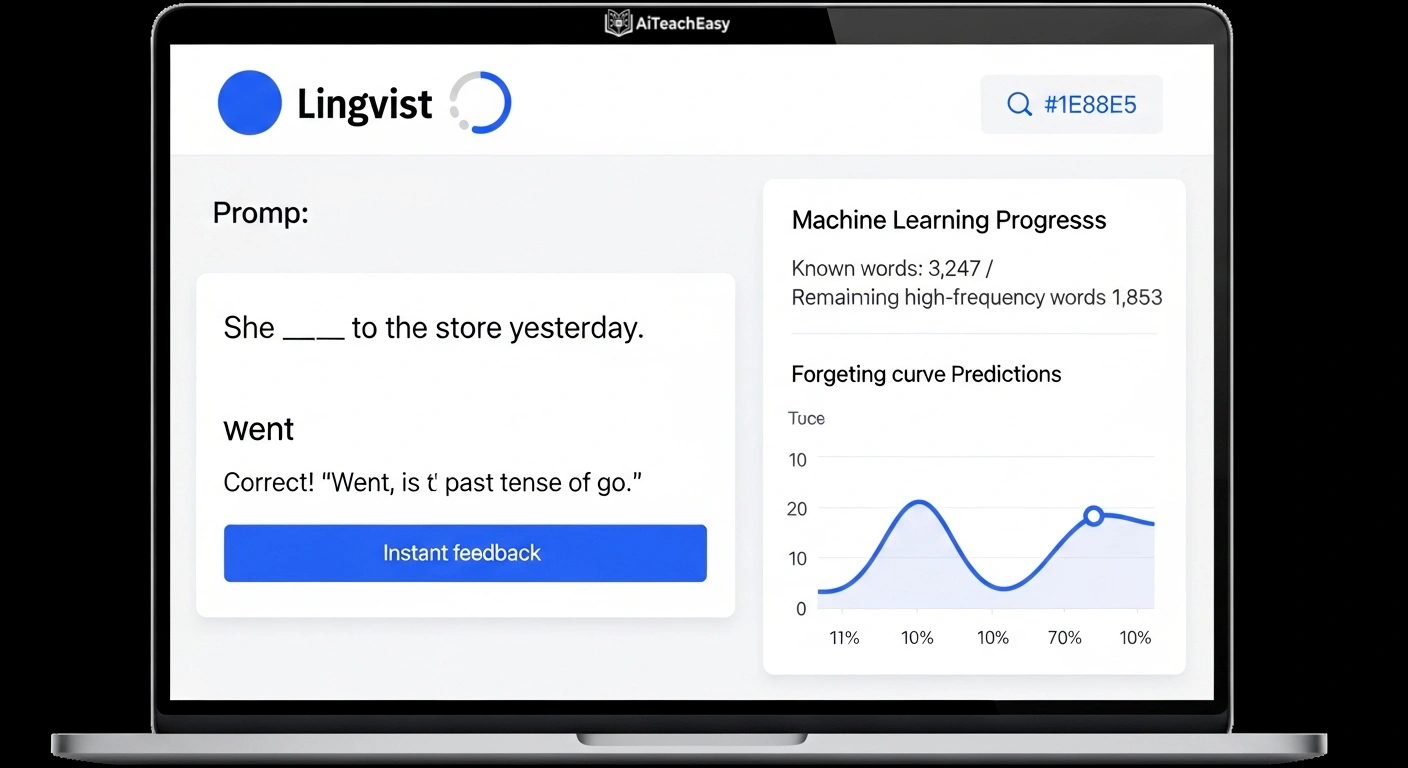
Lingvist uses machine learning to model exactly which words you know — and crucially, which you do not — then delivers high-frequency vocabulary in context using a spaced repetition algorithm optimized for your individual forgetting curve. Research suggests Lingvist users gain around 5,000 new vocabulary items in roughly 200 hours of study. For learners whose primary bottleneck is vocabulary breadth rather than grammar or pronunciation, Lingvist is the most efficient tool available.
It currently supports four languages (English, French, Spanish, and German), which is its main limitation. But within those languages, the vocabulary system is genuinely the fastest and most precise available.
Languages: 4 | Price: ~$8/month | Best for: Learners who need to rapidly expand vocabulary in French, Spanish, German, or English
16. Busuu — Best Community-Powered CEFR-Aligned Learning
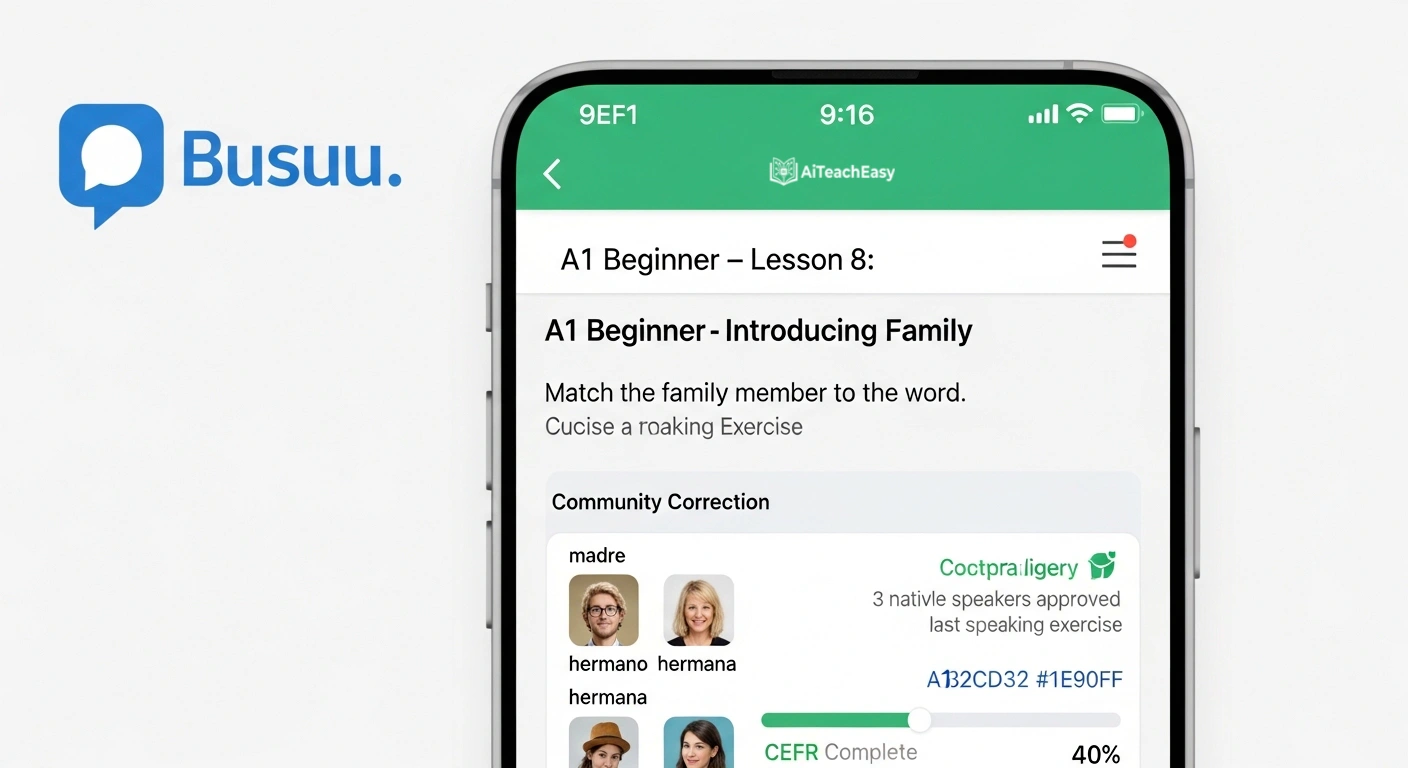
Busuu combines AI-powered lessons with corrections from a global community of native speakers. Your writing and speaking exercises are reviewed by real human native speakers alongside the AI feedback — a hybrid approach that produces more nuanced corrections than AI alone. Its courses are CEFR-aligned from A1 through B2, making it one of the few apps with official language framework compatibility for learners preparing for formal certification or structured academic study.
Offline access and a clean, professional interface make Busuu particularly popular with business professionals who need to demonstrate certified language proficiency. Teachers who want to assign structured language practice to students might also find the best AI tools for online classes a useful companion resource for building blended learning environments around Busuu’s CEFR-aligned content.
Languages: 12 | Price: ~$10/month | Best for: Business professionals and exam-prep learners who want CEFR-aligned content with human community feedback
17. Pimsleur — Best Audio-Only Learning Method
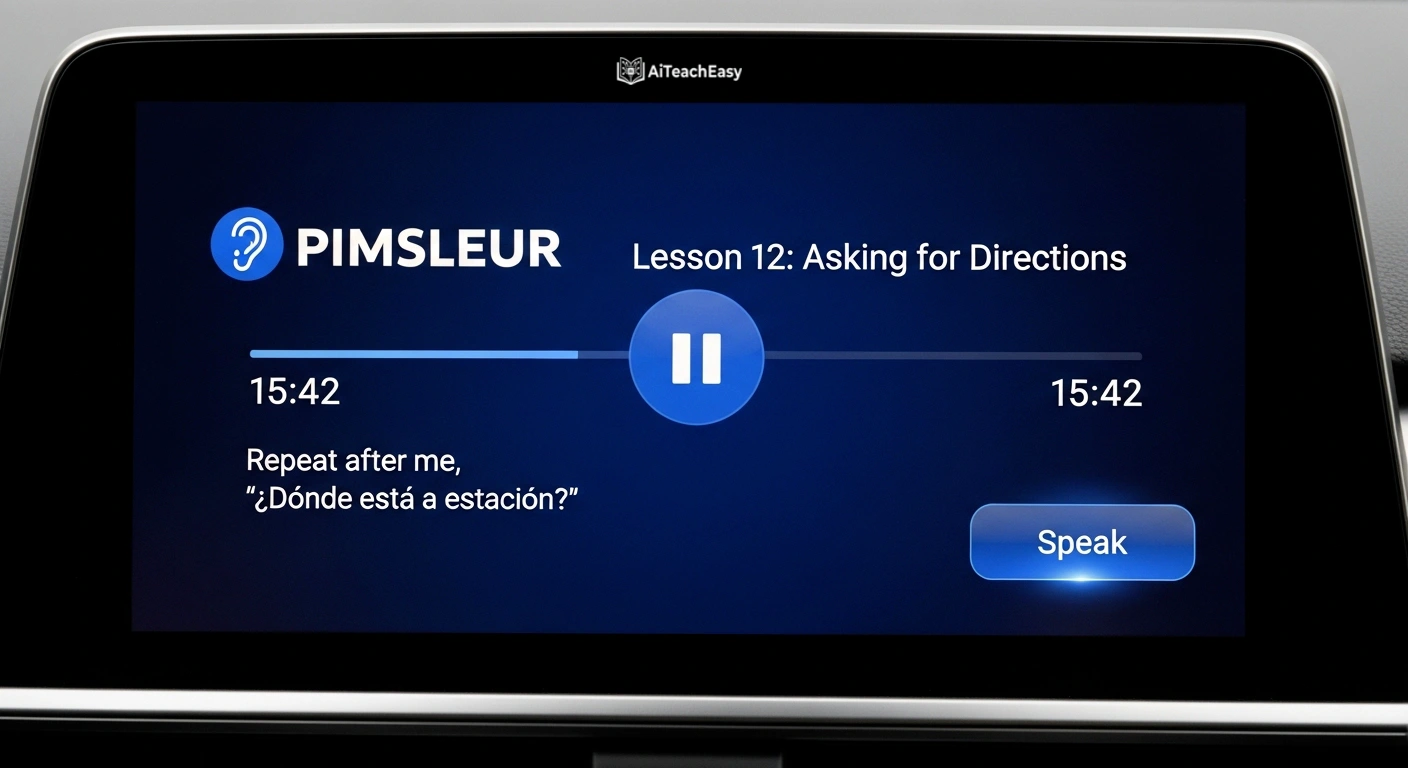
Pimsleur is the gold standard for audio-based language learning. Each lesson is 30 minutes of carefully structured listen-and-repeat audio designed to fit into a commute, workout, or household chores. The method uses spaced repetition through audio and is particularly effective for building natural pronunciation and speaking confidence, even for learners who are not actively sitting in front of a screen.
If your schedule genuinely does not permit focused screen time — or if you commute and want to use that time productively — Pimsleur is your best option. It covers more than 50 languages, including many less commonly taught ones, at a consistent quality level.
Languages: 50+ | Price: ~$20/month | Best for: Commuters and busy learners who want meaningful audio-only language practice that fits into an active schedule
18. Langotalk — Best Speaking Practice for Intermediate Learners
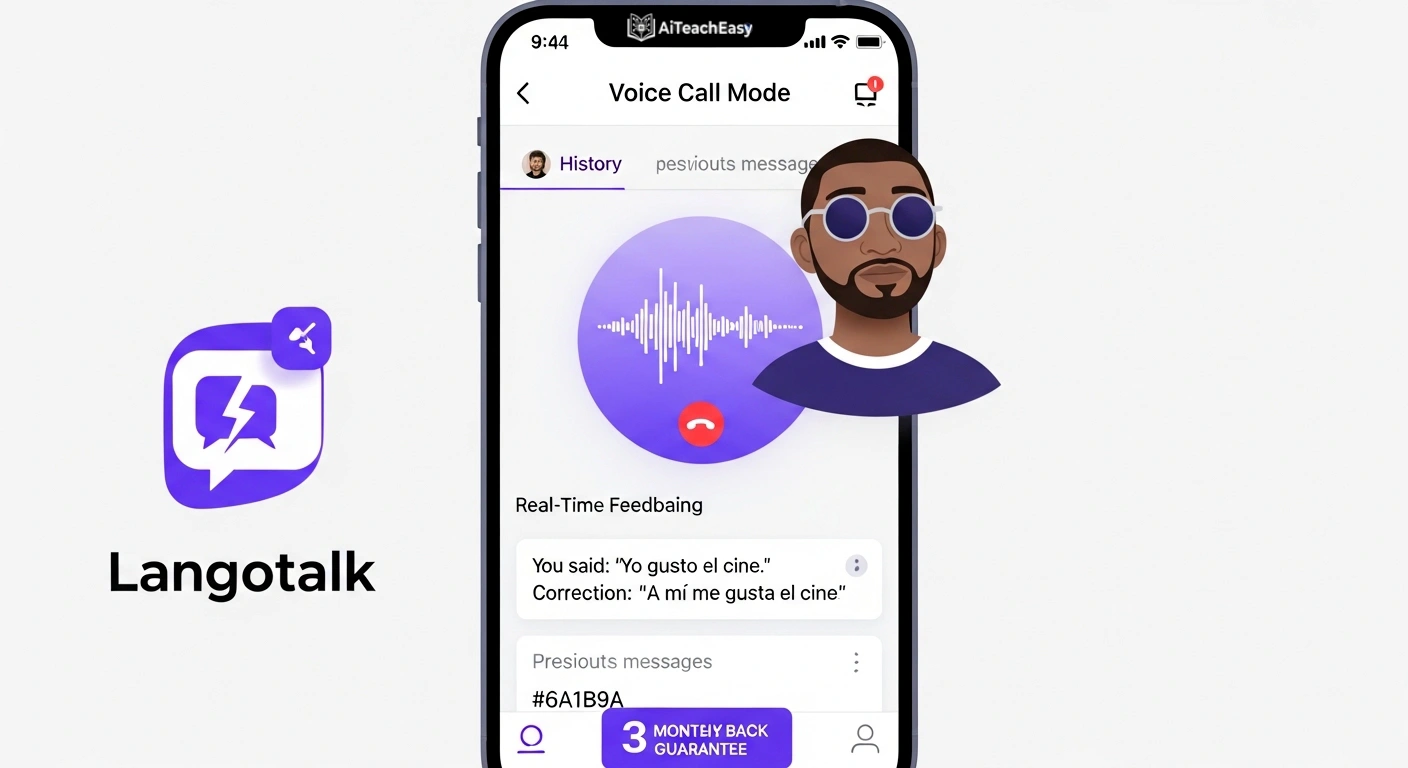
Langotalk has grown to 500,000+ users with 20+ languages and a polished, frictionless conversation experience across both web and mobile. Its AI Voice Call mode enables hands-free speaking practice — ideal for simulating phone conversation scenarios. The feedback loop is notably encouraging: instead of just flagging errors, Langotalk actively guides you toward the correct form with a supportive, clear explanation.
At $6.67/month on the annual plan with a generous 3-month money-back guarantee, it represents exceptional value. A strong runner-up to Langua specifically for intermediate learners focused on building daily speaking reps and fluency through high-volume conversation practice.
Languages: 20+ | Price: 6.67/month(annual)/29.99/month | Free Trial: 7 days | 3-month money-back guarantee | Best for: Intermediate learners who want to build speaking fluency through high-volume daily conversation practice
19. YourTeacher.AI — Best Bilingual Code-Switching Tutor
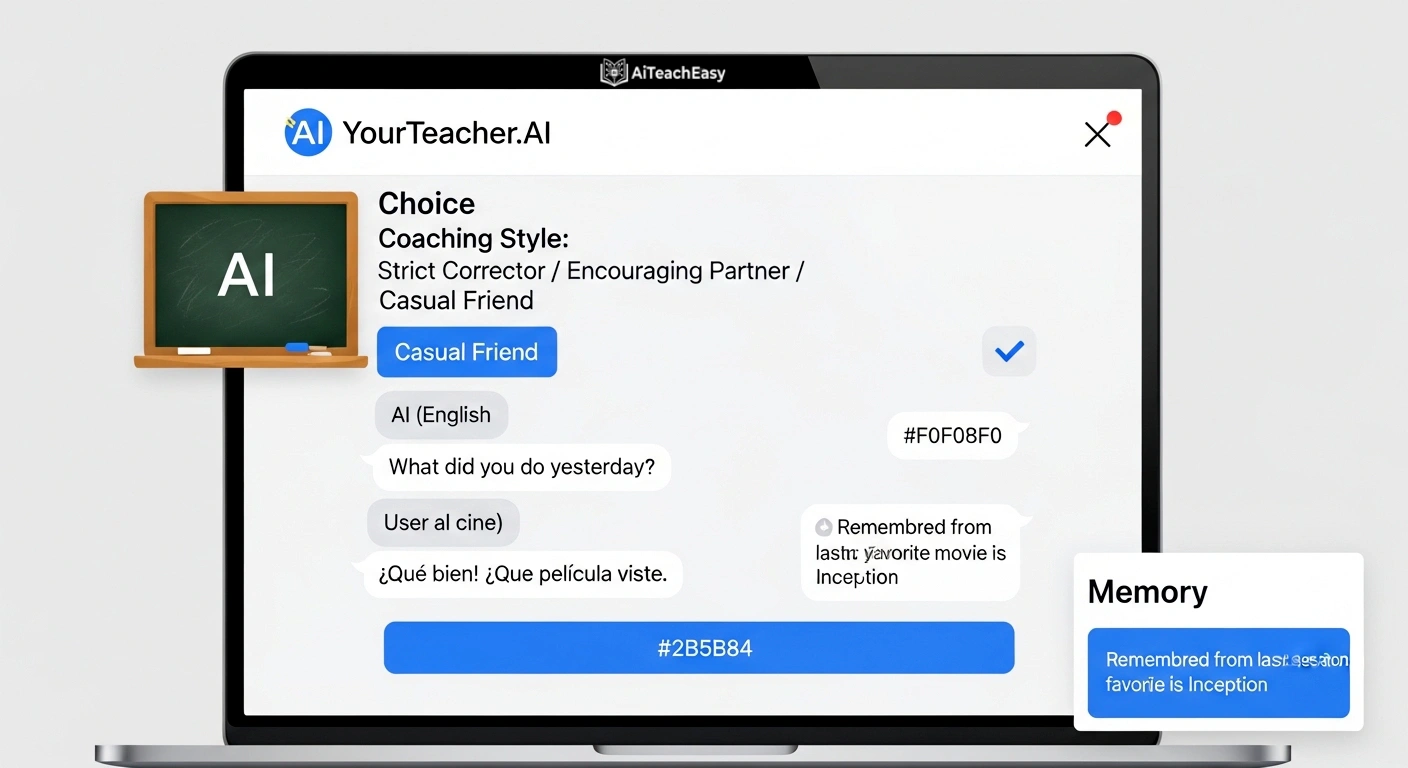
Created by polyglot YouTuber Xiaomanyc (famous for surprising strangers by speaking their native language), YourTeacher.AI features bilingual AI tutors that seamlessly switch between English and your target language — mirroring the way real bilingual conversations actually flow. The AI remembers your past conversations and mistakes across sessions, building a genuinely personalized learning arc over weeks and months.
The tutor personality settings let you choose your preferred coaching style: strict corrector, encouraging partner, or casual conversational friend. For learners who want control over the tone and style of their AI instruction, this level of customization is unique.
Languages: 10+ | Price: ~$10/month | Best for: Learners who want bilingual code-switching practice and control over their tutor’s coaching style
20. Edcafe AI — Best All-in-One Platform for Language Teachers
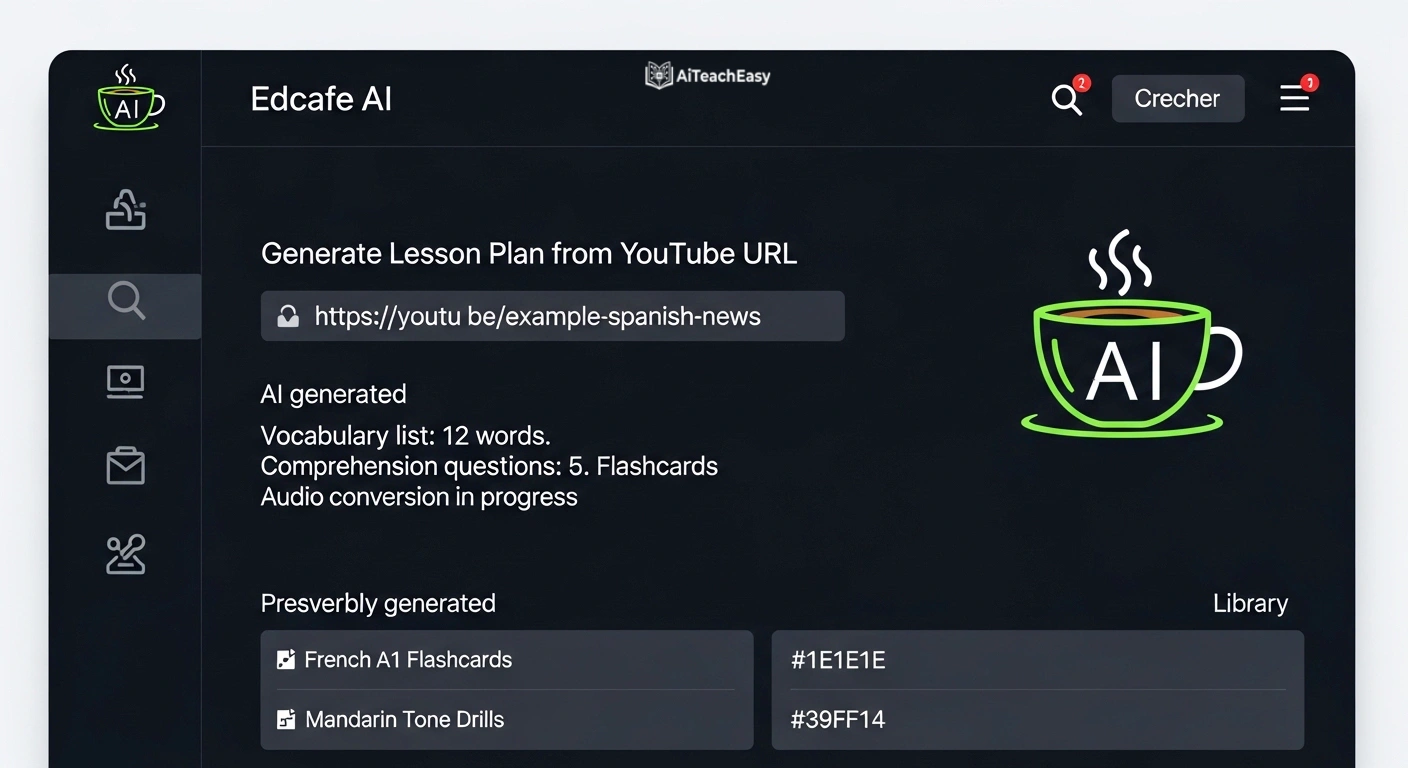
Edcafe AI is primarily designed for educators, and its feature set is extraordinary for anyone building language learning content. It supports 48 languages, generates AI flashcards in multiple formats (term-definition, Q&A, fill-in-the-blank), produces leveled reading activities with auto-graded comprehension questions, converts any content to text-to-speech audio in multiple dialects, and allows teachers to build custom AI chatbots trained on their own class materials.
Teachers can generate complete lesson plans from a YouTube URL, an uploaded document, or a simple text topic in seconds. For language teachers specifically, this is unmatched — and it pairs well with the best AI lesson plan generators for teachers if you want to see how Edcafe AI compares to other planning tools in a broader context. The forever-free tier is genuinely usable, not a stripped-down preview.
Languages: 48 | Price: Forever-free tier / ~$10/month (premium) | Best for: Language teachers and content creators who want to build custom AI-powered learning materials
21. Migaku — Best for Advanced Immersion-Style Learners
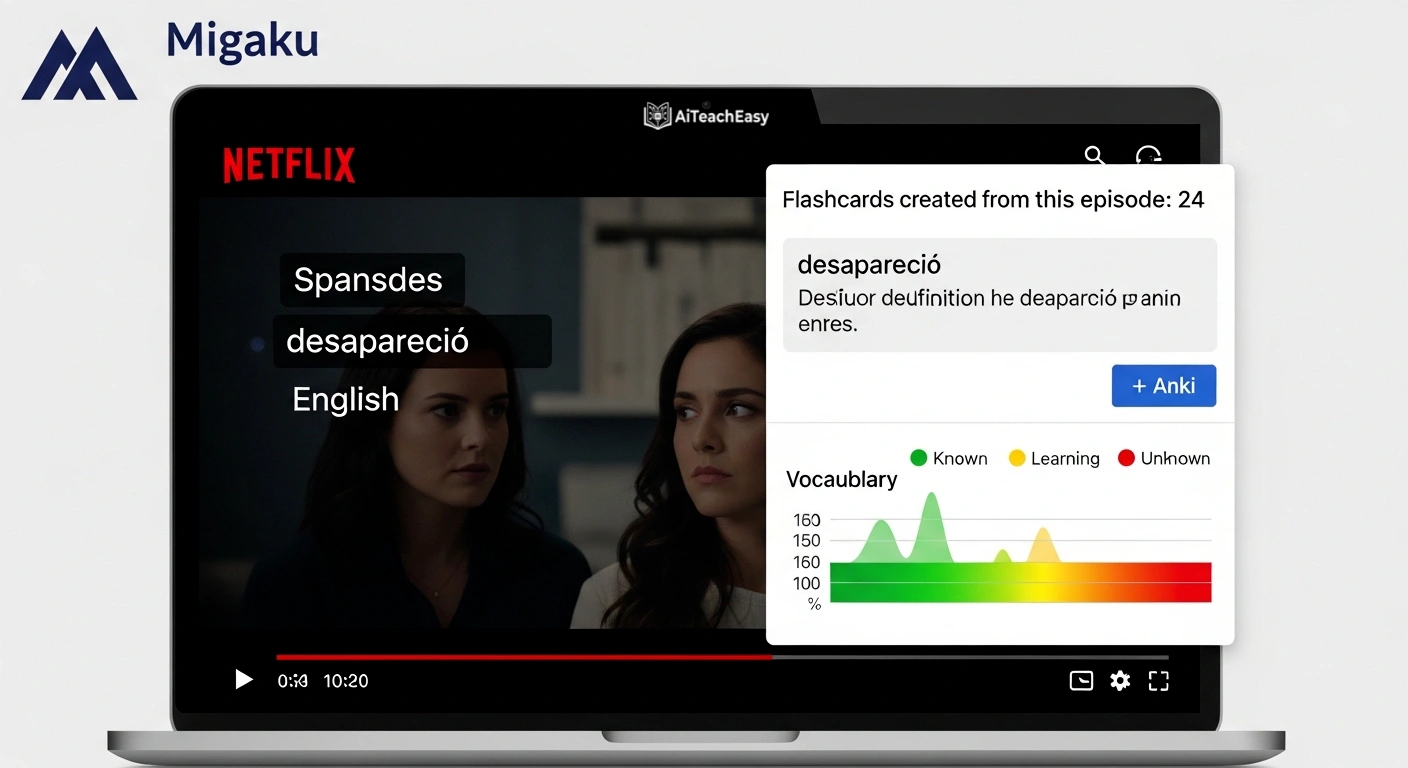
Migaku is built for advanced learners using the immersion method — watching native-language TV shows, anime, YouTube, and reading authentic texts in their target language. It integrates directly with streaming platforms to automatically create flashcards from subtitles, tracks your vocabulary across all the media you consume, and syncs with Anki for spaced repetition review.
If you have completed structured learning with Babbel or Busuu and are now ready to go deep into native content, Migaku is the ultimate companion. It does not teach you a language from scratch — it accelerates the transition from textbook learning to authentic native-level consumption, which is how most advanced learners eventually reach true fluency.
Languages: 10+ | Price: ~$9/month | Best for: Advanced learners who are ready to transition from structured learning into authentic native-language immersion
22. Drops — Best Visual Vocabulary App (5 Minutes a Day)
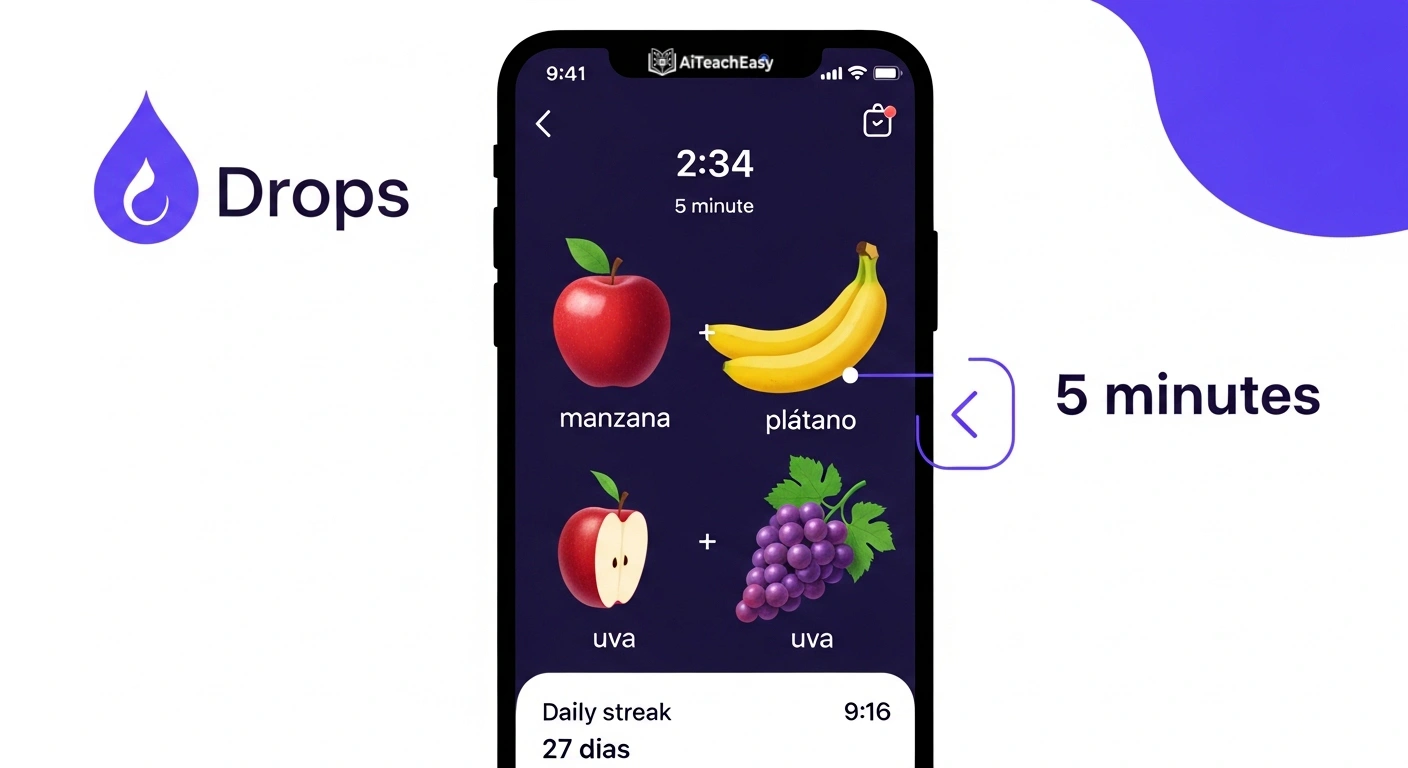
Drops specializes in visual, gamified vocabulary building through beautiful 5-minute daily sessions. Each word is associated with a distinctive visual illustration rather than a translation, building intuitive recall rather than cognitive translation. With 57 language options (one of the broadest libraries of any app) and grammar game additions added in early 2026, Drops is the most time-efficient vocabulary supplement available. Use it as a 5-minute warm-up before your AI conversation session each day.
Languages: 57 | Price: Free (5 min/day) / ~$10/month (unlimited) | Best for: Visual learners who want a quick, beautiful daily vocabulary supplement
23. Lingodeer — Best Structured App for Japanese, Korean & Mandarin
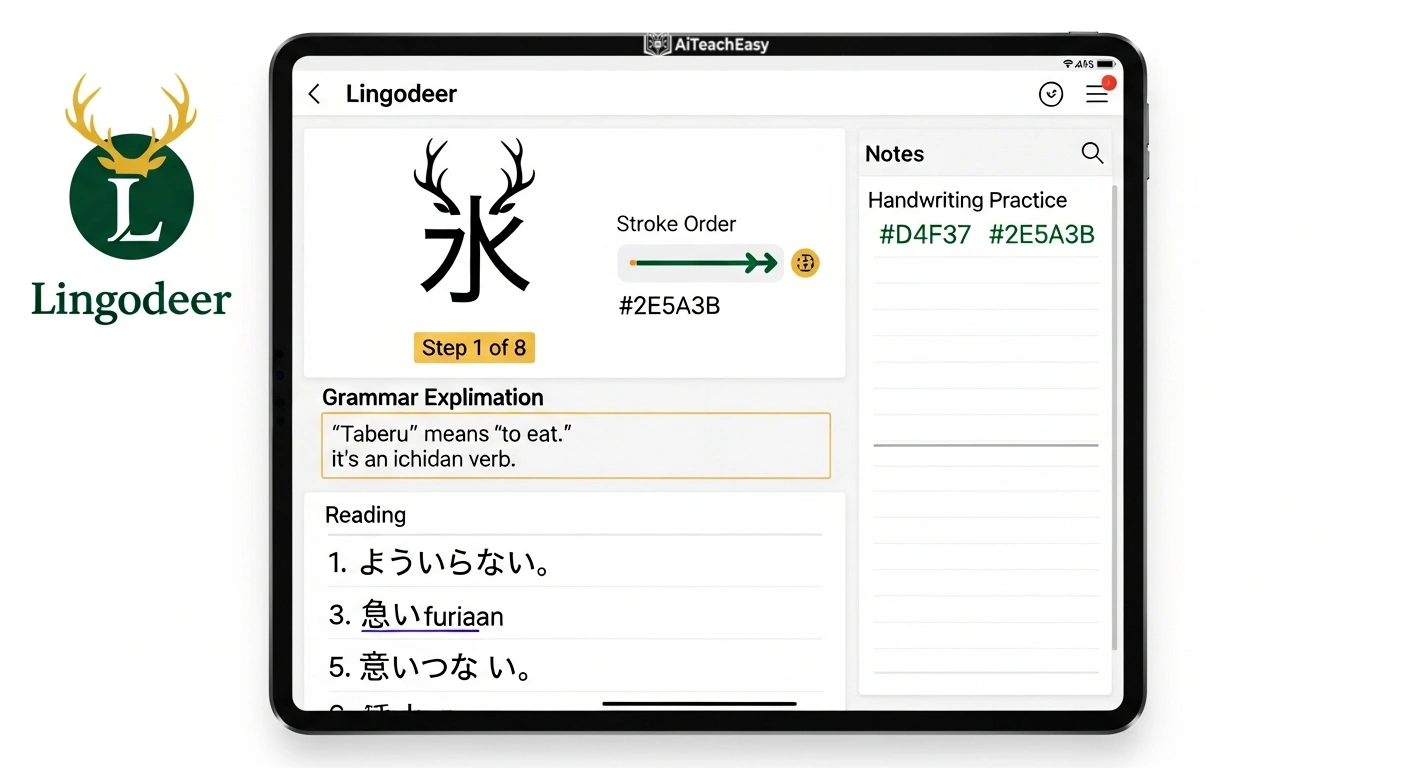
Lingodeer provides the most grammar-explicit, carefully structured approach to Asian language learning available in 2026. While other apps gloss over the complexity of Japanese kanji, Korean grammar particles, or Mandarin tones, Lingodeer provides clear grammatical explanations, handwriting practice, reading stories, and quiz-based reinforcement — all built around the specific linguistic structures of East Asian languages. For anyone attempting these writing systems for the first time, the scaffolding is invaluable.
Languages: 15 (specializing in Japanese, Korean, Mandarin, Thai, and more) | Price: ~$8/month | Best for: Beginners and intermediate learners targeting Japanese, Korean, or Mandarin Chinese
24. NaturalReader — Best Text-to-Speech Tool for Listening Practice
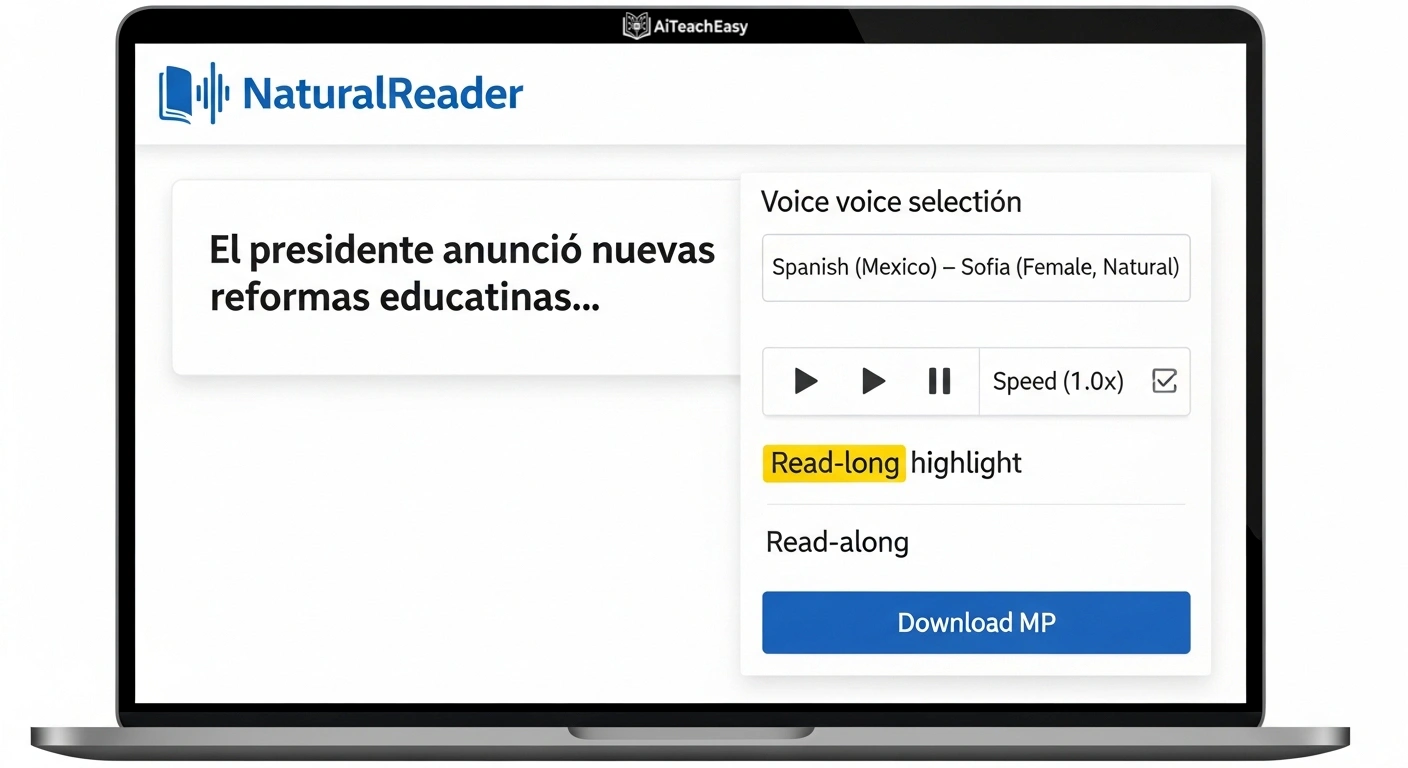
NaturalReader converts any text into lifelike audio across 200+ voices and 50+ languages. Paste an article from a Spanish newspaper, upload a French short story, or type a phrase you want to hear pronounced correctly — and NaturalReader produces natural-sounding audio immediately. The adjustable playback speed and read-along text highlighting make it excellent for building listening comprehension and training your ear to authentic speech patterns.
This is not a conversation practice tool — it is a listening and pronunciation modeling tool, and within that specific function it is the best available.
Languages: 50+ | Price: Free tier / ~$10/month | Best for: Learners who want to develop listening comprehension by hearing authentic-sounding native audio of real target-language text
25. ChatGPT — Best Free Supplement for Advanced Learners
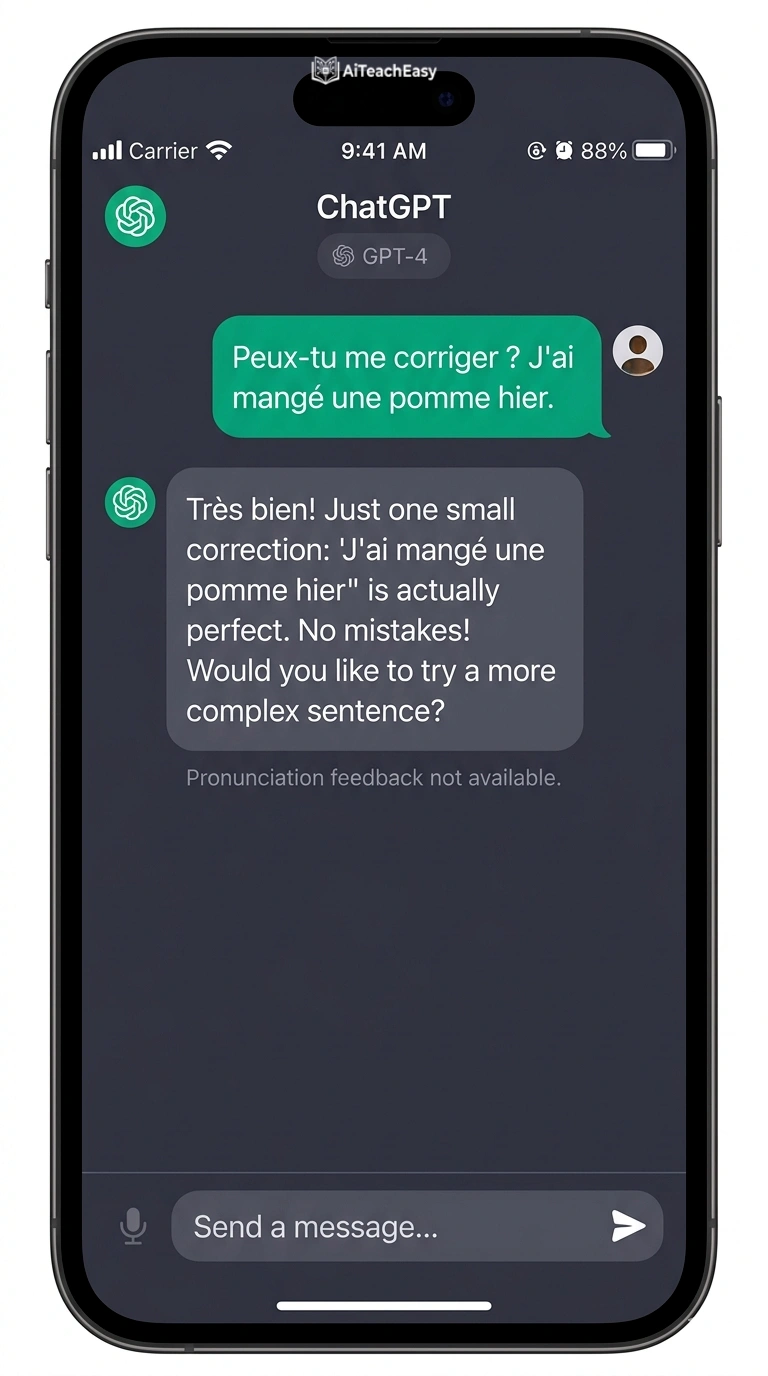
ChatGPT is not a dedicated language learning app, and that shows clearly in direct comparison testing. It does not proactively correct your grammar, it frequently forgets to ask follow-up questions, it cuts off your speech mid-sentence due to poor speech detection for learners, and it offers no pronunciation feedback, vocabulary tracking, or structured curriculum.
But for advanced learners on a budget, it remains remarkably useful as a supplement. You can hold extended conversations in your target language, request grammar explanations on demand, ask for vocabulary lists on specific topics, or have it evaluate your written work. The free tier is sufficient for these use cases. Just do not mistake it for a dedicated language learning tool — it was not built for this and it shows.
If you want to know how to use it strategically alongside your language studies, the guide on how students can use ChatGPT for study is worth reading before you start.
Languages: 100+ | Price: Free / $20/month (Plus) | Best for: Advanced learners who want flexible free AI conversation and grammar explanation as a supplement to dedicated language apps
Master Comparison Table
| Tool | Best For | Languages | Free Option | Paid From | Conversation Quality | Pronunciation AI |
|---|---|---|---|---|---|---|
| Langua | Best Overall | 32+ | Trial | ~$8/mo | ★★★★★ | ★★★★☆ |
| Speak | Beginners | 11+ | Trial | $15/mo | ★★★★☆ | ★★★★★ |
| ELSA Speak | Pronunciation | English | 7-Day | ~$7/mo | ★★★☆☆ | ★★★★★ |
| TalkPal AI | Best Value | 57+ | 14-Day | ~$6/mo | ★★★★☆ | ★★★★☆ |
| Talkio AI | Dialect Precision | 70 / 122 dialects | 7-Day | ~$9/mo | ★★★★☆ | ★★★★★ |
| Praktika | Engaging Daily Lessons | 20+ | Trial | ~$12/mo | ★★★★☆ | ★★★☆☆ |
| Univerbal | Anxious Beginners | 10+ | Free Tier | ~$10/mo | ★★★☆☆ | ★★★☆☆ |
| Duolingo Max | Habit Building | 40+ | Free Tier | $30/mo | ★★★☆☆ | ★★★☆☆ |
| Babbel | Structured Curriculum | 14 | Trial | $12.95/mo | ★★★★☆ | ★★★★☆ |
| Chatterbug | AI + Human Hybrid | 6 | No | $195/mo | ★★★★★ | ★★★★☆ |
| FluentU | Authentic Media | 10+ | 7-Day | $18/mo | ★★★★☆ | ★★★☆☆ |
| Memrise | Native Speaker Video | 22+ | Generous | ~$8/mo | ★★★☆☆ | ★★★☆☆ |
| Rosetta Stone | Immersion / No Translation | 25+ | Trial | ~$12/mo | ★★★★☆ | ★★★★☆ |
| HelloTalk | Free Human Exchange | 150+ | Free | $7/mo | ★★★★★ | N/A |
| Lingvist | Rapid Vocabulary | 4 | Trial | ~$8/mo | ★★★☆☆ | ★★★☆☆ |
| Busuu | CEFR + Community | 12 | Free Tier | ~$10/mo | ★★★★☆ | ★★★☆☆ |
| Pimsleur | Audio / Commuters | 50+ | Trial | $20/mo | ★★★☆☆ | ★★★★☆ |
| Langotalk | Intermediate Speaking | 20+ | 7-Day | $6.67/mo | ★★★★☆ | ★★★★☆ |
| YourTeacher.AI | Bilingual Code-Switching | 10+ | Trial | ~$10/mo | ★★★★☆ | ★★★☆☆ |
| Edcafe AI | Teachers / Creators | 48 | Forever Free | ~$10/mo | ★★★☆☆ | ★★★☆☆ |
| Migaku | Advanced Immersion | 10+ | Trial | ~$9/mo | ★★★★☆ | ★★★☆☆ |
| Drops | Visual Vocabulary | 57 | 5-min/day | ~$10/mo | ★★☆☆☆ | ★★☆☆☆ |
| Lingodeer | Asian Languages | 15 | Trial | ~$8/mo | ★★★☆☆ | ★★★☆☆ |
| NaturalReader | Listening / TTS | 50+ | Free Tier | ~$10/mo | N/A | ★★★★☆ |
| ChatGPT | Free Supplement | 100+ | Free | $20/mo (Plus) | ★★★★☆ | ★☆☆☆☆ |
How to Get the Most Out of AI Language Apps
The tools above are only as good as the habits you build around them. Based on my 90 days of testing and extensive conversations with learners who have reached conversational fluency using these apps, here is what actually works.
1. Practice Every Day — Even Just 15 Minutes
Consistency is the single most powerful variable in language acquisition. Twenty minutes of daily AI conversation practice will outperform two hours on weekends every single time. The brain acquires language through frequent, repeated exposure — not infrequent marathon sessions. Use Duolingo to anchor your daily habit, then use Langua or TalkPal for the actual conversation-building work.
If you want a full framework for consistent AI-assisted study — not just for language learning but for any skill — the guide on how to build an AI study system lays out exactly how to structure your daily practice sessions for maximum retention.
2. Combine AI with at Least One Human Interaction Weekly
AI tools are spectacular for judgment-free, high-volume practice. They are patient, available at 3 AM, and never embarrassed by your mistakes. But they cannot fully replicate the unpredictability, cultural nuance, and emotional connection of talking to a real person. Pair your AI app with a weekly session on HelloTalk, a Chatterbug live tutoring session, or a local language exchange group.
Learners using this hybrid approach consistently report reaching conversational fluency in 6–8 months instead of the typical 12–18. The AI handles volume and consistency. The human handles depth and culture.
3. Match the Tool to Your Current Bottleneck
Do not use Drops when your bottleneck is conversation practice. Do not use TalkPal when you need grammar drills. Diagnose your actual weakness before choosing your primary tool.
- Weak vocabulary → Lingvist or Drops
- Weak pronunciation → ELSA Speak or Talkio AI
- Weak conversation fluency → Langua or Langotalk
- Need cultural immersion → FluentU or Migaku
- Need CEFR certification prep → Busuu
Understanding the best AI tools for your specific study goal matters just as much as choosing the right app. The guide on the best AI tools for exam preparation is particularly useful if your language study goal is tied to a specific test or certification.
4. Turn On “Strict Correction” Mode
Most AI language apps default to gentle, encouraging feedback — which is great for confidence but bad for accuracy. Comfortable mistakes become permanent habits. Explicitly tell your AI tutor to correct every grammar and vocabulary mistake immediately, or activate strict correction mode if the app offers it. This single habit change significantly accelerates accuracy gains.
The parallel principle applies to any AI-assisted study — if you want to understand how AI feedback generators work more broadly, that context helps you understand what to ask for and how to interpret corrections you receive.
5. Review New Vocabulary the Following Day
Every AI conversation generates new vocabulary. Langua, Talkio, and TalkPal all save these words for later review in their wordbook features. Spend 5 minutes each morning reviewing yesterday’s new words before starting that day’s session. Spaced repetition across speaking contexts — hearing a word in conversation, reviewing it the next morning, seeing it in a new context — accelerates retention faster than any other method.
This also connects directly to how AI tools for memorization work: the principle of spaced, varied repetition is consistent whether you are memorizing vocabulary, historical dates, or medical terminology.
FAQs — Answered by an Expert
What is the best AI app to learn a language in 2026?
Langua (by LanguaTalk) is the best overall AI language learning app in 2026 for most learners. Its conversation depth, native-quality voice cloning, adaptive vocabulary system, and permanent conversation history are unmatched by any competitor tested in this review. For absolute beginners, Speak is the stronger starting point thanks to its structured curriculum. For pronunciation specifically, ELSA Speak is the top choice. And for budget-conscious learners, TalkPal AI at ~$6/month offers the best value across the widest language selection.
Can AI language learning apps actually make you fluent?
AI apps can significantly accelerate your path to fluency — but they cannot deliver fluency on their own. Consistent daily AI speaking practice (15–20 minutes) combined with weekly interaction with native speakers can compress the typical 12–18 month timeline to conversational fluency down to 6–8 months. True fluency requires cultural immersion, reading authentic content, listening to native media, and genuine human interaction. Think of AI apps as your most available, most patient practice partner — not your only teacher.
Is Duolingo enough to learn a language?
No — and millions of learners with 1,000-day streaks who freeze up when a real native speaker says hello prove this. Duolingo is an exceptional habit-building tool that will genuinely build vocabulary and basic grammar patterns. But it does not give you sufficient speaking practice to reach conversational fluency. Use Duolingo as your daily warm-up (5–10 minutes) and pair it with a conversation-focused app like Langua, Speak, or TalkPal AI for actual fluency-building.
What is the best free AI language learning app?
For genuinely free options, HelloTalk (real human language exchange, 150+ languages), Duolingo’s free tier (gamified vocabulary and grammar), Memrise’s free tier (native speaker video vocabulary), and ChatGPT (conversation practice and grammar explanation) are the strongest. For free trials that provide meaningful access, TalkPal AI offers the longest (14 days), ELSA Speak provides 7 days of full access, and Edcafe AI has a forever-free tier. You can also find additional free tools worth knowing about in this guide to free AI tools with no signup required.
How does AI language learning compare to a private tutor?
AI language learning tools cost 6–15/monthversus30–60/hour for a private tutor — making them roughly 95% cheaper for equivalent hours of practice time. They are available 24/7, infinitely patient, never embarrassed by your mistakes, and adaptive to your personal weak spots. The disadvantages are real: they cannot offer genuine cultural nuance, emotional connection, or the accountability of a human relationship. The optimal approach in 2026 combines both: AI for high-volume daily practice and humans for quality immersion and cultural depth.
Which AI language app is best for pronunciation?
ELSA Speak is the gold standard — its AI is trained specifically on non-native speakers and identifies sound-level errors that generic speech recognition misses entirely. Talkio AI comes second with its word-by-word pronunciation scoring across 122 dialect-specific tutors. Speak also has excellent pronunciation checking integrated into its lesson structure. For dialect-specific accent reduction (Mexican Spanish versus Castilian Spanish, for example), Talkio is the only app that operates at that level of granularity.
What is the best language learning app for beginners?
Speak is the best AI-powered app for beginners in 2026 — it forces speaking practice from day one within a structured curriculum. Duolingo is excellent for beginners who need habit-building and low-pressure vocabulary exposure. Univerbal is the gentlest option for learners who are anxious about mistakes. For beginners tackling Japanese, Korean, or Mandarin specifically, Lingodeer provides clearer grammar scaffolding than any other app for those writing systems.
How many minutes a day should I practice with an AI language app?
Research and real learner experience both converge on the same answer: 15–20 minutes of daily focused conversation practice produces better results than 2-hour weekend sessions. The optimal daily routine looks something like this: 5–10 minutes of vocabulary review (Drops, Lingvist, or your wordbook), 15–20 minutes of AI conversation practice (Langua, TalkPal, or Talkio), and 10–15 minutes of passive listening during commutes or chores (podcasts, FluentU, YouTube in your target language). That 30–45 minute daily routine sustained for 6–12 months produces genuinely impressive results.
Is Rosetta Stone still worth it in 2026?
Yes — with important context. Rosetta Stone’s immersion methodology is genuinely research-backed and produces strong intuitive language sense for many learners. Its TruAccent pronunciation technology has 25 years of real-world refinement behind it. However, compared to newer AI-first apps like Langua or Speak, Rosetta Stone’s conversation AI feels less sophisticated and the interface reflects its age. It remains an excellent choice specifically for learners who want the no-translation immersion approach. For pure conversation practice, newer apps have overtaken it.
Can I use ChatGPT to learn a language?
Yes, ChatGPT can be a useful supplement — particularly for advanced learners on a budget. You can hold extended target-language conversations, request grammar explanations on demand, get vocabulary lists on specific topics, and have your writing evaluated. The limitations are significant for serious language learning: no pronunciation feedback, no vocabulary tracking, poor speech detection for learners, no structured curriculum, and it frequently forgets to correct mistakes unless explicitly reminded. Use it as a free supplement — not a primary learning tool. The guide on how students can use ChatGPT for study shows how to prompt it effectively for language practice specifically.
Are there good AI language learning tools for students with special needs?
Yes — several apps on this list are well-suited for learners with diverse needs. NaturalReader is used extensively by students with dyslexia and reading difficulties for its text-to-speech capabilities. Drops and its visual learning approach works well for learners who process information better through images than text. Univerbal‘s judgment-free, low-pressure environment suits learners with language anxiety or social communication differences. For a broader look at how AI is supporting diverse learners in educational settings, the guide on AI tools for special needs students is worth reading alongside this one.
Final Verdict
If I could give you only one recommendation from 90 days of testing 25 apps across eight languages, it would be this: start with Langua for conversation, ELSA for pronunciation, and TalkPal if your budget is tight. Add Drops as a 5-minute daily vocabulary warm-up, and schedule one weekly session with a real human on HelloTalk. Sustain that combination for six months and you will be conversationally fluent — not because any single app is magic, but because the compound effect of consistent, layered practice adds up faster than any traditional method ever could.
Language learning in 2026 has never been more accessible, more affordable, or more scientifically grounded. The only remaining obstacle is consistency — and that one is on you.
About the Author
Prof. Irfan is an applied linguist and EdTech researcher with over 15 years of experience in Second Language Acquisition research and educational technology evaluation. Having learned six languages himself — including Arabic, English, Urdu, Spanish, French, and Mandarin — he brings both academic rigor and genuine learner perspective to every review and recommendation.
He has published research on AI-mediated language acquisition, taught linguistics at the university level, and consulted with EdTech startups on pedagogically sound language tool design. His work sits at the intersection of cognitive science, applied linguistics, and educational technology — fields that rarely talk to each other but must, if AI language tools are to fulfill their genuine potential.
For this guide, Prof. Irfan personally tested all 25 tools over 90 days across eight languages, cross-referenced his findings with peer-reviewed SLA literature, and consulted learner community feedback from r/languagelearning, Trustpilot, and independent app review platforms to ensure every recommendation is grounded in real-world results rather than marketing claims.
Credentials: M.A. Applied Linguistics · Ph.D. Educational Technology · 6 Languages Spoken · 15+ Years Research Experience · University Lecturer · EdTech Advisor
Last reviewed and updated: April 2026. Pricing and features may change — always verify current details on each tool’s official website before subscribing.