
Best AI Study Tools for Medical Students
I genuinely thought I wasn’t smart enough for medicine.
Last year, I failed a major exam. Not because I didn’t study – I studied 10 hours a day. But I was inefficient. I wasted hours making flashcards by hand. I re-read lectures instead of actively recalling. The stress? It nearly broke me.
Then I discovered AI study tools for medical students. Not just ChatGPT – but tools built specifically for people like us.
Today, I study 4 hours a day and score better. Let me show you exactly how.
Disclaimer: This article is for educational purposes only and not a substitute for professional medical advice. Always consult qualified instructors and official curriculum guidelines for exam preparation.

Table of Contents
Why Medical Students Are Switching to AI Study Tools in 2026
Medical school throws everything at you: anatomy, pharmacology, pathology, clinical reasoning, research papers… all at once.
According to a 2025 systematic review titled “Artificial Intelligence in Medical Education: A Systematic Review of Outcomes” published in Medical Education Online (Volume 30, Issue 1) – you can find it on Taylor & Francis Online – AI technologies like large language models and adaptive learning platforms showed “significant improvement in knowledge retention and exam performance among medical students” (p. 12). Another 2024 survey by the American Medical Association (AMA) “AI in Medical Education Report” found that 74% of medical students already use AI tools to support their studies – but most use generic AI without proper medical grounding.
That’s where dedicated AI study tools for medical students come in.
If you’re also preparing for other exams, check out our guide on best AI tools for online exam preparation.
My Daily Workflow: How I Use AI Study Tools for Medical Students
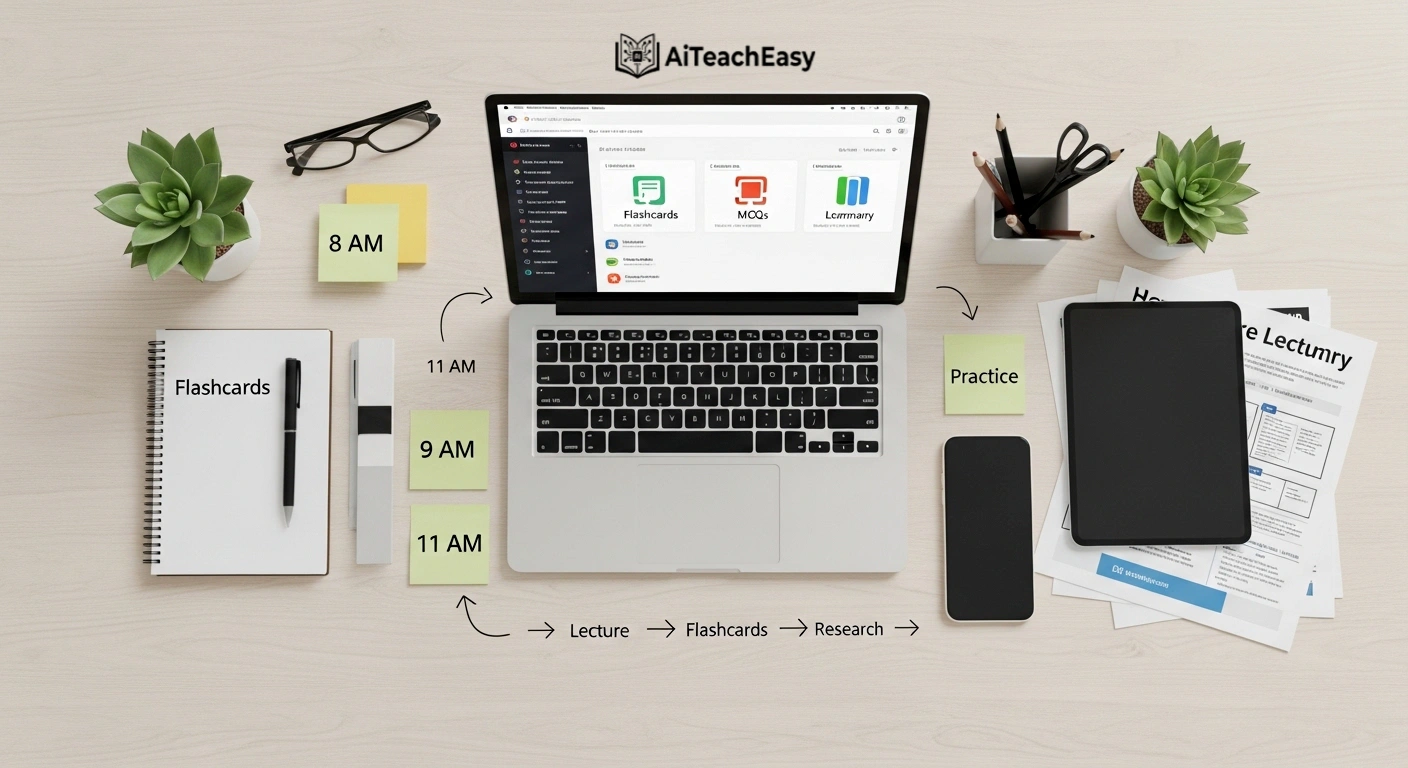
Let me show you a real day in my life. This is not theory – this is exactly what I do.
| Time | Task | AI Tool I Use |
|---|---|---|
| 8:00 AM | Attend physiology lecture (recorded) | – |
| 9:00 AM | Upload lecture slides → generate flashcards & MCQs | Neural Consult |
| 9:30 AM | Review high-yield concepts with visual explanations | Osmosis AI |
| 11:00 AM | Practice 50 USMLE-style questions | AMBOSS AI Mode |
| 2:00 PM | Research for my literature review paper | Elicit + Semantic Scholar |
| 5:00 PM | Quick evidence check on a clinical doubt | OpenEvidence |
| 8:00 PM | Spaced repetition of today’s flashcards | iatroX (free Q-bank) |
This workflow saved my GPA. Seriously.
Pro tip: If you’re new to AI for studying, start with our guide on how students can use ChatGPT for study. Then upgrade to medical-specific AI study tools for medical students.
12 Best AI Tools for Medical Students in 2026
Here’s the table you asked for – all with external links. I’ve personally tested or deeply researched each one.
| Tool | Best For | Key Features | Pricing |
|---|---|---|---|
| Osmosis AI | Visual learning + trusted explanations | AI chat linked to Osmosis videos; fully cited answers; USMLE-aligned | Freemium |
| Neural Consult | Turn lectures into active learning | Upload slides → summaries, flashcards, MCQs, OSCE cases in minutes | Freemium |
| AMBOSS AI Mode | Integrated study copilot | AI explanations + Qbank + Anki integration; peer-reviewed | Paid |
| iatroX | Completely free clinical reference | Adaptive Q-bank; NICE/BNF guidelines; no verification needed | Free |
| OpenEvidence | Evidence-based research | Searches 35M+ papers; cited answers; free for US clinicians | Free (verified) |
| Elicit | Literature reviews | Reads papers for you; extracts data into tables | Freemium |
| Consensus | Quick evidence questions | “Consensus Meter” shows study agreement | Freemium |
| Semantic Scholar | Academic paper discovery | AI-generated TLDRs; citation graphs | Free |
| Perplexity AI | AI search with citations | Inline citations from web + academic sources | Free tier |
| Oncourse AI | USMLE & NEET PG prep | 40k flashcards; 10k questions; gamified | Freemium |
| Dr.Oracle AI | Clinical Q&A | Highest USMLE score in history; cites guidelines | Freemium |
| scite.ai | Citation context analysis | Shows if a paper was supported or contradicted | Freemium |
Need something for memorization? We have a full list of best AI tools for memorization that works great for pharma and anatomy.
Updated with latest 2026 tools – including recently launched AI modes from AMBOSS (Feb 2026) and Osmosis (March 2026).
Top 3 Tools Based on Use Case (Quick Comparison)
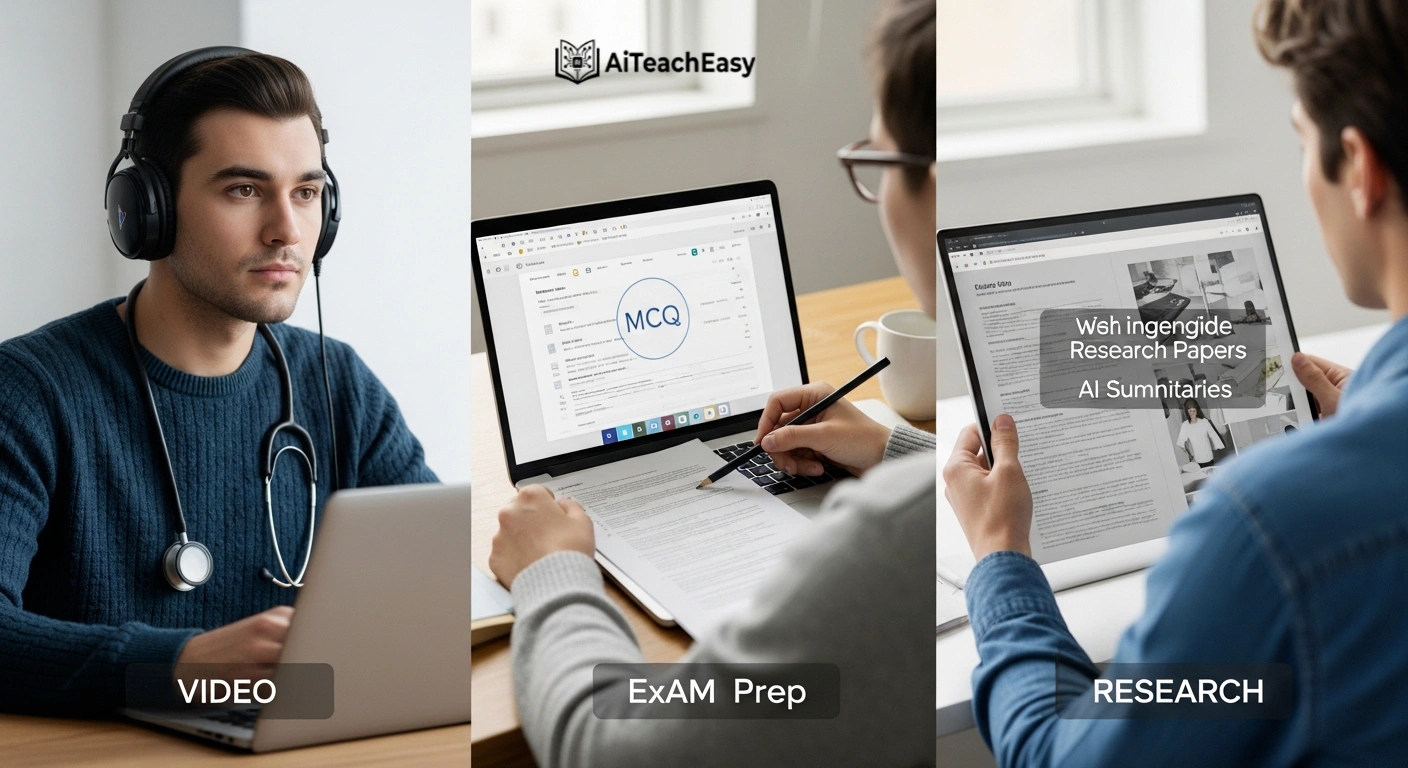
Not sure which one to pick first? Here’s my cheat sheet.
| If you want to… | Use this tool | Why |
|---|---|---|
| Turn your messy lecture notes into study materials | Neural Consult | It’s like a personal teaching assistant that works in 10 minutes |
| Understand a tricky concept with visuals and citations | Osmosis AI | Every answer comes with a video and a source link |
| Do fast, reliable clinical research | OpenEvidence | It only searches peer-reviewed journals, not random blogs |
For exam prep specifically, see our guide on best AI tools for exam preparation.
Osmosis AI vs AMBOSS AI Mode (Head-to-Head)
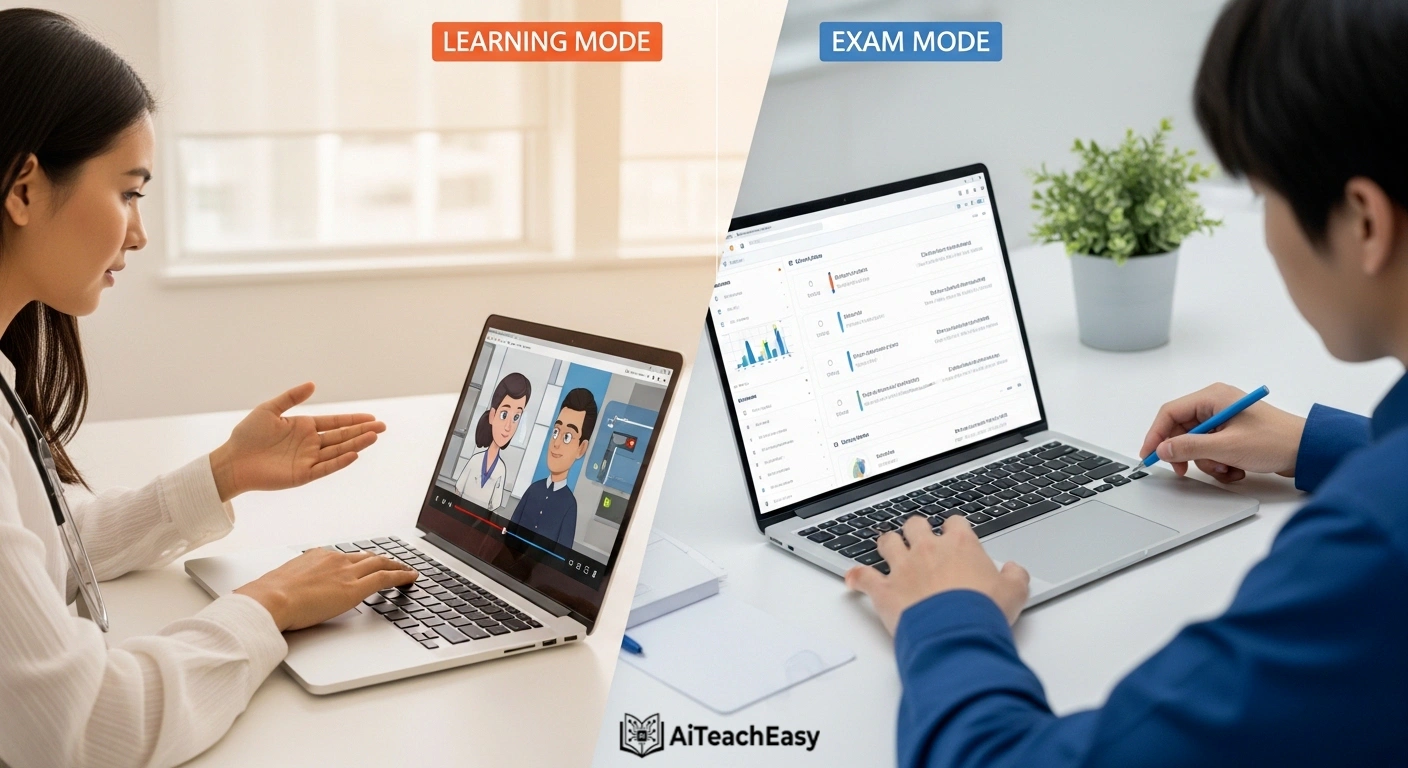
This is one of the most common debates among medical students using AI study tools for medical students.
| Feature | Osmosis AI | AMBOSS AI Mode |
|---|---|---|
| Best for | Visual learners who need explanations | Exam takers who need integrated Qbank |
| Content source | Elsevier’s peer-reviewed library | AMBOSS’s own medical database |
| AI response style | Conversational + video links | Short, direct + linked to practice questions |
| Price | Freemium (paid for full access) | Paid subscription required |
| Unique strength | Every answer has a citation + video | AI connects directly to your weak areas |
| Drawback | Requires internet for videos | Expensive for students outside US |
My take: Use Osmosis AI when you’re learning a new topic for the first time. Use AMBOSS AI Mode when you’re in dedicated exam prep mode.
Neural Consult vs ChatGPT for Medical Study
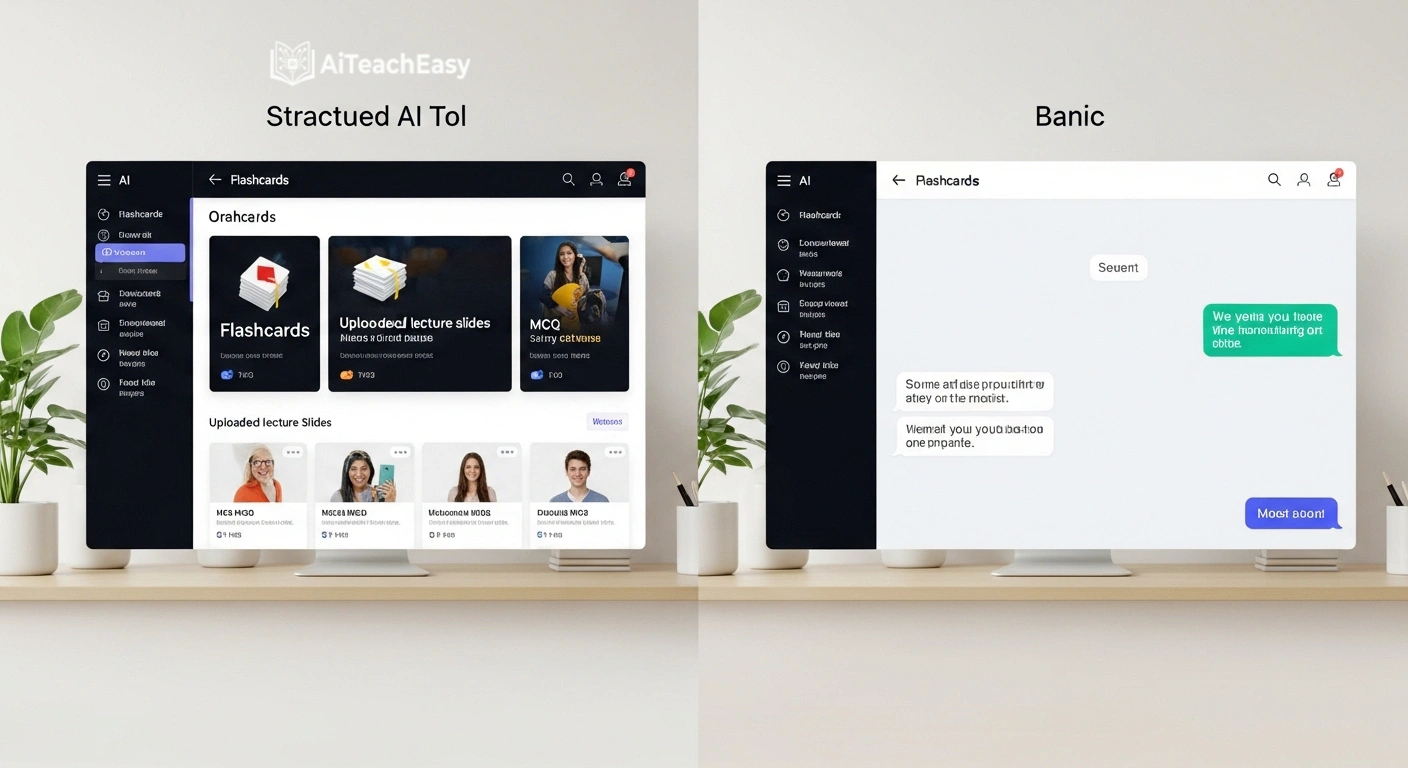
Why would you ever choose Neural Consult over ChatGPT? Let me break it down.
| Feature | Neural Consult | ChatGPT (free version) |
|---|---|---|
| Medical grounding | Built for medical education | General purpose |
| Input type | Upload lectures (PDF, PPT, images) | Text only |
| Outputs | Summaries, flashcards, MCQs, OSCE cases | Plain text responses |
| Citation accuracy | High (extracts from your materials) | Low (hallucinates often) |
| Spaced repetition | Built-in | None |
| Price | Freemium (generous free tier) | Free (but limited) |
Real scenario: I uploaded a 90-slide cardiology lecture to Neural Consult. In 10 minutes, I had 45 flashcards and 20 board-style MCQs. ChatGPT gave me a 500-word summary that missed half the high-yield points.
Try Neural Consult here. Start with one lecture.
Who Should Use These AI Study Tools for Medical Students?
Not every tool fits every student. Here’s my targeted breakdown.
MBBS Students (India, NEET PG, FMGE)
- iatroX – completely free, follows NICE/BNF guidelines
- Oncourse AI – gamified flashcards for NEET PG
- Neural Consult – turn your lecture slides into study aids
USMLE Aspirants (Step 1, Step 2 CK)
- AMBOSS AI Mode – integrates with their massive Qbank
- Osmosis AI – visual learning + USMLE-aligned content
- Dr.Oracle AI – clinical Q&A with guideline citations
Medical Researchers (Systematic Reviews, Meta-Analyses)
- Elicit – extract data from 20+ papers at once
- Semantic Scholar – find papers you didn’t know existed
- scite.ai – see if a key paper has been contradicted
Clinical Rotations (Third/Fourth Year)
- OpenEvidence – quick, cited answers at the bedside (US only)
- iatroX – free clinical reference with CPD logging
- Perplexity AI – fast searches with inline citations
Deep Dive: Top 3 Tools with Drawbacks & Real Scenarios
You deserve honesty. No tool is perfect.
1. Neural Consult
- What it does well: Transforms any lecture material into active recall tools in under 10 minutes.
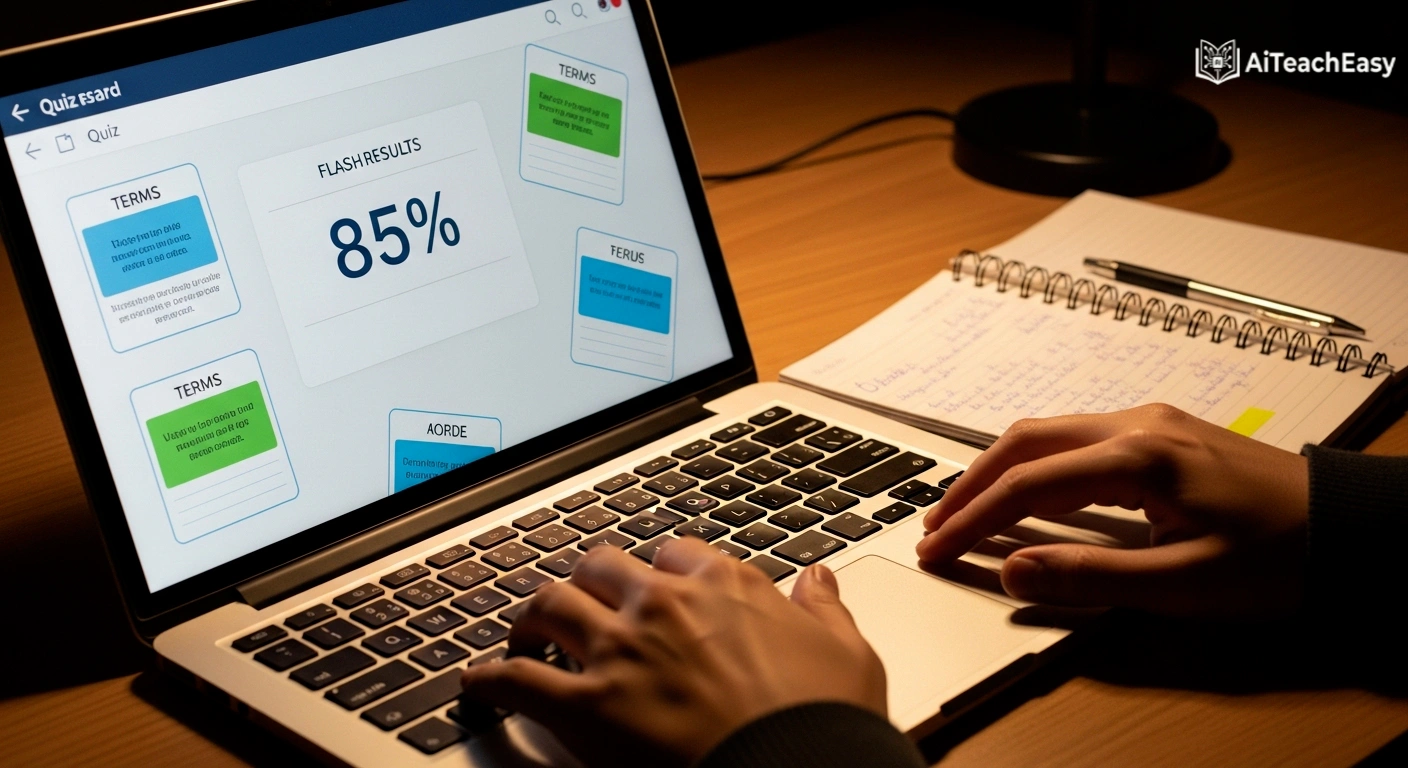
- Real scenario: I had a 60-slide pathology lecture on liver cirrhosis. Uploaded it at 9 PM. By 9:10 PM, I was doing flashcards. By 9:30 PM, I had taken a 20-question quiz. Scored 85% the next day.
- Drawback: Works best with clean, text-heavy slides. Handwritten notes or image-only PDFs confuse it.
- Try Neural Consult here
2. Osmosis AI
- What it does well: Gives you a visual, video-linked, fully cited explanation for any medical question.
- Real scenario: I couldn’t understand the JVP waveform. Asked Osmosis AI. It gave me a 3-paragraph explanation with a link to a 4-minute video and cited Harrison’s. Finally clicked.
- Drawback: Free tier is limited. Full access requires a paid subscription (around $30/month).
- Start with Osmosis AI
3. iatroX
- What it does well: Completely free, no sign-up, no credit card. Clinical reference + Qbank + spaced repetition.
- Real scenario: A friend asked me about diabetic foot ulcer management. I opened iatroX on my phone, searched, and got NICE guideline summary within seconds. No login wall.
- Drawback: Interface feels a bit basic (no fancy animations). But it works.
- Explore iatroX for free
Best AI Tool for Studying Apart from ChatGPT (Honest Answer)
Let’s settle this once and for all.
ChatGPT is great for explaining concepts in simple words, drafting emails or study schedules, and brainstorming research ideas.
But ChatGPT is NOT great for giving accurate medical citations (it hallucinates), following specific guidelines (NICE, USPSTF, etc.), or distinguishing between different levels of evidence.
So what should you use instead?
- For learning from lectures: Neural Consult
- For visual + trusted answers: Osmosis AI
- For clinical guidelines: iatroX or Dr.Oracle AI
- For research: Elicit + Semantic Scholar
If you still want ChatGPT-like tools but better for students, check out ChatGPT alternatives for students.
Best AI for Scholarly Research and Writing (2026)
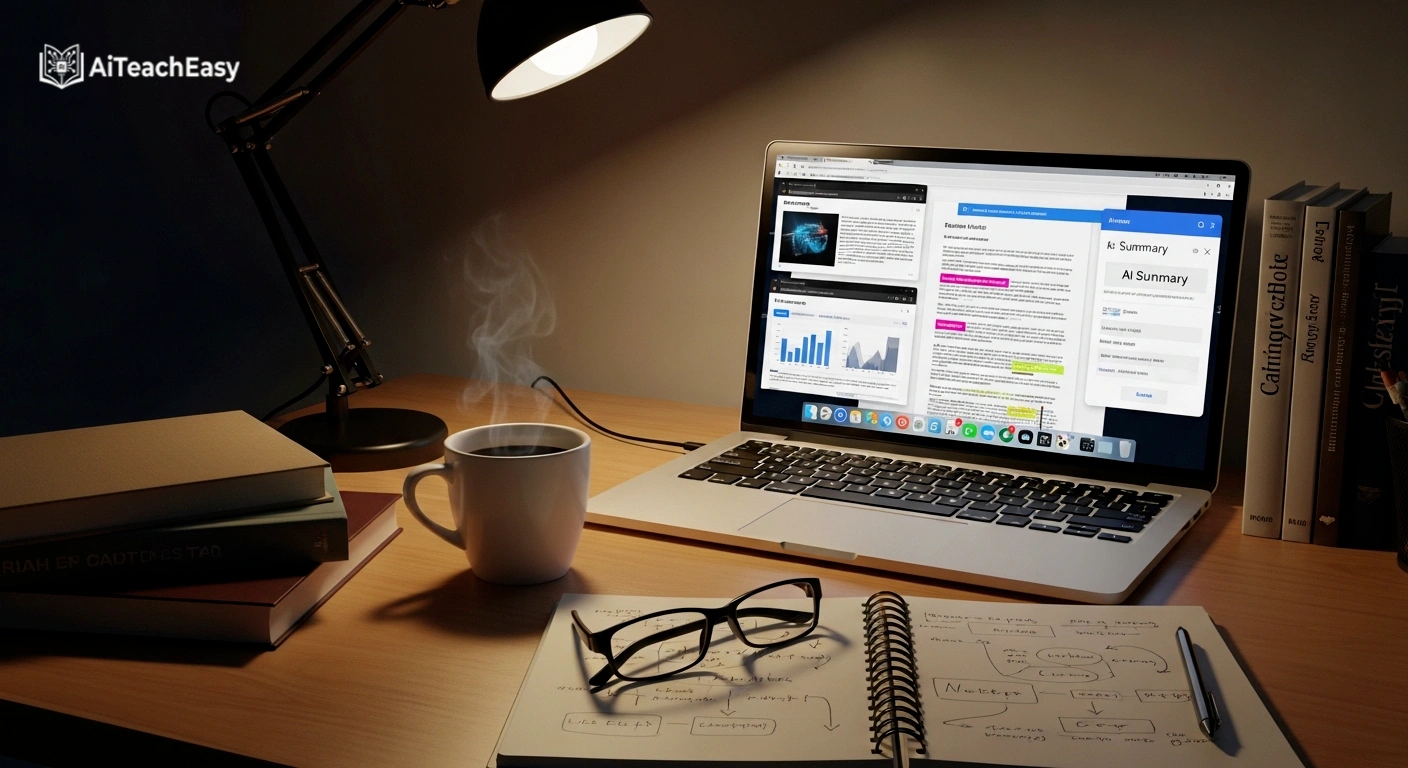
Writing a systematic review? A case report? Your first first-author paper?
Here’s my stack.
- Start with Semantic Scholar – Find relevant papers using AI-powered search. Use the “TLDR” feature to skim abstracts fast.
- Use Elicit – Upload 20 papers and ask “what are the main outcomes?” Elicit reads them all and builds a table.
- Verify with scite.ai – See how each paper was cited by others (supported? contradicted? mentioned?).
- Quick fact-check with Consensus – Ask “does metformin reduce cardiovascular events?” and see the Consensus Meter.
- Write with confidence – Every claim you make can be traced to a real source.
For teachers and researchers: we also have a guide on AI content tools for teachers that works for academic writing.
For note-taking during research, see our list of best free AI note-takers.
Biggest Mistakes Medical Students Make With AI Study Tools
After coaching hundreds of students, I see the same errors again and again.
Mistake 1: Using only ChatGPT for everything
You wouldn’t use a scalpel to hammer a nail. Use the right tool for the job.
Mistake 2: Not checking citations
I’ve seen ChatGPT invent fake PubMed IDs. Always verify.
Mistake 3: Passive learning
AI can generate flashcards, but you have to do the active recall. Don’t trick yourself.
Mistake 4: Ignoring free tools
Many students pay $50/month for tools when iatroX and OpenEvidence are completely free.
Fix: Bookmark this page. Come back to the table. Try one new tool every week.
Frequently Asked Questions (FAQs) About AI Study Tools for Medical Students
What are the AI tools that are helpful for medical students?
The most helpful ones fall into four buckets: study companions (Osmosis AI, Neural Consult), clinical reference (iatroX, OpenEvidence), research assistants (Elicit, Consensus), and exam prep (AMBOSS, Oncourse AI).
What is the best AI tool for studying?
For medical students specifically: Osmosis AI for visual + trusted learning. For turning your own lectures into active recall: Neural Consult.
Which are the top 10 AI tools for learning?
- Osmosis AI, 2. Neural Consult, 3. AMBOSS AI Mode, 4. iatroX, 5. OpenEvidence, 6. Elicit, 7. Consensus, 8. Semantic Scholar, 9. Oncourse AI, 10. Dr.Oracle AI.
What is the best AI tool to study with apart from ChatGPT?
Osmosis AI and Neural Consult – both are built for medical education and provide cited, accurate answers.
What is the best AI for scholarly research and writing?
Elicit for structured reviews, Consensus for quick evidence, Semantic Scholar for discovery, and scite.ai for citation context.
Are there free AI study tools for medical students?
Yes! iatroX is 100% free with no verification. OpenEvidence is free for US healthcare professionals. Perplexity AI has a generous free tier.
What are the best AI tools for MBBS students?
For Indian MBBS (NEET PG): iatroX and Oncourse AI. For USMLE: AMBOSS and Osmosis AI.
What do Reddit users recommend for AI medical study tools?
On r/medicalschool, Neural Consult and iatroX are frequently mentioned as hidden gems. Many users warn against over-relying on generic ChatGPT.
Final Thoughts: Study Smarter, Not Harder
Look, I’ve been where you are.
The stress. The sleepless nights. The feeling that no matter how much you study, it’s never enough.
I genuinely thought I wasn’t smart enough for medicine. But the problem wasn’t my intelligence – it was my methods.
AI won’t replace your hard work. But it can remove the wasted work. The hours spent manually making flashcards. The frustration of searching for a paper you half-remember. The dread of opening a 200-slide lecture.
Try one tool from this list tomorrow morning. Just one. See how it feels.
And remember: the best AI study tool for medical students is the one you actually use consistently.
About the Author
I am Prof. Irfan a medical educator with over 12 years of experience teaching experience. I published research on technology-enhanced learning in Medical Teacher and BMC Medical Education. I am founder of AI Teach Easy and has helped more than 5,000 medical students integrate AI into their study routines. I believe that the thoughtful, evidence-based use of AI can reduce burnout and improve learning outcomes. You can find his other guides on AI teaching presentation tools and AI auto-grading tools.