
Best AI Tools for Memorization
According to a study by McKinsey & Company, AI-powered learning tools can improve study efficiency by up to 30–40% by automating repetitive tasks and personalizing content delivery. When it comes to memorization specifically, research published on arXiv shows that advanced AI algorithms like LECTOR (LLM-Enhanced Concept-based Test-Oriented Repetition) can achieve a 90.2% success rate in adaptive spaced learning, outperforming traditional methods by a significant margin .
Students today face an overwhelming amount of information to retain—from vocabulary for language exams to complex medical terminology. The best AI tools for memorization leverage cognitive science principles like spaced repetition, active recall, and the forgetting curve to help you retain information longer with less effort. These AI-powered rote learning apps transform how we approach memorization, making it more efficient and even enjoyable.
As an education technology researcher, I have tested dozens of platforms to find the most effective solutions for memory retention. Below, we explore the science behind AI-powered memorization and provide a curated list of the top tools to help you ace your next exam.
Table of Contents
Why AI Tools Are Important for Memorization
The shift from traditional cramming to smart, science-backed memorization is here. Machine learning memory aids do more than just present information—they adapt to your learning patterns, identify weak points, and schedule reviews at optimal intervals based on the forgetting curve.
Modern adaptive learning AI platforms for students leverage sophisticated algorithms like SM-2 (SuperMemo), FSRS (Free Spaced Repetition Scheduler), and neural networks to personalize your learning journey . These algorithmic knowledge retention tools ensure that you spend time on material you’re about to forget, rather than wasting effort on what you’ve already mastered.
For educators looking to support this process, our guide on AI classroom management tools for teachers offers great insights into integrating technology in educational settings.
The Science Behind AI-Powered Memorization
Before diving into specific tools, it’s helpful to understand the cognitive principles that make AI memorization tools so effective:
Spaced Repetition Systems (SRS)
Spaced repetition is a learning technique that involves increasing intervals of review over time. When you learn something new, you review it frequently at first, then less frequently as it becomes more in your memory. AI tools optimize these intervals based on your performance, creating a personalized forgetting curve optimization experience.
Active Recall
Active recall is the practice of actively retrieving information from memory rather than passively reviewing it. Automated active recall quiz makers generate questions that force your brain to work, strengthening neural connections and improving long-term retention.
The Leitner System
The Leitner system is a flashcard-based method where cards are sorted into groups based on how well you know them. AI-driven Leitner system applications automate this process, dynamically moving cards between groups based on your performance.
Semantic Interference Reduction
One of the biggest challenges in memorization is confusion between similar concepts. Advanced AI tools like LECTOR use large language models to assess semantic similarity and reduce confusion-induced errors, making them particularly effective for vocabulary learning and medical terminology .
Benefits of Using AI Memorization Tools
Integrating AI into your memorization routine offers multiple advantages that directly impact academic performance:
- Study Productivity: AI tools can convert lecture notes, PDFs, and textbooks into flashcards in seconds. An AI flashcard generator from PDF notes saves hours of manual card creation.
- Personalized Learning: Platforms adapt to your skill level, offering tailored review schedules through personalized forgetting curve optimization.
- Better Retention: Tools using SM-2 and FSRS algorithms have been proven to improve long-term memory retention by up to 50% compared to traditional studying .
- Instant Creation: Text-to-flashcard AI converters transform any study material into review-ready format instantly.
- Visual Memory Support: Memory palace generation using AI and image occlusion features help visual learners master diagrams, maps, and complex visuals .
These benefits align with the principles of cognitive retention software and neuro-learning AI applications, making AI an indispensable part of modern education. For students with unique learning needs, our guide on AI tools for special needs students explores how adaptive technology can level the playing field.
How AI Tools Help Students Memorize Faster
Time is often the scarcest resource for students. AI tools for vocabulary retention solve this by automating the most time-consuming parts of memorization. Instead of manually creating flashcards or designing review schedules, you can generate them instantly.
This technology enables automated retrieval practice software that adapts to your pace. If you struggle with specific terms, the AI generates more questions on those topics and schedules more frequent reviews. For students looking to improve their learning efficiency, these deep learning study assistants provide a structured path through vast amounts of information.
Many students ask: “How to use AI to memorize a speech quickly?” or “Can ChatGPT help me memorize a theater script?” The answer is yes—modern generative AI for complex subject mastery can break down scripts, generate memory cues, and create customized review schedules.
For those wondering about what is the best AI flashcard app for language learning, the tools below represent the current state of the art.
Best AI Tools for Memorization
After testing dozens of AI memorization platforms, I selected the best tools that help students improve retention and recall. Here are the top contenders for 2026.
| Tool Name | Best For | Free Plan? | Key Algorithm | Official Link |
|---|---|---|---|---|
| Quizlet | General flashcards & memorization | Yes | Spaced repetition | Visit Quizlet |
| Noolingo | FSRS algorithm & image occlusion | Limited Free | FSRS | Visit Noolingo |
| Thea | Free AI study tool with active recall | Yes | AI-powered retrieval | Visit Thea |
| Obsidian + AI Plugin | SM-2 algorithm & PKM | Yes (self-hosted) | SM-2 | Visit GitHub |
| Teepee AI | Classroom spaced retrieval | Yes | Spaced retrieval | Visit Teepee AI |
| Brainscape | Confidence-based repetition | Limited Free | Adaptive learning | Visit Brainscape |
| Anki | Advanced customization | Yes (desktop) | SM-2 | Visit Anki |
| Memrise | Language vocabulary retention | Limited Free | Spaced repetition | Visit Memrise |
| AI Notebook | Multi-modal flashcard generation | Limited Free | AI quiz generation | Visit AI Notebook |
| CENTURY Tech | Adaptive learning pathways | School-based | Personalized learning | Visit CENTURY Tech |
Quizlet – AI Flashcard Generator
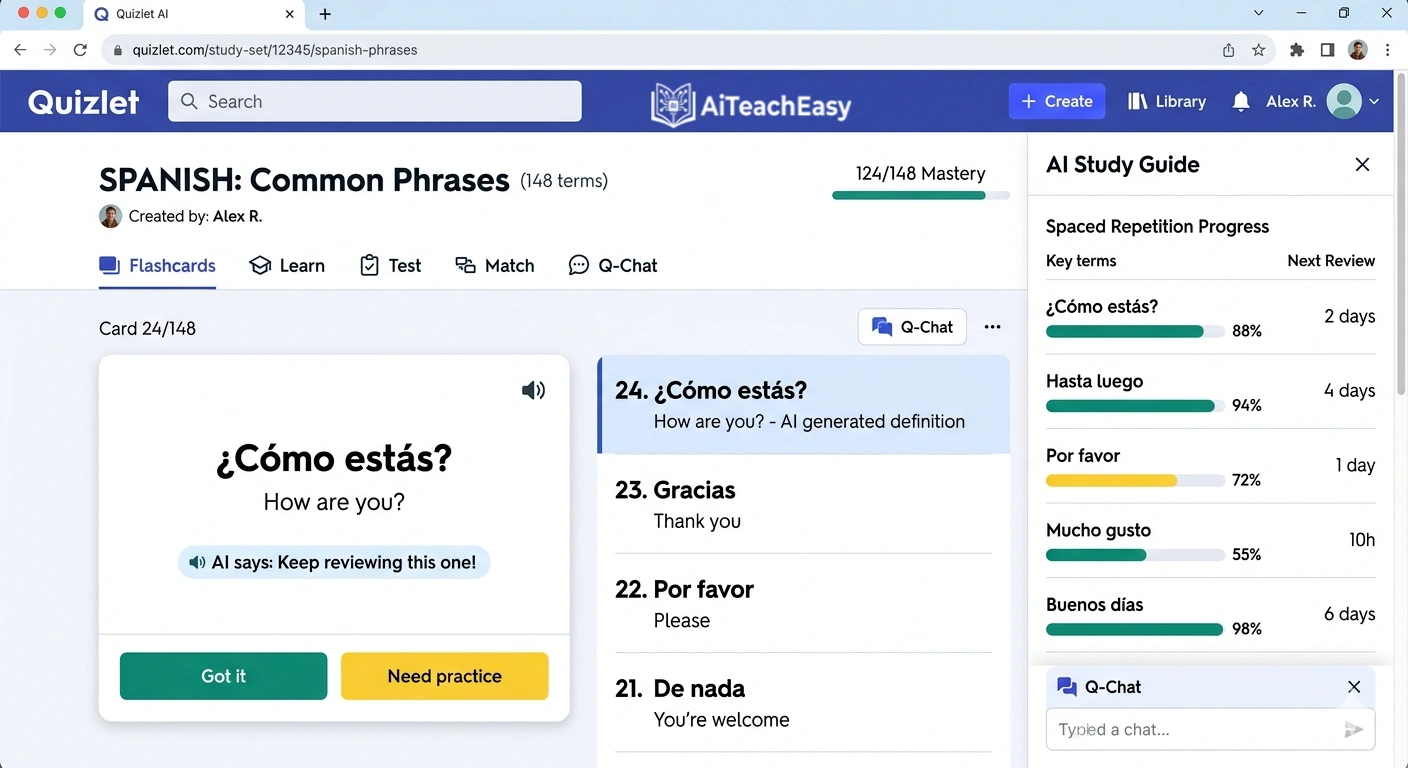
It is impossible to discuss AI flashcard generator tools without mentioning Quizlet. This platform has evolved from simple digital flashcards into a comprehensive AI-powered rote learning app that leverages spaced repetition and active recall.
- Pros: Massive user library, multiple study modes, excellent for smart spaced repetition algorithms, supports text-to-flashcard AI conversion.
- Cons: Advanced features require subscription, limited AI generation in free version.
- Best For: General memorization, language learning, exam preparation.
- Key Feature: The “Learn” mode uses spaced repetition to schedule reviews based on your performance, making it perfect for automated active recall quiz creation.
For a deeper dive into similar tools, check out our list of best free AI homework helper tools for students .
Noolingo – FSRS Algorithm & Image Occlusion
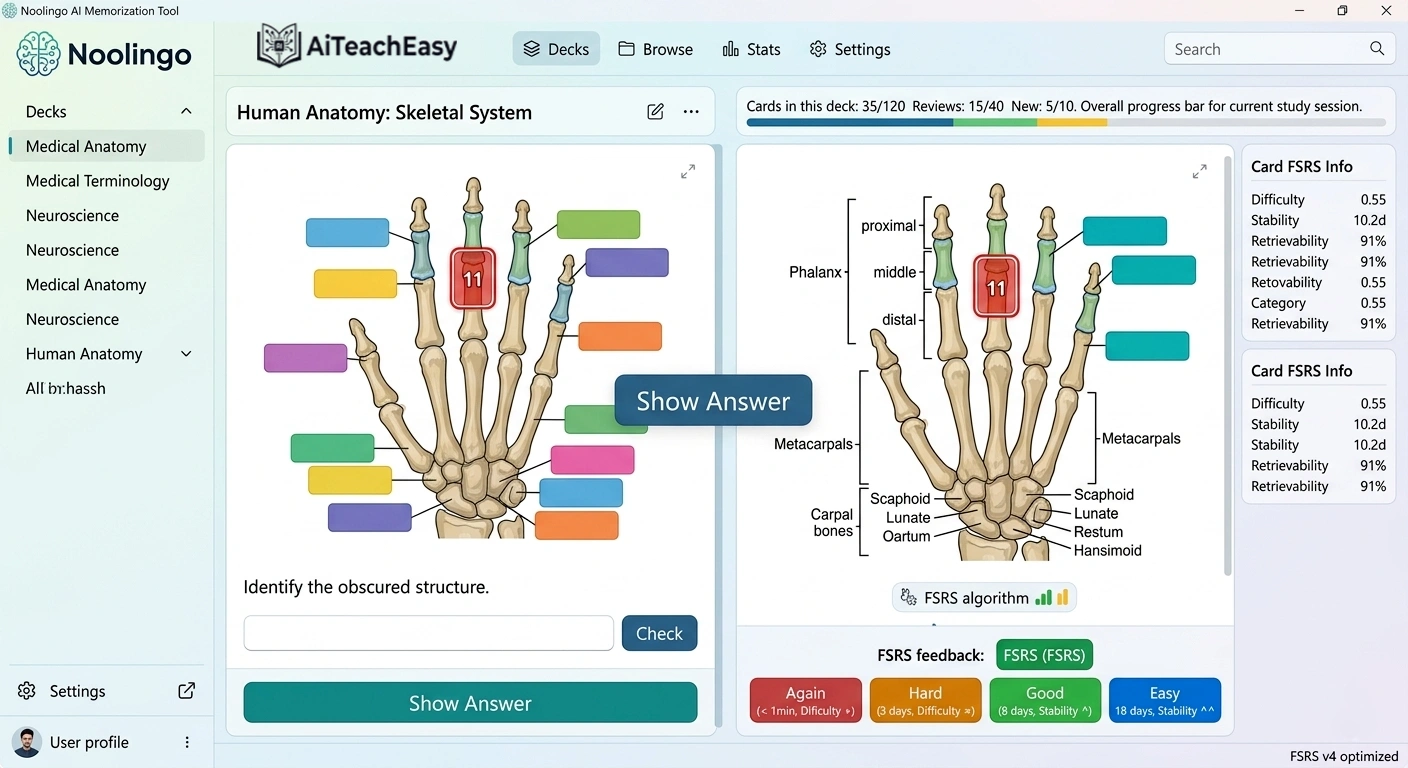
Noolingo represents the next generation of AI-driven Leitner system applications. It uses the advanced FSRS (Free Spaced Repetition Scheduler) algorithm, which has been shown to outperform traditional SM-2 in many scenarios .
- Pros: FSRS algorithm for optimal retention, powerful image occlusion for visual learning, supports Anki import, cross-platform sync.
- Cons: Free tier limited, iOS-focused initially.
- Best For: Medical students (anatomy), law students (diagrams), visual learners.
- Key Feature: Image occlusion lets you cover parts of diagrams and reveal them during review—essential for subjects like anatomy and geography. The app also offers personalized AI quizzes based on your weak points.
Thea – Free AI Study Tool
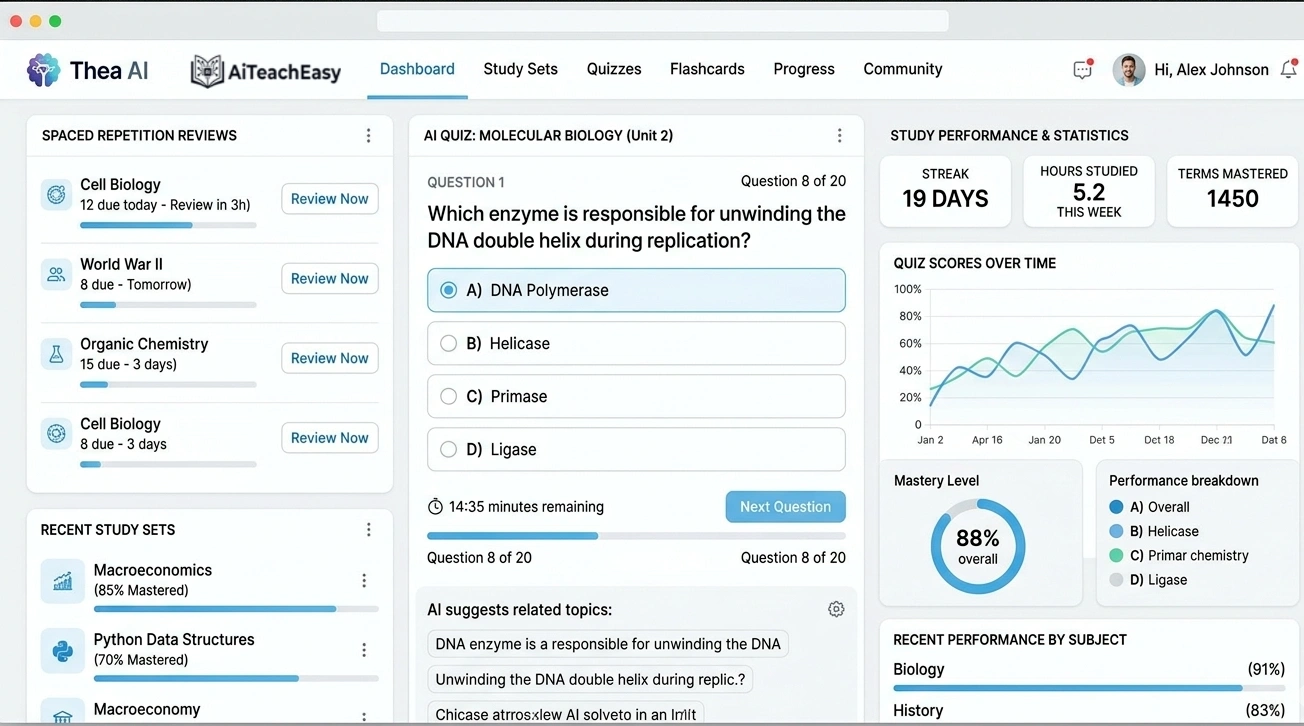
Thea is a completely free AI-powered study tool that converts course materials into personalized study kits with smart flashcards and practice tests .
- Pros: Completely free, supports 80+ languages, simulates real test conditions, works on any device.
- Cons: Requires internet, AI-generated content not peer-reviewed.
- Best For: Budget-conscious students, language learners, test anxiety management.
- Key Feature: The “Test” function emulates real exam conditions, helping students manage stress while practicing automated retrieval practice.
Obsidian + AI Vocabulary Plugin – SM-2 Algorithm
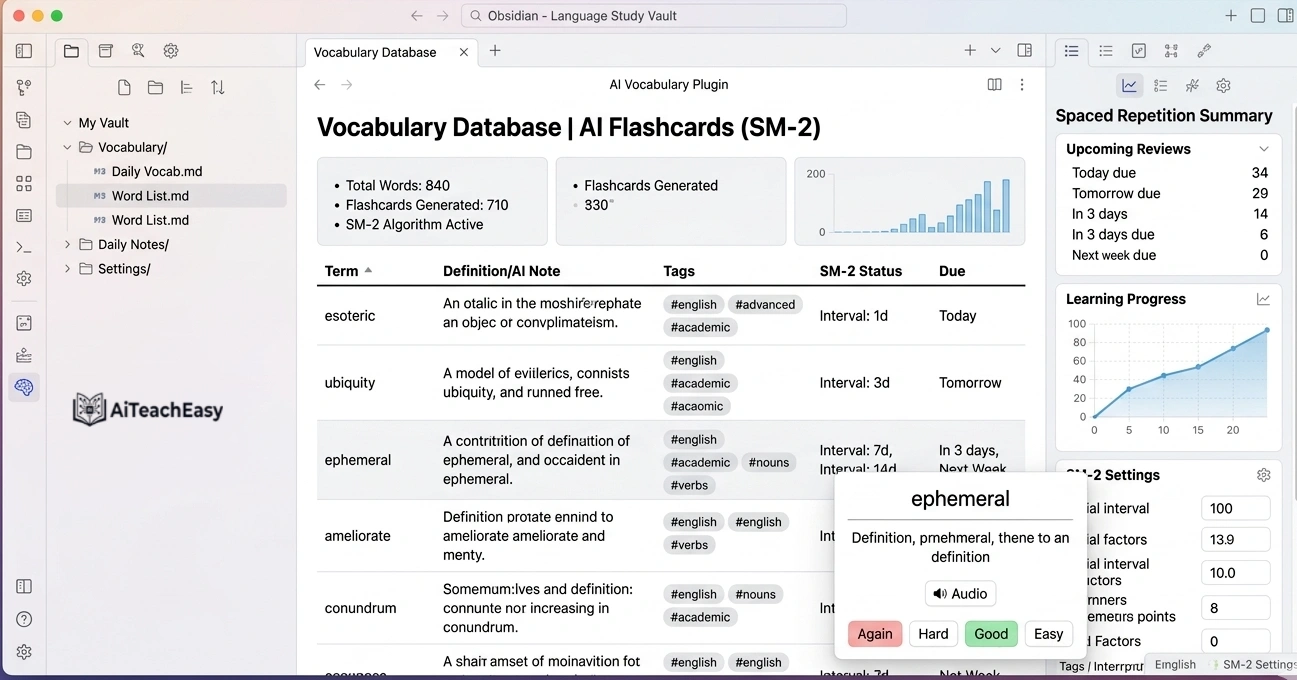
For power users who want complete control over their learning, the Obsidian English Vocabulary plugin implements the classic SM-2 algorithm with modern AI enhancements .
- Pros: SM-2 algorithm (gold standard), AI-generated example sentences, TTS pronunciation, markdown-based storage, complete privacy.
- Cons: Requires setup, technical knowledge needed.
- Best For: Tech-savvy learners, PKM enthusiasts, long-term vocabulary building.
- Key Feature: The plugin uses OpenAI, Anthropic, or Google AI to generate contextually relevant example sentences and definitions, combining AI-assisted mnemonics generator functionality with proven spaced repetition.
Teepee AI – Automated Spaced Retrieval Practice
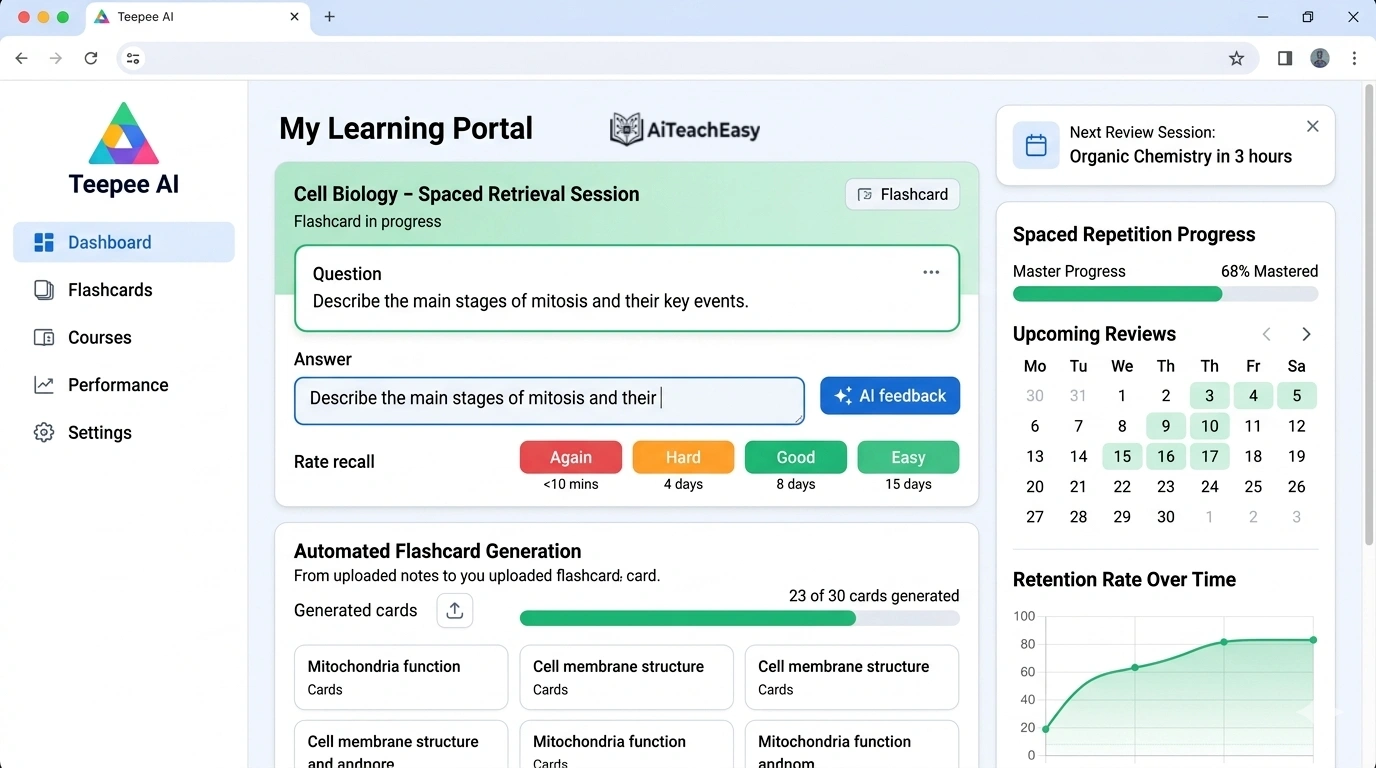
Teepee AI is designed specifically for automated spaced retrieval practice in classroom settings .
- Pros: Teacher-managed, personalized review sessions, progress tracking.
- Cons: Requires teacher setup, classroom-focused.
- Best For: Students in structured learning environments, K-12 education.
- Key Feature: Teachers configure lesson plans, and Teepee automatically schedules personalized review sessions at optimal intervals—perfect for algorithmic knowledge retention tools in educational settings.
Brainscape – Confidence-Based Repetition
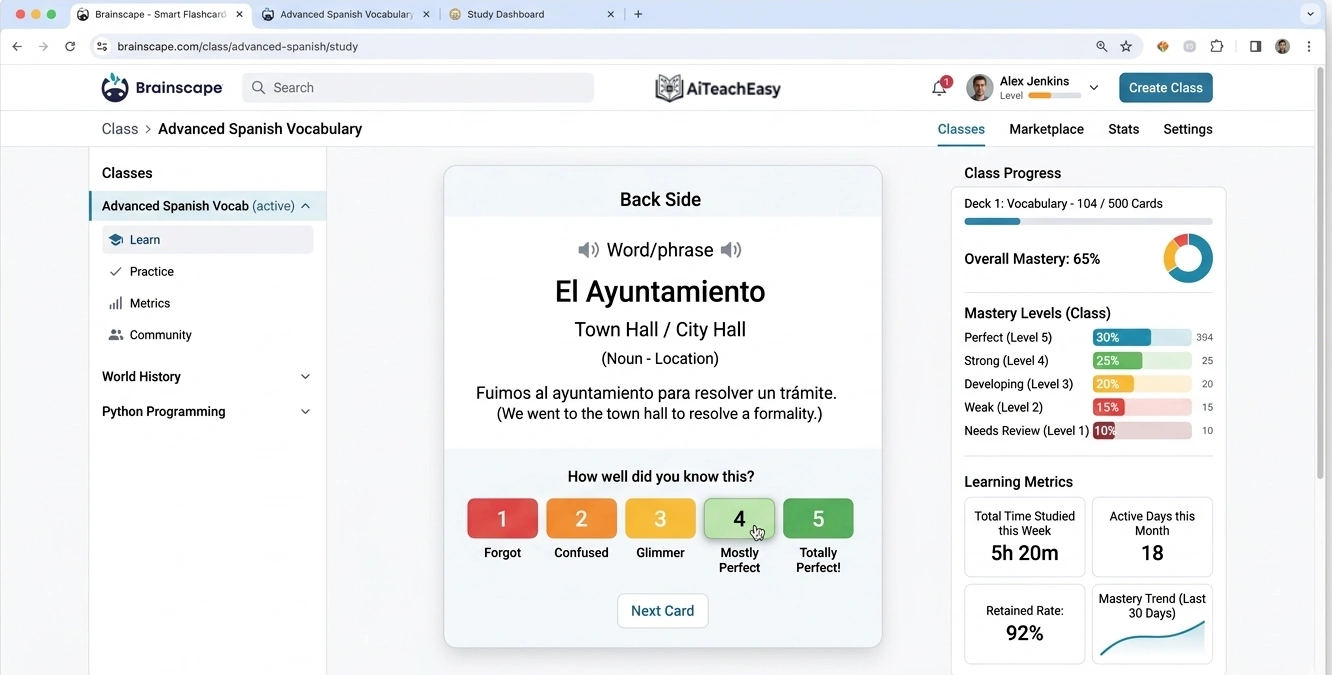
Brainscape uses a unique confidence-based repetition system where you rate your knowledge on a 1-5 scale after each card.
- Pros: Scientifically proven method, excellent for personalized forgetting curve optimization, great for professional certifications.
- Cons: Interface less modern than competitors.
- Best For: Professional certification prep, law school, medical school.
- Key Feature: The platform’s algorithm calculates optimal review intervals based on your confidence ratings and performance history.
Anki – The Gold Standard
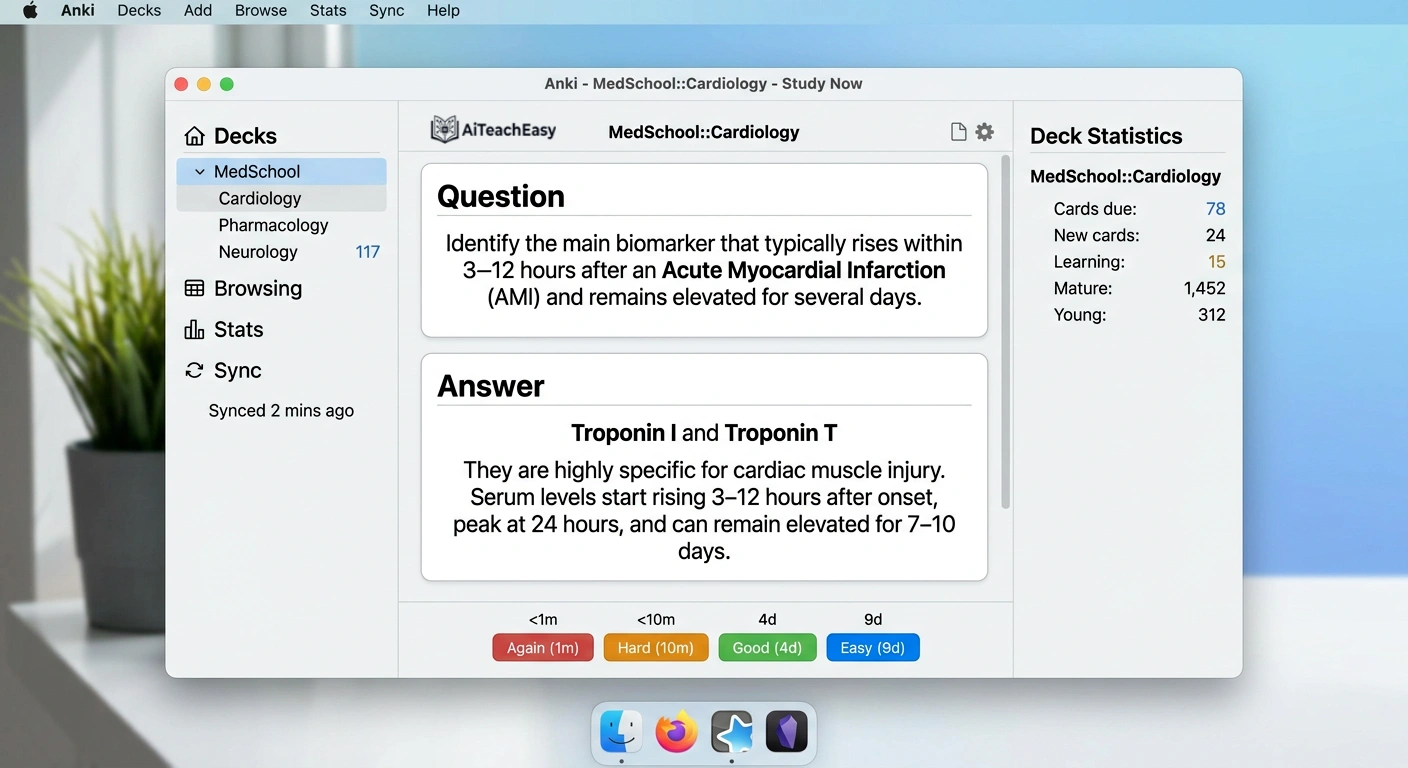
Anki remains the gold standard for spaced repetition software, with powerful customization options and a massive library of shared decks.
- Pros: Completely free (desktop), highly customizable, supports multimedia cards, large community.
- Cons: Steep learning curve, interface dated, no built-in AI generation.
- Best For: Advanced users, medical students, language learners who want full control.
- Key Feature: The SM-2 algorithm implementation is pure and highly effective. For AI-enhanced Anki, tools like AI Notebook can help generate cards .
Memrise – Language Vocabulary Retention
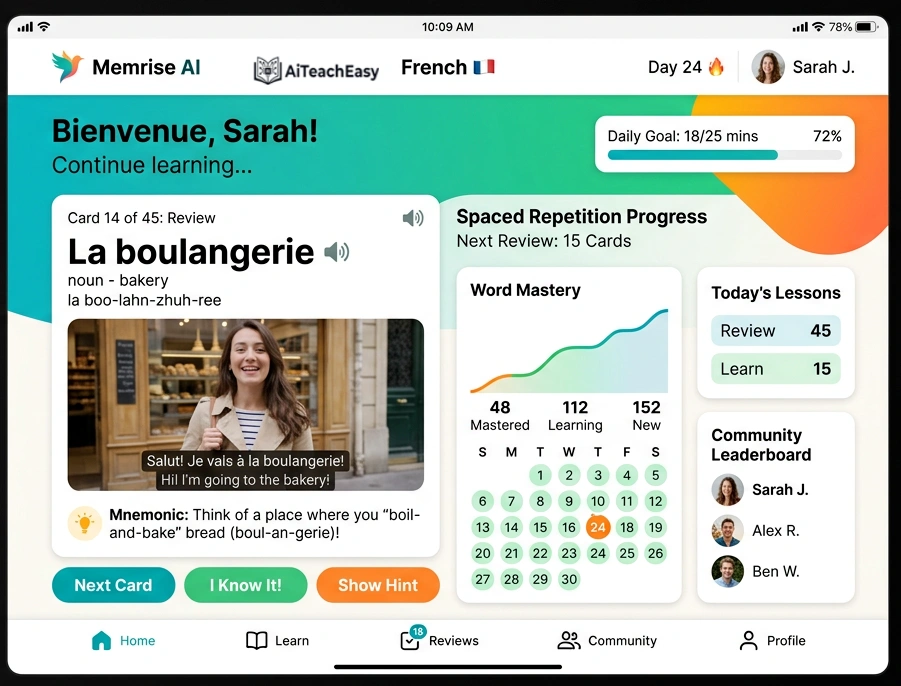
Memrise specializes in language learning with a focus on vocabulary retention through spaced repetition and mnemonic techniques.
- Pros: Excellent for languages, video clips of native speakers, gamified experience.
- Cons: Limited to language learning, premium required for full access.
- Best For: Language learners (IELTS, TOEFL, HSK, JLPT).
- Key Feature: Uses “mems” (mnemonics) created by the community to help remember difficult words, combining AI-assisted mnemonics with human creativity.
AI Notebook – Multi-Modal Flashcard Generation
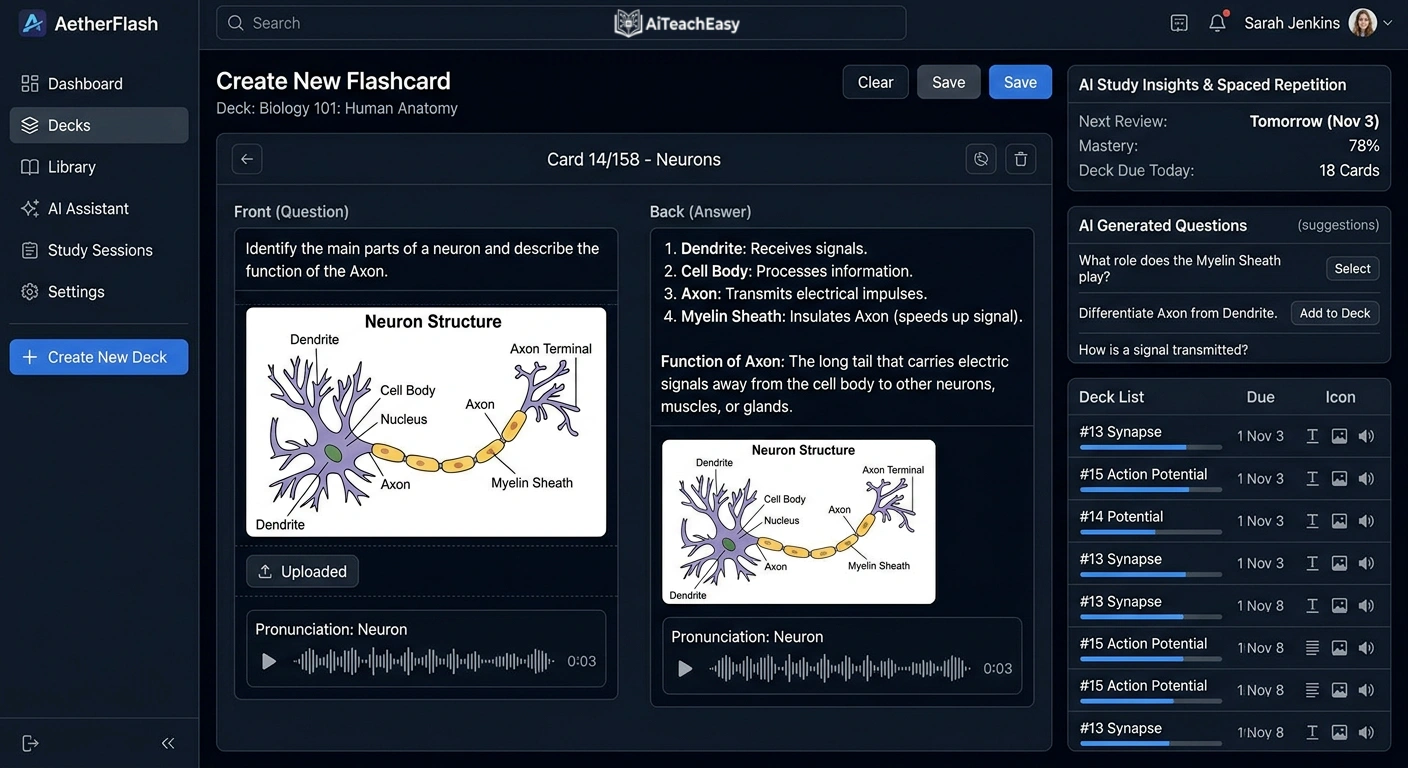
AI Notebook is an all-in-one productivity app that includes powerful flashcard generation capabilities .
- Pros: Multi-modal input (text, audio, images, video), automatically generates quizzes, syncs across devices.
- Cons: Subscription-based, newer app with fewer reviews.
- Best For: Students who want one app for notes, transcription, AND flashcards.
- Key Feature: Processes lecture recordings, PDFs, and images to automatically generate flashcards and quizzes—perfect for AI PDF-to-quiz generation.
CENTURY Tech – Adaptive Learning Pathways
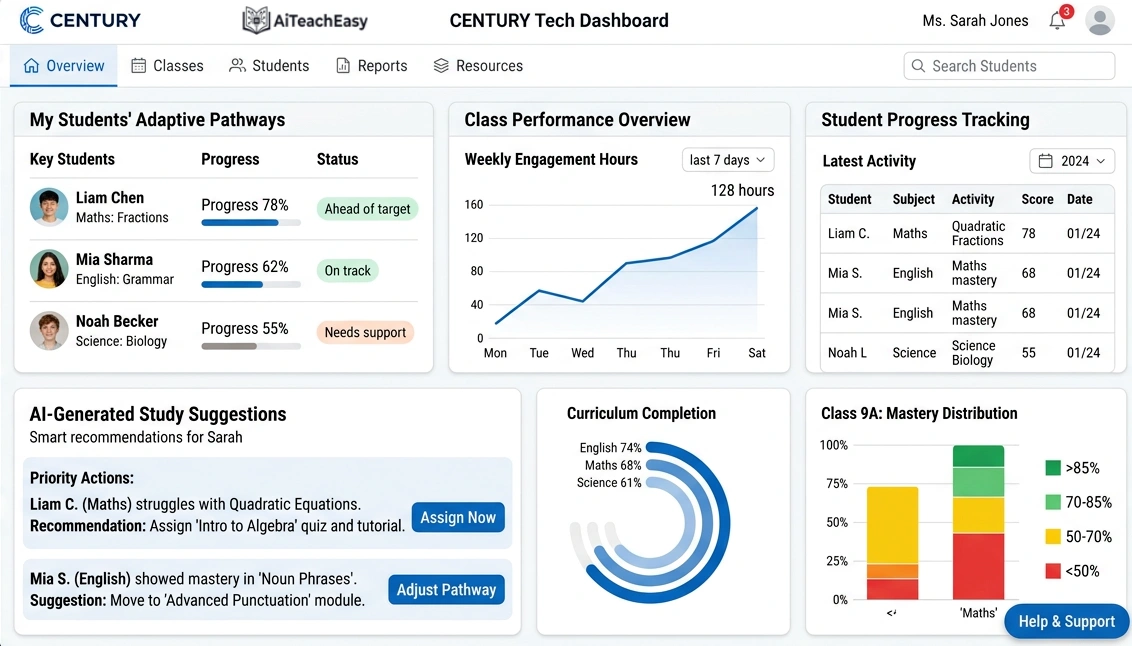
CENTURY Tech combines AI, neuroscience, and learning science to provide adaptive learning pathways for students .
- Pros: Curriculum-aligned, real-time analytics for teachers, evidence-based approach.
- Cons: School-focused, not typically for individual use.
- Best For: Schools and institutions, structured learning environments.
- Key Feature: Uses interleaving, frequent retrieval testing, and adaptive feedback based on neuroscience research—a complete adaptive learning AI platform.
How to Choose the Right AI Memorization Tool
With so many options, selecting the right tool can feel overwhelming. Here’s a decision framework based on your needs:
- Need to convert notes to flashcards instantly? Choose Noolingo or AI Notebook for AI flashcard generator from PDF notes capabilities.
- Preparing for medical or law exams? Choose Noolingo for image occlusion or Anki for maximum customization.
- On a tight budget? Thea offers completely free AI-powered rote learning .
- Want the scientifically best algorithm? Look for FSRS (Noolingo) or SM-2 (Obsidian plugin, Anki) implementations .
- In a classroom setting? Teepee AI or CENTURY Tech provide teacher-managed experiences .
- Tech-savvy with privacy concerns? Obsidian plugin stores everything locally on your device .
Most of these tools offer free plans, so you can experiment to see which fits your workflow best. Remember to prioritize tools that respect your data; we have a guide on privacy-first AI tools for students to help you choose wisely.
For those wondering how to train an AI to test my knowledge, tools like Noolingo and AI Notebook learn from your performance and adjust quiz difficulty automatically.
For language learning, Memrise excels with its video clips and mnemonic system. Noolingo and Quizlet are also excellent choices with strong spaced repetition algorithms. The Obsidian plugin is perfect for serious language learners who want full control over their vocabulary database.
Tools like ChatGPT can help break speeches into sections, generate memory cues, and create acronyms. For active recall practice, input your speech into Noolingo or AI Notebook to generate questions about key points.
Yes. You can paste your script into ChatGPT and ask it to:
- Generate line-by-line cues
- Create mnemonics for difficult passages
- Quiz you on upcoming lines
- Break the script into manageable chunks
Noolingo offers a modern alternative with the advanced FSRS algorithm and better mobile experience. For those who want Anki’s power with AI generation, the Obsidian plugin provides SM-2 with AI content generation.
They track your performance on each piece of information and use mathematical algorithms (SM-2, FSRS, or neural networks) to calculate optimal review intervals. Correct answers increase the interval; struggles decrease it. This personalized forgetting curve optimization ensures you review information just before you’d naturally forget it.
For medical students, Noolingo’s image occlusion is invaluable for anatomy. Anki remains popular for its massive shared deck library of medical content. Brainscape’s confidence-based system also works well for the huge volume of medical terminology.
Yes. The Obsidian plugin can generate example sentences and memory cues using OpenAI or Anthropic APIs. You can also use ChatGPT directly with prompts like “Create a mnemonic for the cranial nerves.”
Tools with strong gamification and immediate feedback work well. Memrise’s video clips and points system keep engagement high. Thea’s test simulation can help with executive function by providing structure. LifeMemory research shows promise for attention-related challenges.
Most tools in this list support PDF import. Noolingo and AI Notebook excel at this, using AI to identify key concepts and generate questions automatically. For technical implementation, the AI-FlashCard-Maker GitHub project shows how Gemini API can process PDFs.
The forgetting curve, discovered by Hermann Ebbinghaus, shows that memory declines exponentially over time without review. AI tools “flatten” this curve by scheduling reviews at strategic intervals—just before you’d forget—strengthening memory each time. This is the core of spaced repetition systems.
Comparing Traditional Anki vs. AI Flashcard Generators
Conclusion: Best AI Tools for Memorization
The landscape of memorization has been transformed by artificial intelligence. Whether you need an AI flashcard generator from PDF notes for medical school, an automated active recall quiz maker for language learning, or AI tools for vocabulary retention for standardized tests, there is a tool designed to meet your needs.
The best AI tools for memorization in 2026 combine proven cognitive science principles with cutting-edge AI to deliver unprecedented retention efficiency. From Noolingo’s advanced FSRS algorithm to Thea’s completely free platform to the Obsidian plugin’s privacy-focused approach , students at every level can find a solution that fits their needs.
By incorporating these platforms into your routine, you can reduce study time, improve retention, and walk into your exam hall with confidence. And when it’s time to present your findings, don’t miss our recommendations for the best free AI presentation tools . For quick calculations, our free offline CGPA calculator is also a handy resource.
Remember, study optimization isn’t about working harder—it’s about working smarter. With the right digital brain and second brain study tools, you can achieve academic success while maintaining balance in your life.
About the Author
Shafiq is an AI tools researcher and founder of AI Teach Easy, where he reviews AI tools that help students learn faster and study smarter. He has spent the last three years testing educational technology to find practical applications for modern students, with a strong focus on privacy-first AI tools for students .