
Best AI Auto Grading Tools (2026)
The Hidden Cost of Traditional Grading
Grading has always been central to education, but it is also one of the most underestimated sources of teacher burnout. On the surface, it seems straightforward—review student work, assign marks, and provide feedback. In reality, however, effective grading requires deep concentration, consistency, and fairness across every single submission.
As class sizes grow and digital learning expands, this process becomes increasingly difficult to sustain. Teachers often find themselves grading late into the night, trying to maintain the same level of quality for the first paper as they do for the fiftieth. Over time, even the most experienced educators begin to feel the pressure. Feedback becomes shorter, patterns emerge, and personalization starts to fade.
This is not a reflection of teaching ability. It is a structural limitation of time.
AI auto grading tools are emerging as a response to this challenge. They are not designed to replace teachers, but to support them in maintaining high standards without sacrificing time or energy. When used correctly, they do more than automate grading—they transform how feedback is delivered and how learning is reinforced.
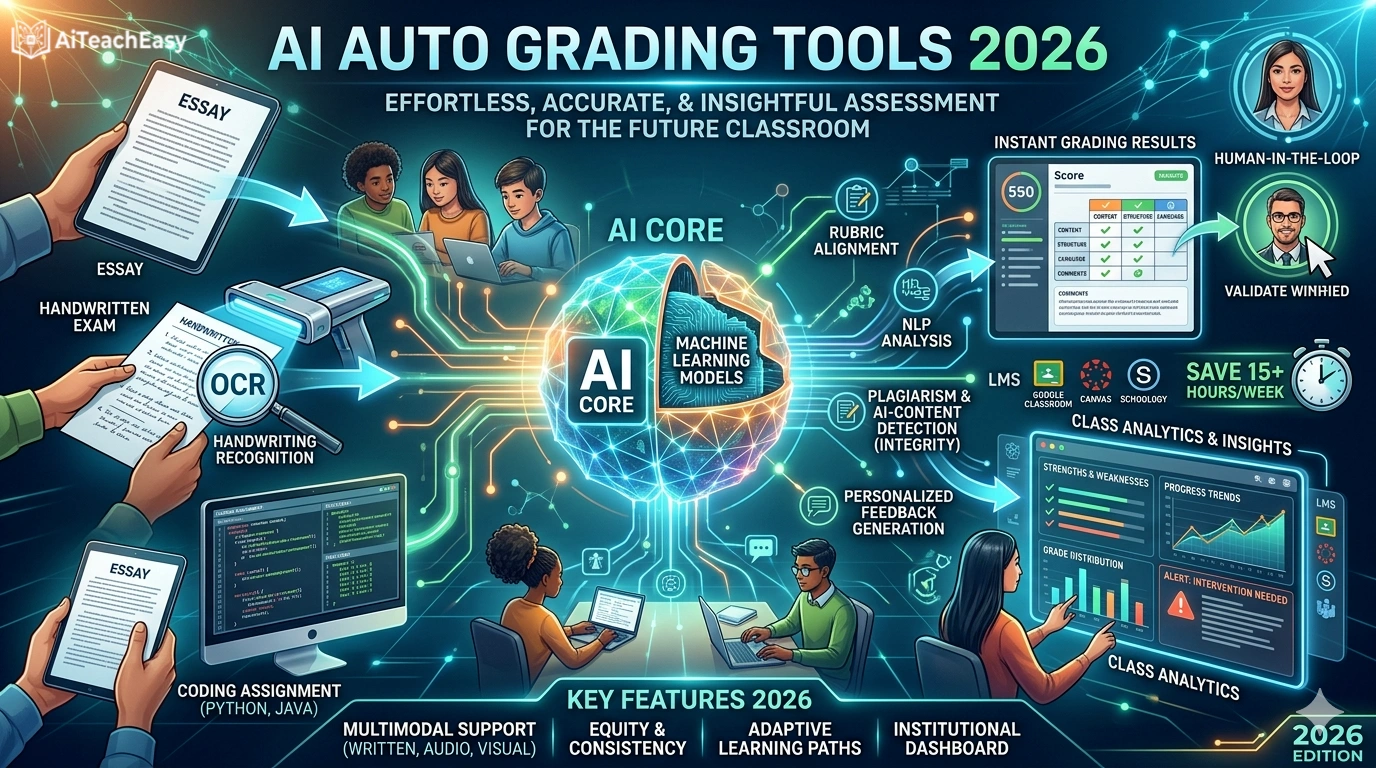
Table of Contents
What Are AI Auto Grading Tools?
AI auto grading tools are intelligent systems that evaluate student work using machine learning and advanced language models. They can analyze answers, apply rubric-based scoring, and generate structured feedback within seconds.
However, their true value lies not in automation alone, but in amplifying teacher intent. These tools take your evaluation criteria and express it consistently across all students. Rather than replacing your judgment, they help you scale it.
Most modern platforms follow a hybrid model where AI generates initial grading suggestions, and the teacher reviews and refines them before finalizing. This ensures that grading remains both efficient and pedagogically sound.
If you are already exploring how AI supports teaching workflows, you may also find value in this guide on
👉 best AI productivity tools for teachers
Why AI Grading Is Rapidly Expanding in 2026
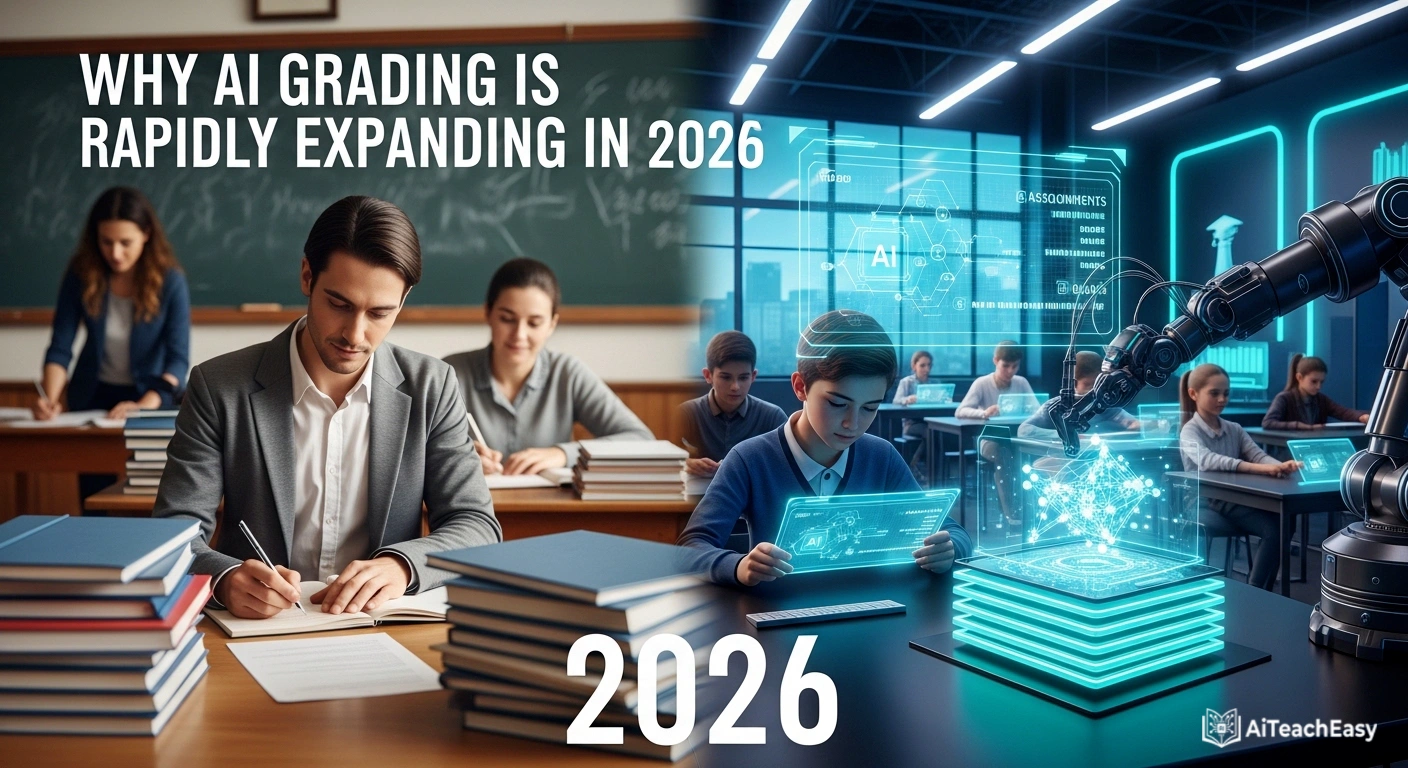
Education has undergone a significant transformation in recent years. Classrooms are no longer confined to physical spaces, and students are increasingly accustomed to digital interactions. As a result, expectations around feedback have changed dramatically.
Students now expect faster responses, clearer insights, and actionable suggestions that help them improve. At the same time, teachers are managing heavier workloads, balancing instruction, administration, and assessment simultaneously.
This is where AI grading tools provide a critical advantage. They enable rapid feedback cycles, which are essential for formative assessment. Instead of waiting days for results, students can receive feedback almost instantly, allowing them to identify mistakes and improve while the learning experience is still fresh.
This shift also supports the development of a growth mindset, where students view feedback as an opportunity to improve rather than simply a final judgment. In contrast, traditional grading methods often focus more heavily on summative assessment, where feedback arrives too late to influence learning.
How AI Auto Grading Works in Practice
Although AI grading may seem complex, the underlying workflow is surprisingly aligned with traditional teaching methods. The difference lies in speed and scalability.
The process begins when student work is uploaded into the system, either manually or through integrations with platforms such as Google Classroom. The teacher then defines the rubric, specifying criteria, weightage, and expected outcomes.
Once this structure is in place, the AI analyzes each submission. It evaluates the content based on the rubric, identifying patterns, structure, and relevance. It then generates a suggested score along with detailed feedback.
The final and most important step is teacher review. This ensures that the feedback reflects nuance, creativity, and individual student context—areas where human judgment remains essential.
Best AI Auto Grading Tools (2026 Comparison Table)
Below is a structured comparison of the most effective tools currently used by educators. This format is optimized for SEO and helps readers quickly evaluate their options.
| Tool | Best For | Key Strength | Unique Feature | Privacy Level | Pricing | Official Website |
|---|---|---|---|---|---|---|
| Gradescope | STEM, large classes | Rubric-based grading | AI-assisted grouping of similar answers for faster grading | High | Paid | https://www.gradescope.com |
| Turnitin AI | Writing & integrity | Plagiarism + feedback | Combines originality reports with AI grading insights | High | Paid | https://www.turnitin.com |
| CoGrader | Essay grading | Time-saving feedback | Generates first-pass grading with detailed comments | Medium | Free + Paid | https://www.cograder.com |
| GPTZero AI Grader | AI detection + grading | Accuracy reports | Detects AI-written content alongside grading | Medium | Free + Paid | https://www.gptzero.me |
| PowerGrader | Higher education | Controlled grading | Instructor-led AI grading with high accuracy | High | Paid | https://www.apporto.com |
One tool worth highlighting here is Gradescope. Its AI-assisted grading system groups similar student answers together, allowing teachers to grade them in batches rather than individually. This significantly reduces repetitive work and is especially powerful in large classrooms.
A Practical Workflow for Using AI Grading Tools
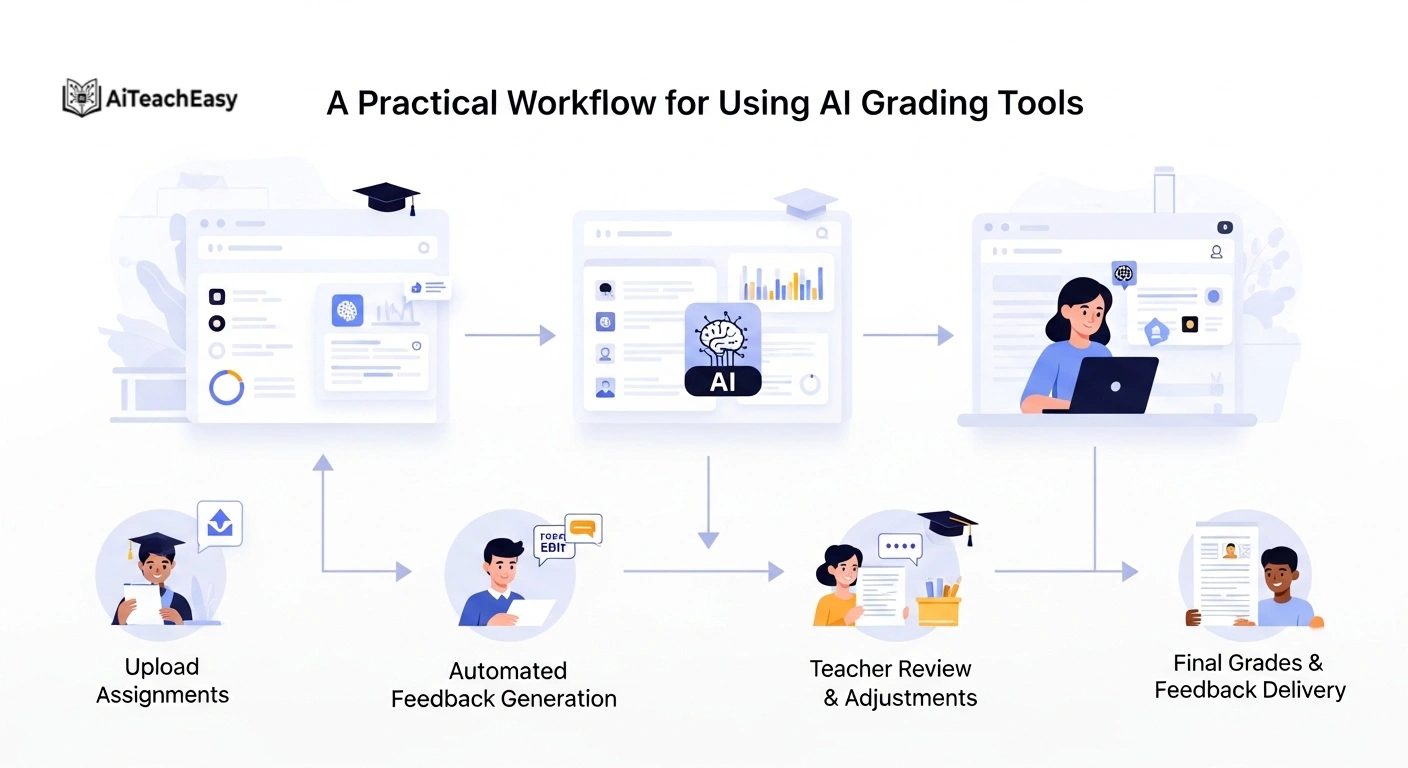
To use AI grading effectively, it is essential to follow a structured workflow that balances efficiency with responsibility.
The process begins with defining the learning objectives. Before any grading takes place, teachers should clarify whether the assignment is intended for formative or summative assessment. This ensures that the feedback aligns with the desired learning outcome.
Before uploading student work, there is a critical step that must not be skipped.
⚠️ Step 1.5: Anonymize Student Data
Remove all identifying information, including names, email addresses, and student IDs. This protects privacy and ensures compliance with data protection standards such as GDPR and FERPA.
Once anonymized, the work can be uploaded into the AI tool. The rubric is applied, and the system generates feedback and suggested scores.
The final step is review and refinement. This is where the teacher ensures that the feedback reflects the student’s individuality, effort, and creativity.
Types of Assessments AI Can Grade
AI grading tools have evolved to handle a wide range of assessments, making them versatile across different subjects and grade levels.
For objective assessments such as multiple-choice questions or true/false formats, AI grading is highly accurate and requires minimal review. These types of tasks are ideal for full automation.
Short-answer responses are slightly more complex, but AI can still evaluate correctness, clarity, and relevance effectively. This makes it easier to identify common misconceptions across a class.
Essay grading represents one of the most advanced applications of AI. Modern tools can analyze argument structure, coherence, and alignment with the thesis. When used correctly, they can support deeper feedback processes similar to those discussed in
👉 AI report writing tools for teachers
In technical subjects such as mathematics and programming, AI grading tools can evaluate problem-solving steps, code accuracy, and logical structure. Platforms like Gradescope are particularly strong in these areas.
The Role of AI in Formative and Summative Assessment
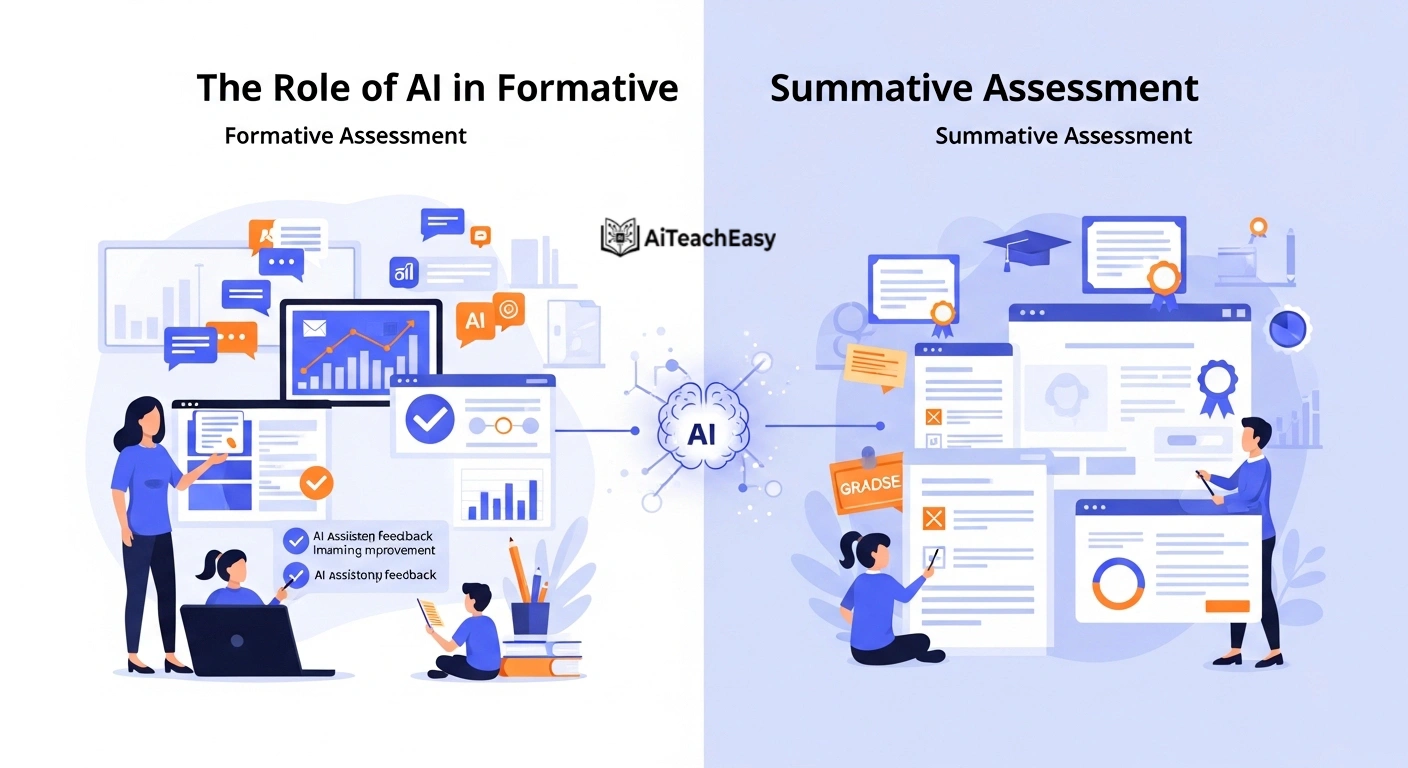
One of the most important distinctions in education is between formative and summative assessment. Understanding this difference is key to using AI grading tools effectively.
Formative assessment focuses on learning and improvement. It involves ongoing feedback that helps students identify gaps and refine their understanding. AI tools excel in this area because they provide rapid feedback cycles, enabling students to act on suggestions immediately.
Summative assessment, on the other hand, is used to evaluate final performance. It often carries higher stakes and requires greater accuracy. While AI can assist in this process, it should always be combined with careful teacher review to ensure fairness.
By aligning AI grading with formative assessment, teachers can create a more dynamic and responsive learning environment.
Benefits of AI Auto Grading Tools
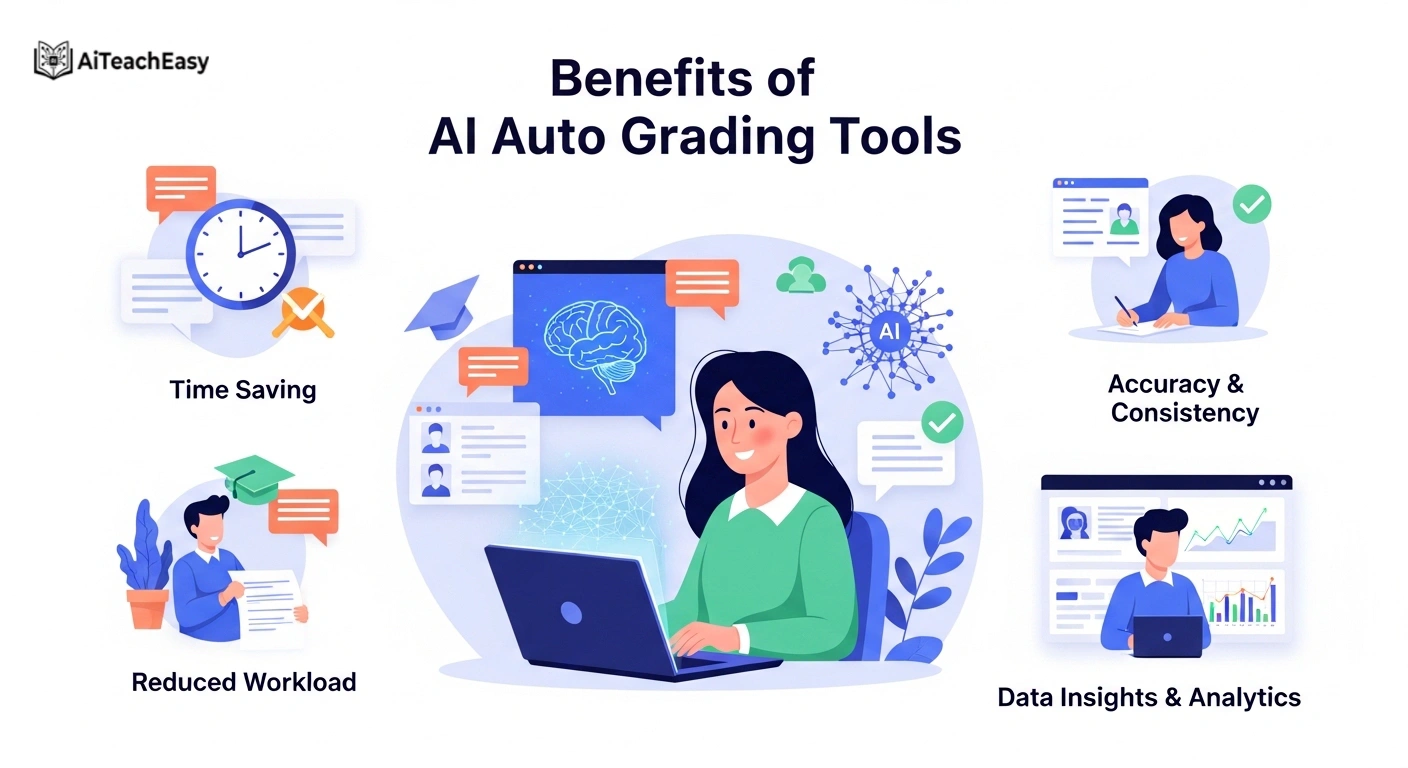
The most immediate benefit of AI grading tools is time efficiency. Teachers can significantly reduce the hours spent on repetitive grading tasks, allowing them to focus more on instruction and student engagement.
However, the deeper impact lies in consistency. AI applies the same rubric across all submissions, eliminating variations caused by fatigue or time pressure. This leads to fairer and more reliable grading.
Another important advantage is speed. Students receive feedback much faster, which improves learning outcomes and keeps them engaged in the process.
Over time, these tools also enable data-driven teaching. By analyzing performance trends, teachers can identify learning gaps and adjust their strategies accordingly.
Limitations and Challenges
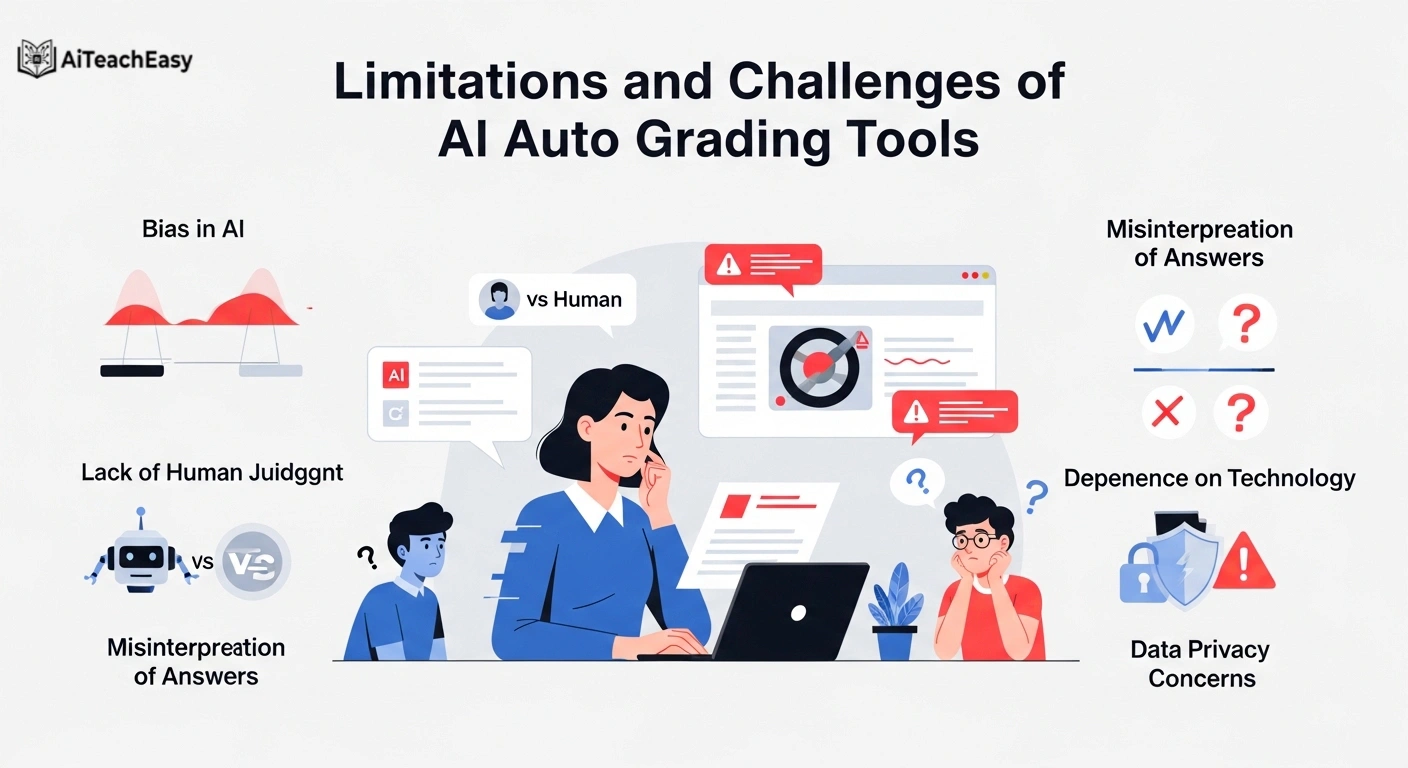
Despite their advantages, AI grading tools are not without limitations. They can struggle with nuance, creativity, and context. A student’s unique perspective or unconventional approach may not always be fully captured by an algorithm.
There is also the risk of over-reliance. Teachers who depend too heavily on AI may lose their personal voice in feedback, reducing its effectiveness.
Another challenge is rubric dependency. AI systems are only as good as the criteria they are given. Poorly designed rubrics can lead to inaccurate or misleading results.
These limitations highlight the importance of maintaining a balanced approach, where AI supports—but does not replace—teacher judgment.
Real Classroom Insight
In one classroom scenario, AI was used to grade a creative writing assignment. The feedback was technically accurate, focusing on structure and grammar. However, it failed to recognize the originality and creativity of the student’s work.
This experience reinforced an important lesson.
AI is highly effective at evaluating patterns and rules, but it does not fully understand individuality. Teachers must always review and adjust AI-generated feedback to ensure it reflects the student as a whole.
Data Privacy and Ethical Use
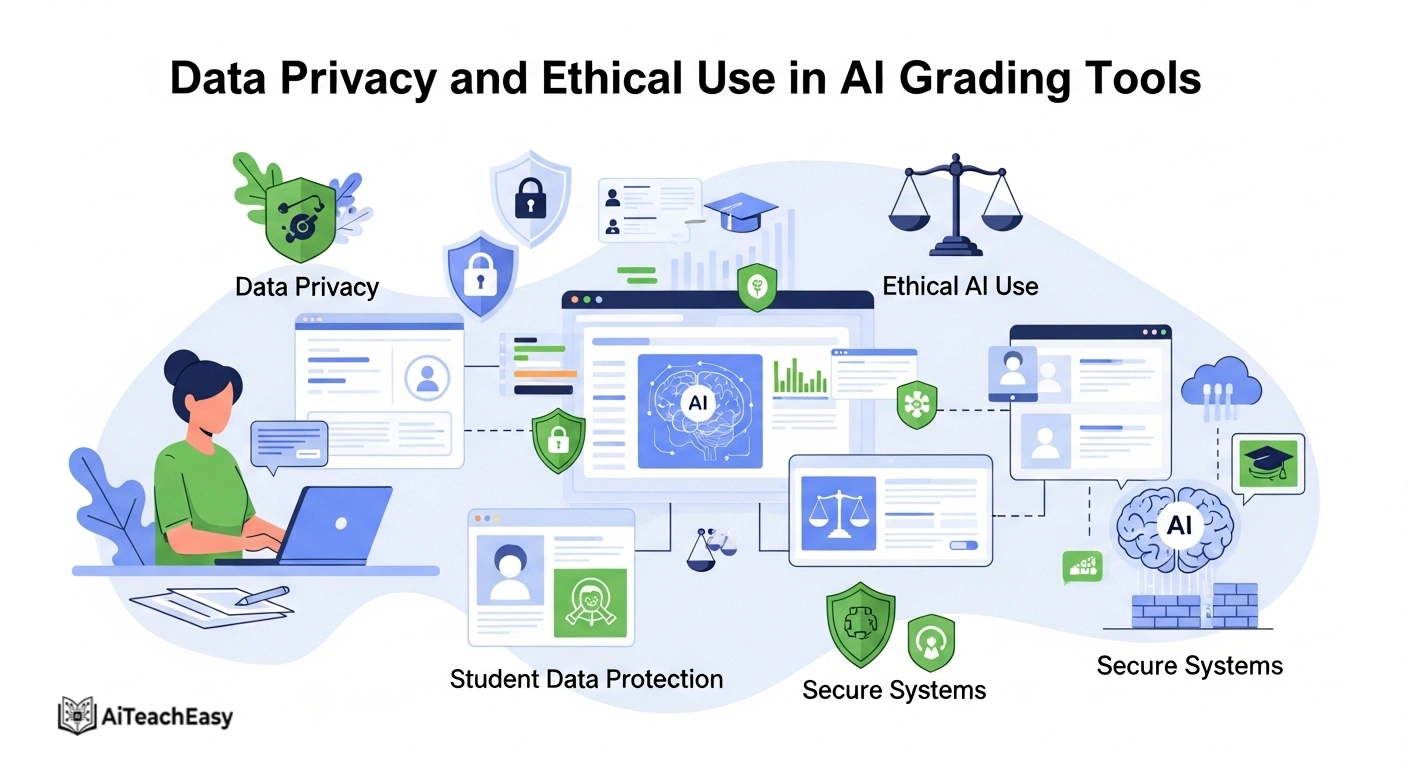
As AI becomes more integrated into education, data privacy has become a critical concern. Teachers must ensure that student information is protected at all times.
This includes anonymizing data before uploading it to AI tools, using platforms with strong privacy policies, and staying informed about regulations.
For safer workflows, consider exploring
👉 privacy-first AI tools for students
Ethical use of AI is not just about compliance—it is about maintaining trust between teachers and students.
Common Mistakes to Avoid
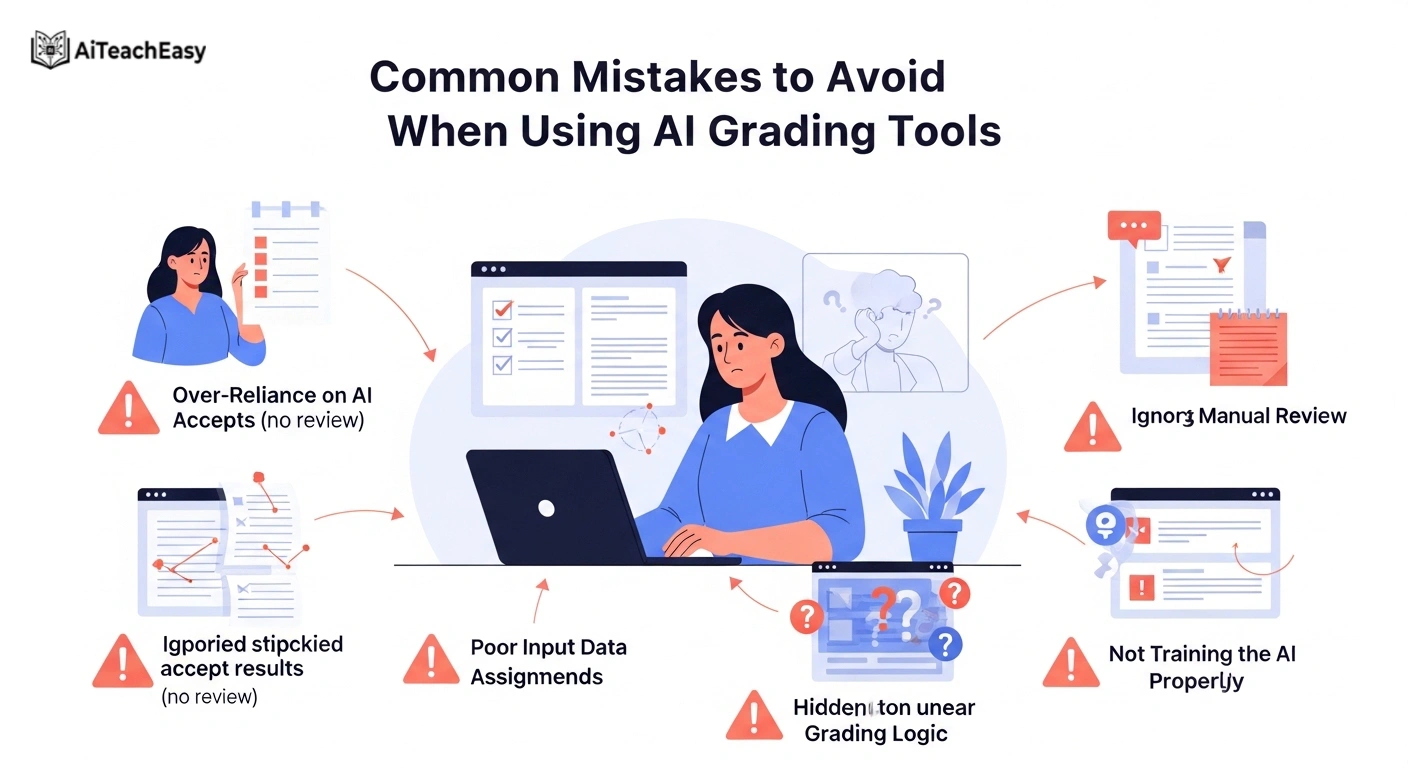
Many teachers adopt AI grading tools but fail to use them effectively. One common mistake is relying on generic prompts, which produce equally generic feedback. Another is skipping the review process, assuming that AI outputs are always accurate.
Some educators focus too heavily on speed, overlooking the importance of feedback quality. This can reduce the effectiveness of AI tools and negatively impact student learning.
The key is to treat AI as a professional assistant rather than a replacement.
The Future of AI Grading
Looking ahead, AI grading tools are expected to become even more advanced. Future systems will likely provide real-time feedback during assignments, adaptive assessments tailored to individual students, and deeper analytics that track long-term progress.
Research published on platforms like https://arxiv.org suggests that some AI grading systems are already approaching human-level accuracy in controlled environments.
This does not diminish the role of teachers. Instead, it allows them to focus more on mentoring, guiding, and supporting students.
FAQs
Can AI grading tools replace teachers?
No. They assist teachers but cannot replace human judgment and understanding.
Are AI grading tools accurate?
They are highly accurate for structured tasks but still require teacher review.
Do they work for all subjects?
Yes, but creative and technical subjects require closer supervision.
Are they safe to use?
Yes, as long as student data is anonymized and privacy guidelines are followed.
Final Thoughts
AI auto grading tools are not just about saving time. They represent a shift in how educators approach assessment.
They allow teachers to move from repetitive grading toward meaningful feedback and deeper engagement with students. They support faster learning cycles, improve consistency, and reduce burnout.
Most importantly, they help teachers focus on what truly matters.
Not grading papers—but teaching students.
About the Author
Professor Irfan
10+ Years of Teaching Experience
An expert in AI-powered education, helping teachers integrate modern tools into classrooms while maintaining quality, engagement, and human connection.