
Best AI Tools for Exam Preparation
According to a study by McKinsey & Company, AI-powered learning tools can improve study efficiency by up to 30–40% by automating repetitive tasks and personalizing content delivery. Students today have access to powerful technology that can revolutionize their study habits. The best AI tools for exam preparation help students summarize lengthy textbooks, generate practice questions, and create personalized study plans in minutes. These AI study tools for students make learning faster, more efficient, and tailored to individual needs. Whether you are cramming for a final or planning a semester-long revision strategy, integrating an AI study assistant into your routine can be the difference between passing and excelling. If you’re also looking to track your academic progress, you might find our student result sheet generator useful for monitoring your grades.
As an education technology researcher, I have tested dozens of platforms to find the most effective solutions. Below, we explore why AI is changing the academic landscape and provide a curated list of the top AI tools for students to help you ace your next test.
Table of Contents
Why AI Tools Are Important for Exam Preparation
The shift from traditional rote learning to smart, adaptive studying is here. AI learning tools are not just about finding answers; they are about understanding how you learn best. Modern AI exam preparation tools leverage machine learning to identify weak areas and reinforce knowledge, effectively acting as a 24/7 AI study helper.
By utilizing AI powered study tools for exams, students can move beyond passive reading. These platforms offer interactive experiences, such as generating instant practice problems or summarizing complex articles, which significantly boosts retention. For educators looking to support this process, our guide on AI classroom management tools for teachers offers great insights into integrating technology in the classroom. This approach aligns perfectly with modern exam revision strategies, focusing on comprehension rather than memorization.
Benefits of Using AI Study Tools
Integrating AI into your study routine offers multiple advantages that directly impact academic performance:
- Study Productivity: AI tools can summarize entire chapters into key points in seconds, saving hours of manual note-taking. This study efficiency allows students to cover more material in less time.
- Personalized Learning: Platforms like Khanmigo adapt to your skill level, offering tailored explanations and practice questions. This ensures you focus on areas where you need the most improvement through AI tools for personalized learning.
- Better Retention: Tools like Quizlet and Brainscape use spaced repetition algorithms, which have been proven to improve long-term memory retention by up to 50% compared to traditional studying. This is the power of flashcard learning.
- Instant Explanations: When you’re stuck on a concept, AI study apps like ChatGPT or Socratic provide immediate, easy-to-understand explanations, eliminating frustrating roadblocks.
- Study Automation: From automated note taking to generating practice tests, study automation tools handle the repetitive work so you can focus on understanding.
These benefits align with the principles of learning productivity and study optimization, making AI an indispensable part of modern education. For students with unique learning needs, our guide on AI tools for special needs students explores how adaptive technology can level the playing field.
How AI Tools Help Students Study Faster
Time is often the scarcest resource for students. AI tools that help students study faster solve this by automating the most time-consuming parts of revision. Instead of manually creating flashcards or summarizing notes, you can generate them instantly.
This technology enables digital learning tools that adapt to your pace. If you struggle with a specific topic, the AI can generate more questions on that subject. For students looking to improve their learning efficiency, these smart study methods provide a structured path through vast syllabi. Ensuring long-term retention of this material is crucial, which is why we’ve also explored AI tools for student retention to help make learning stick.
Many students ask: “Can AI really help me prepare?” The answer is yes. Whether you need AI tools for college exam preparation or AI tools for high school students studying, these platforms offer revision strategies that were unavailable just a few years ago.
Best AI Tools for Exam Preparation
After testing multiple AI study platforms, we selected the best tools that help students improve academic success and exam performance. Here are the top contenders for 2026.
| Tool Name | Best For | Free Plan? | Official Link |
|---|---|---|---|
| ChatGPT | General Q&A & Summarization | Yes | Visit OpenAI |
| Notion AI | Note Taking & Organization | Limited Free | Visit Notion |
| Quizlet | Flashcards & Memorization | Yes | Visit Quizlet |
| Grammarly | Essay & Writing Improvement | Yes | Visit Grammarly |
| Khanmigo | Tutoring (Math/Science) | Yes (Limited) | Visit Khan Academy |
| Perplexity AI | Research & Fact-Checking | Yes | Visit Perplexity |
| Consensus | Academic Research Summarization | Yes | Visit Consensus |
| Socratic by Google | Homework Help (STEM) | Yes | Visit Socratic |
| Otter.ai | Lecture Transcription | Limited Free | Visit Otter.ai |
| Brainscape | Adaptive Flashcards | Limited Free | Visit Brainscape |
ChatGPT – AI Study Assistant
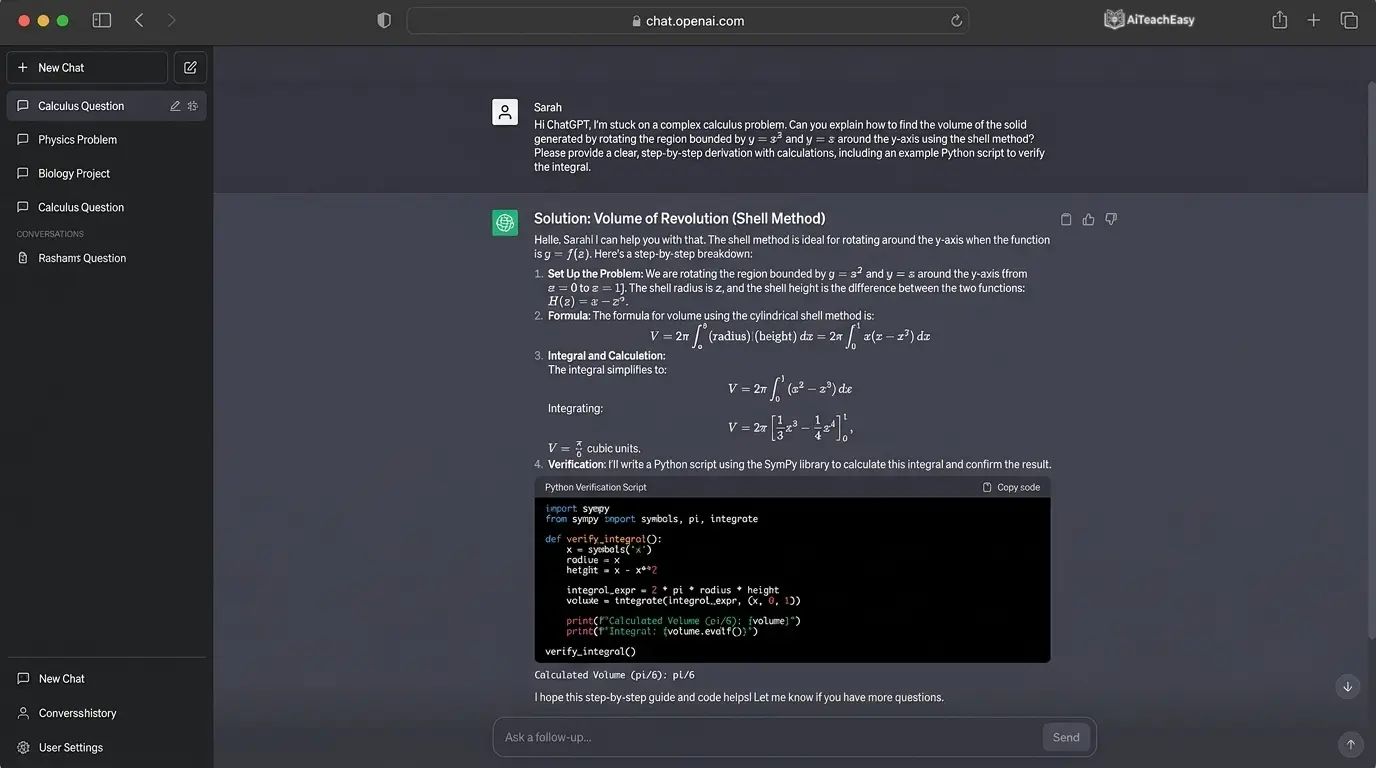
It is impossible to discuss AI study helper tools without mentioning ChatGPT. This versatile chatbot acts as a comprehensive AI study assistant for nearly any subject. Students can paste dense text and ask for a summary, request explanations of complex theories, or generate essay outlines.
- Pros: Explains complex topics simply, great for brainstorming, available 24/7, excellent for AI tools for exam revision.
- Cons: Can sometimes generate inaccurate information (hallucinations), requires fact-checking.
- Best For: General Q&A, summarization, and brainstorming.
- Key Feature: Ability to hold contextual conversations, allowing you to drill down into specific topics until you fully understand them, making it perfect for in-depth revision.
For a deeper dive into similar tools, check out our list of best free AI homework helper tools for students .
Notion AI – AI Note Summarizer
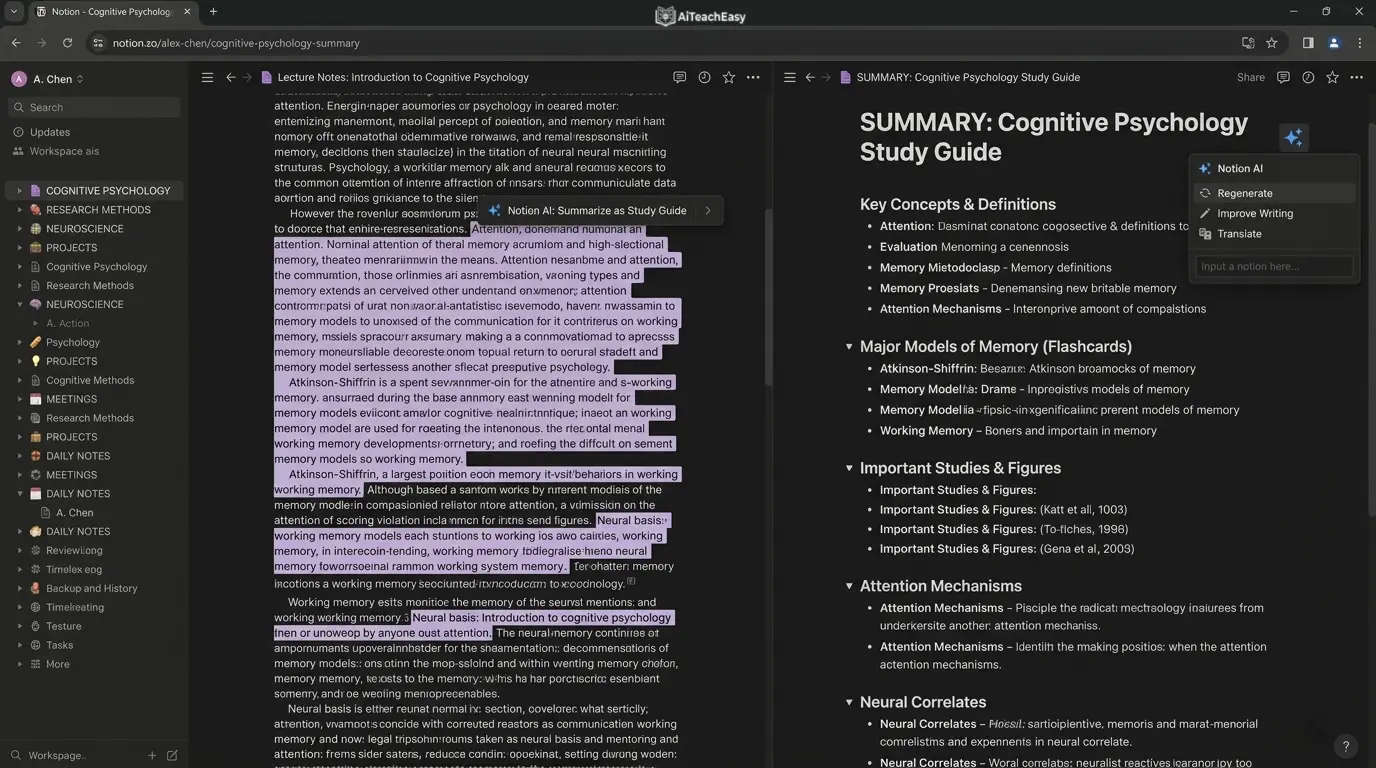
Notion has long been a favorite for organization, but its integrated AI takes study productivity to the next level. As a premier AI note summarizer, it can instantly condense your messy lecture notes into clean, structured study guides.
- Pros: Seamlessly integrates with notes, saves hours of manual summarizing, perfect for automated note taking.
- Cons: AI features require a paid subscription after free trial.
- Best For: Organizing research and condensing notes.
- Key Feature: It integrates directly into your workflow. You can highlight text and ask AI to “fix spelling,” “translate,” or “summarize this,” ensuring your revision materials are always clear and concise.
For alternatives, explore these best free AI note takers .
Quizlet – Flashcards Generator
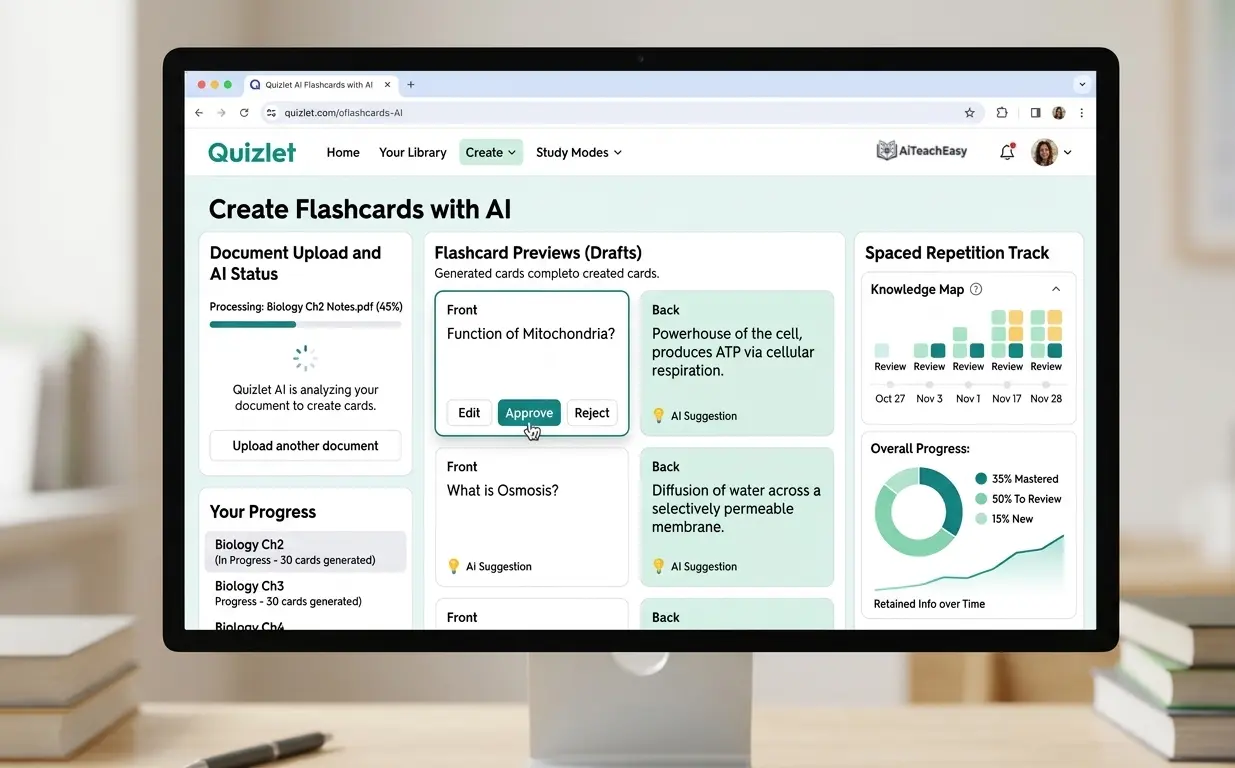
Flashcards remain a gold standard for memorization, and Quizlet has evolved into a powerful AI flashcards platform. The AI flashcards generator allows you to create a full set of cards from a simple text prompt or uploaded document in seconds.
- Pros: Excellent for memorization, huge user library of existing flashcard sets, perfect for flashcard learning.
- Cons: Advanced study modes require a subscription.
- Best For: Memorization and active recall.
- Key Feature: Its “Learn” mode uses spaced repetition, an algorithm that schedules review sessions for cards you find difficult, making it one of the most effective AI tools for exam practice questions.
Grammarly – Writing & Essay Improvement
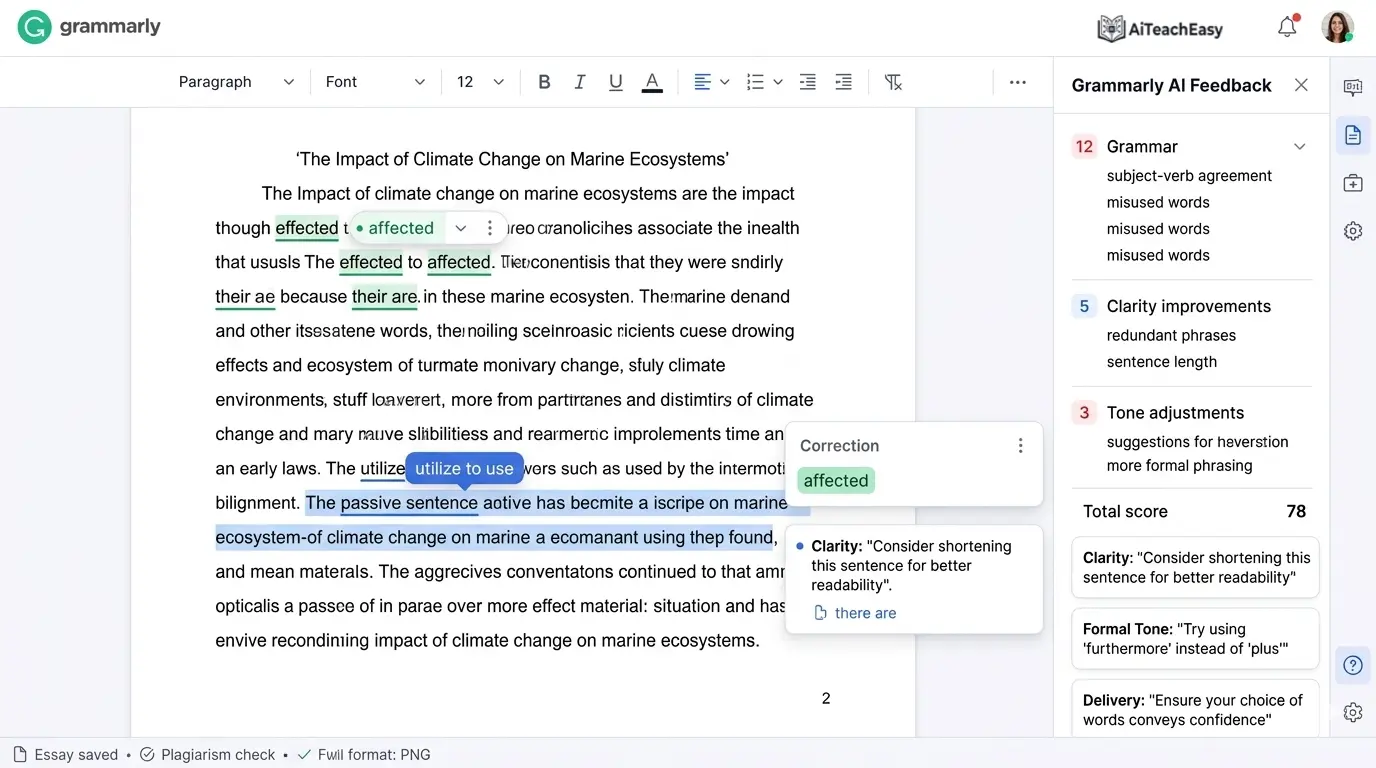
For humanities and social science exams that require essays, Grammarly is indispensable. More than a spellchecker, it functions as an AI writing assistant that helps refine tone, clarity, and engagement.
- Pros: Real-time feedback, plagiarism checker, tone adjustments, boosts academic performance.
- Cons: Premium version is expensive for some students.
- Best For: Essay writing and proofreading.
- Key Feature: The “Generative AI” helper can brainstorm ideas or rewrite sentences to be more concise, ensuring your writing stands out.
Khanmigo – Personalized Learning
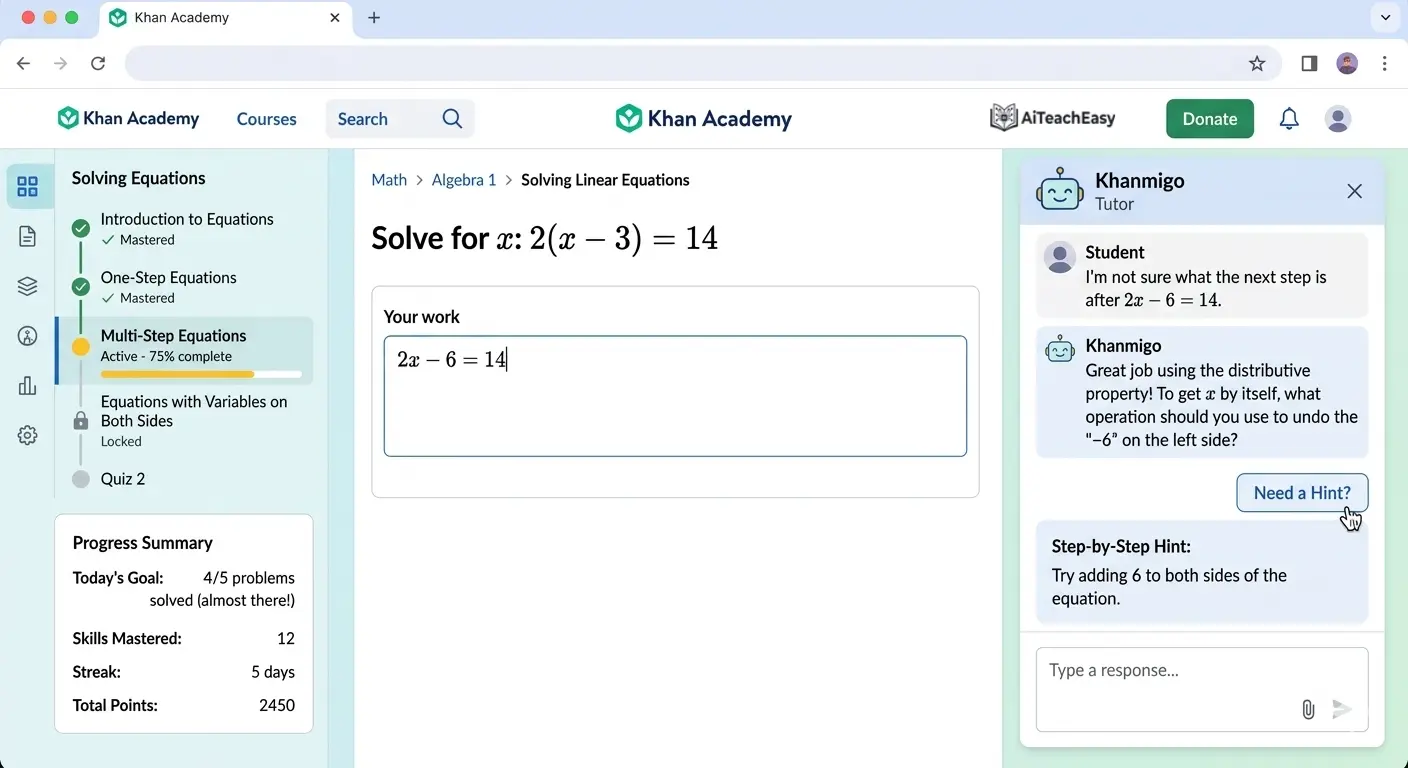
Developed by Khan Academy, Khanmigo is an AI tutoring platform that focuses on guidance rather than just giving answers. It acts as a thoughtful learning assistant that prompts students to solve problems themselves.
- Pros: Encourages critical thinking, safe for kids, aligned with curriculum, excellent for personalized learning.
- Cons: Still in development, waitlist access for free users.
- Best For: Math, science, and humanities tutoring.
- Key Feature: Its “Doppelgänger” feature lets you chat with historical figures, making learning interactive and engaging, which significantly boosts learning productivity.
This is particularly helpful for diverse learners, similar to the approaches discussed in our article on AI tools for special needs students .
Perplexity AI – Research Assistant
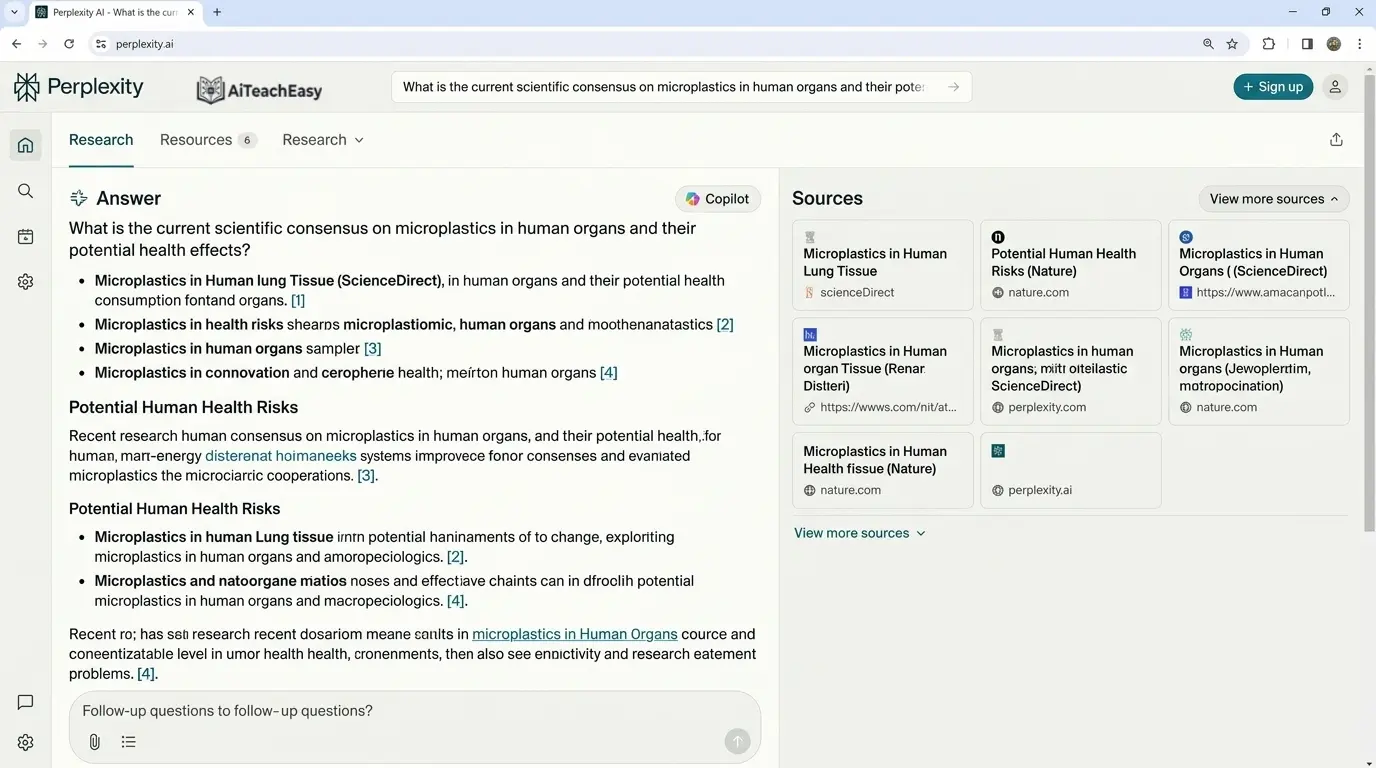
For students who need accurate, cited information quickly, Perplexity AI is a game-changer. Unlike standard chatbots, it provides answers with links to sources, making it perfect for research papers and fact-checking.
- Pros: Provides citations, free to use, great for quick fact-finding, ideal for research.
- Cons: Less effective for creative tasks.
- Best For: Research, fact-checking, and understanding current events.
- Key Feature: It acts as a powerful research tool that combines a search engine with an AI chatbot, ensuring you can verify the information you are using for revision.
Consensus – Research Summarizer
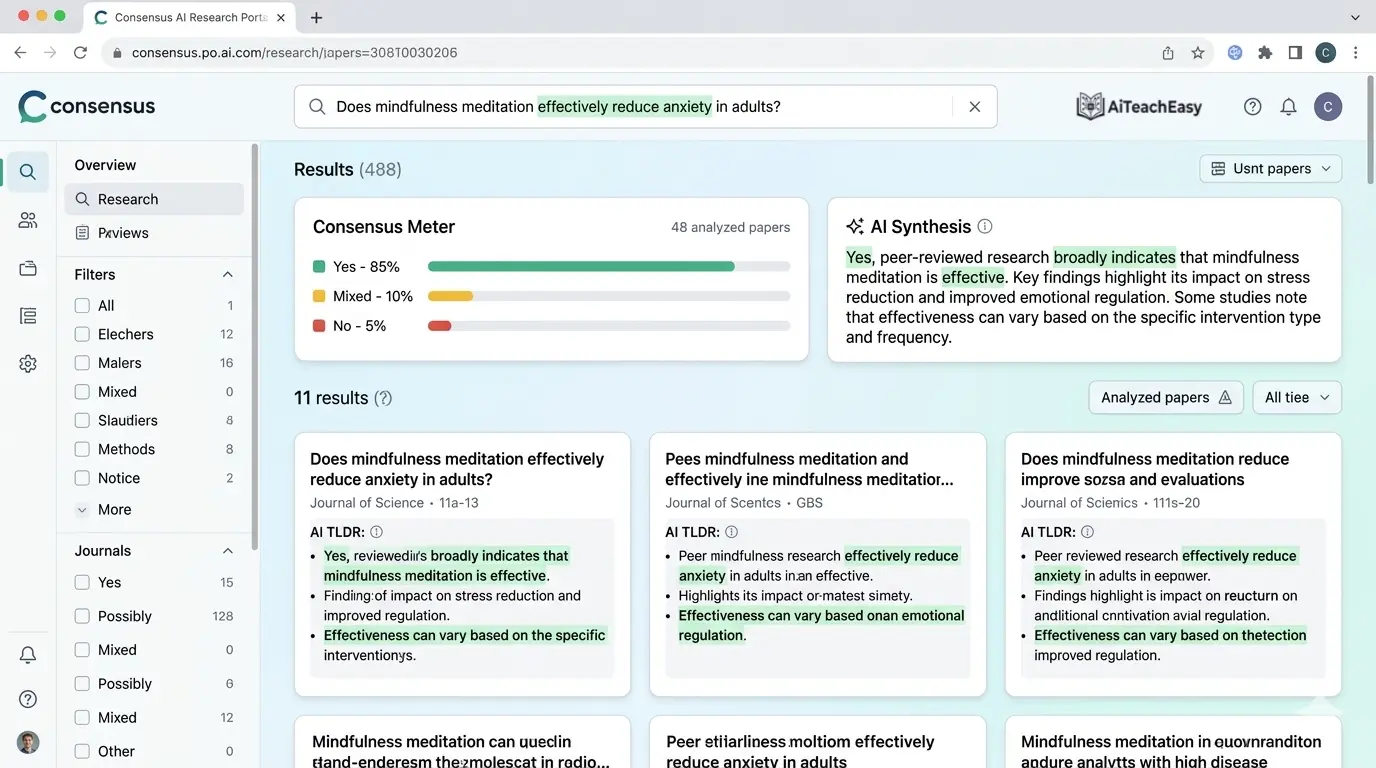
For college students writing research papers or studying for evidence-based exams, Consensus is a must-have. This search engine uses AI to summarize findings from peer-reviewed academic papers.
- Pros: Saves hours of reading, provides consensus meters, excellent for academic research.
- Cons: Limited to scientific papers.
- Best For: Finding and summarizing academic research.
- Key Feature: It provides a “Consensus Meter” that shows how much scientific agreement exists on a topic, making it a robust AI study assistant for fact-checking.
Socratic by Google – Homework Helper
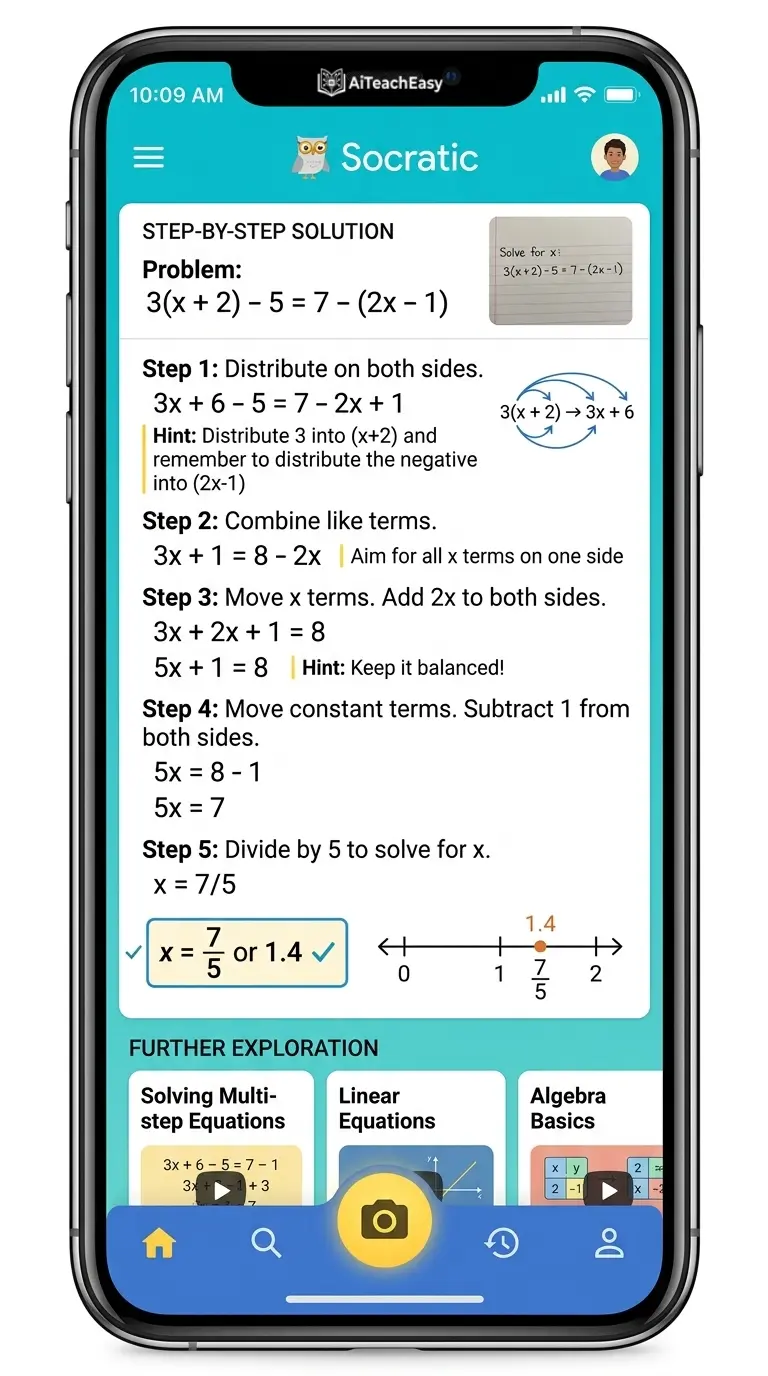
Acquired by Google, Socratic is a fantastic AI homework helper for high school and college students. Simply take a photo of a question, and the app provides explanations, videos, and step-by-step guides.
- Pros: Visual explanations, supports many STEM subjects, completely free.
- Cons: Limited to specific subjects (mainly STEM).
- Best For: Math, science, and history homework help.
- Key Feature: Its visual step-by-step breakdowns help students understand the process of solving a problem, not just the answer, which is essential for true learning.
Otter.ai – Lecture Transcriber
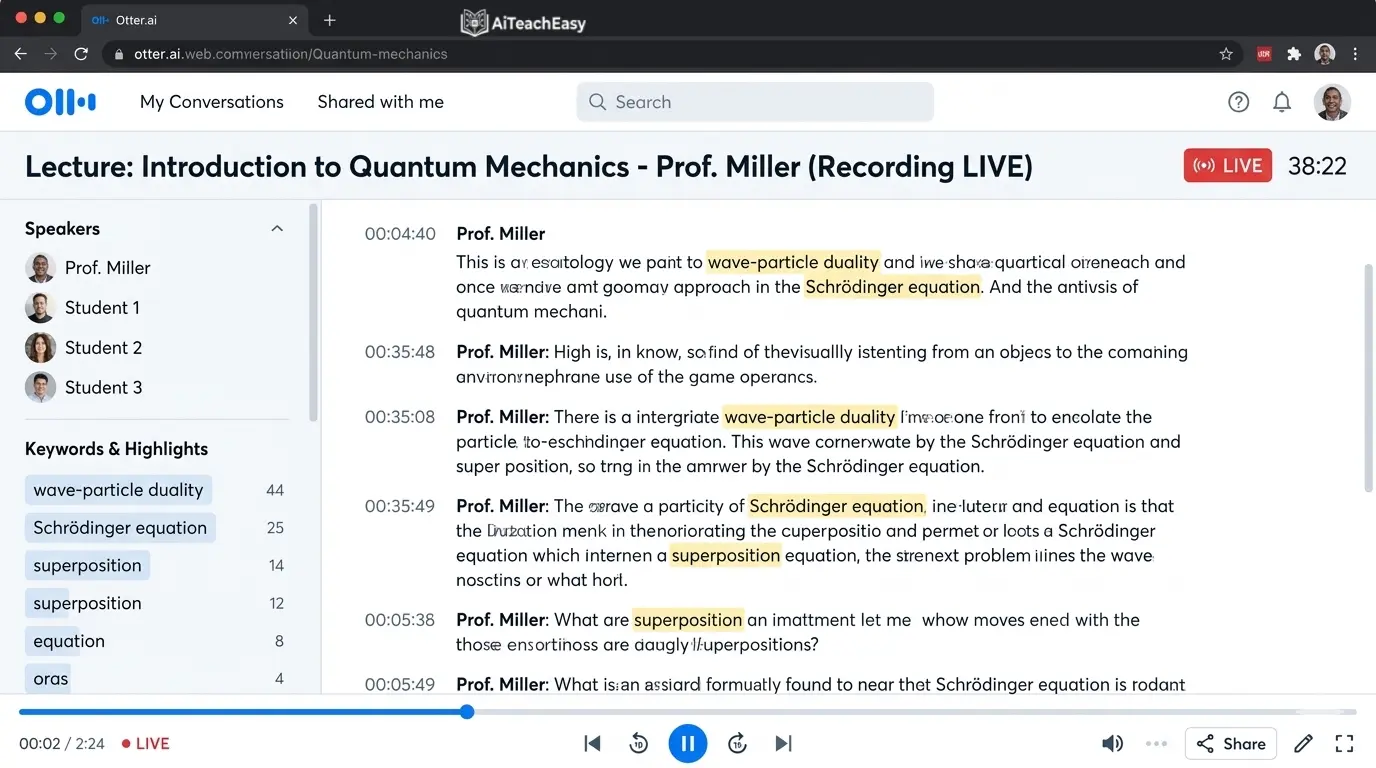
Never miss a detail from a lecture again. Otter.ai is a leading AI note taking app that records and transcribes spoken lectures in real-time.
- Pros: Accurate transcription, searchable notes, highlights key phrases, perfect for lectures.
- Cons: Free plan has limited monthly transcription minutes.
- Best For: Reviewing lectures and group study sessions.
- Key Feature: You can highlight key phrases during transcription. After class, you can search the transcript for specific terms, making it an essential tool for thorough revision.
Brainscape – Adaptive Flashcards
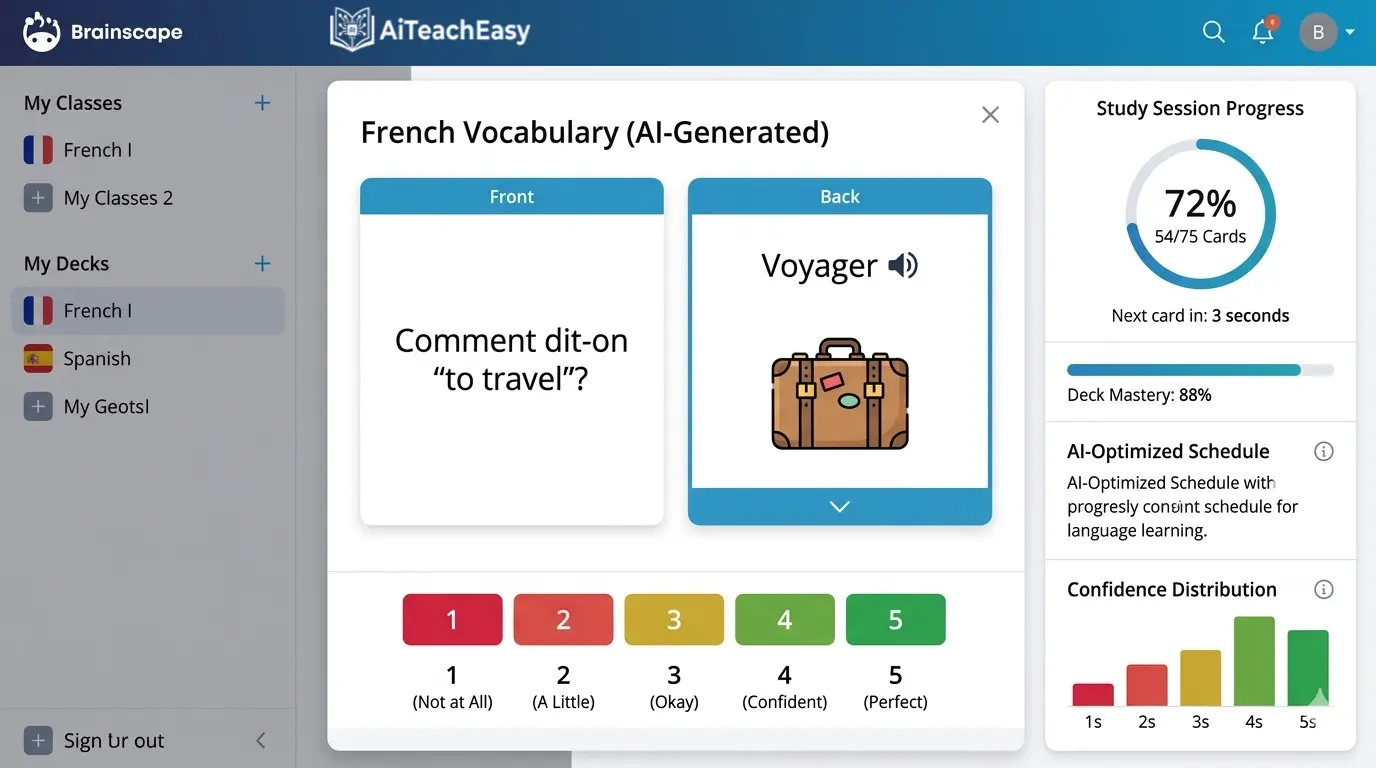
Brainscape utilizes a confidence-based repetition system to optimize memory. Similar to Quizlet, it functions as an AI revision tool but focuses heavily on the cognitive science of learning.
- Pros: Scientifically proven method, highly effective for language learning, great for memorization.
- Cons: Interface is less modern than competitors.
- Best For: Mastering large volumes of vocabulary or definitions.
- Key Feature: The platform asks you how well you knew an answer, and based on your feedback, it schedules the next review at the perfect interval to cement it in your memory, a core principle of personalized learning.
How to Choose the Right AI Study Tool
With so many options, selecting the right tool can feel overwhelming. The best approach is to identify your biggest pain point:
- Struggling with notes? Start with Notion AI or Otter.ai for automated note taking.
- Need memorization help? Quizlet or Brainscape are your best bets for flashcard learning.
- Understanding concepts? ChatGPT or Socratic are excellent AI study apps.
- Writing essays? Grammarly is the clear choice for academic performance.
- Research papers? Perplexity AI or Consensus will save you hours.
Most of these tools offer free plans, so you can experiment to see which fits your workflow best. Remember to prioritize tools that respect your data; we have a guide on privacy-first AI tools for students to help you choose wisely.
For those wondering about free AI tools for exam preparation, many options above offer robust free tiers that provide significant value without cost.
Frequently Asked Questions About AI Study Tools
The “best” tool depends on your subject. However, for general use, AI tools like ChatGPT and Quizlet help students generate study notes, quizzes, and flashcards for faster exam revision. For essay-based subjects, Grammarly is indispensable. To build a professional profile alongside your studies, you might also be interested in these best free AI resume builders.
Yes. According to research, AI powered study tools for exams analyze learning patterns and create personalized study plans for better exam performance. They adapt to your weak spots, ensuring you spend time where it is needed most.
Absolutely. Many platforms offer free tiers. ChatGPT has a free version, Quizlet allows limited free flashcard creation, and browser based AI tools like Grammarly have free extensions that provide significant value without any cost. For a comprehensive list, check out our guides to free AI tools with no signup and browser-based AI tools for students.
The top AI study apps include ChatGPT for general help, Quizlet for flashcards, Grammarly for writing, and Perplexity AI for research. Each serves a different purpose in your exam revision strategies.
No, provided you use it as a study aid rather than a way to complete graded work for you. Using an AI note summarizer to condense your own notes or an AI quiz generator to test your knowledge is an ethical and effective way to enhance your academic performance.
Yes. Many AI tools for exam practice questions can generate custom quizzes based on your study materials, helping you test your knowledge before the actual exam.
Conclusion: Best AI Tools for Exam Preparation
The landscape of education is evolving, and leveraging technology is key to staying ahead. Whether you need an AI homework helper to explain calculus, an AI flashcards generator for history dates, or an AI writing assistant for essays, there is a tool designed to meet your needs. By incorporating these platforms into your routine, you can reduce stress, save time, and walk into your exam hall with confidence.
The best AI tools for exam preparation in 2026 offer unprecedented support for students at every level. From high school to college, these AI tools for studying transform how we approach learning. And when it’s time to present your findings, don’t miss our recommendations for the best free AI presentation tools. For quick calculations, our free offline CGPA calculator is also a handy resource.
Remember, study optimization isn’t about working harder—it’s about working smarter. With the right digital learning tools, you can achieve academic success while maintaining balance in your life.