

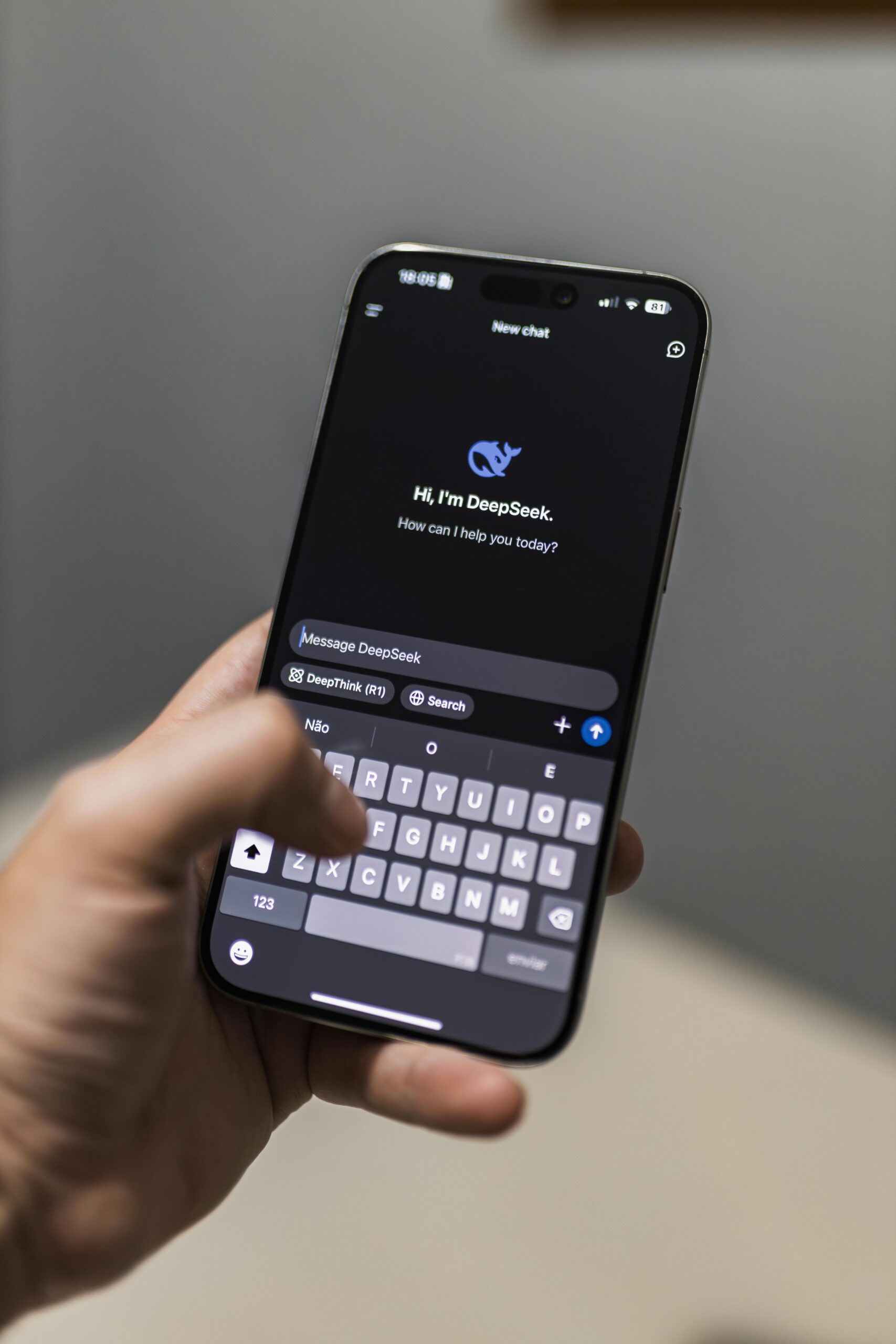





Best AI Tools for Students
The best AI tools for students who want to get better grades without burning out. From homework help to exam prep, we've got you covered.
Best AI Tools for Students
Your Complete Study Guide
Ready to transform how you study and boost your academic performance? In 2025–2026, AI tools for students are no longer just a trend—they are powerful learning companions that help you study smarter, save time, and master your coursework. From AI-powered writing assistants like ChatGPT and Grammarly to note-taking apps, PDF study helpers, and personalized learning platforms, these AI learning tools for students make research, essay writing, coding, and exam preparation faster and more efficient. In this guide, I’ll show you the best AI apps for college students, how to integrate them into your study workflow, and tips to maximize their potential for better grades, improved focus, and stress-free learning.
What Is Artificial Intelligence?
You interact with artificial intelligence every day, often without even realizing it. Basically, artificial intelligence refers to computer systems designed to perform complex tasks that typically require human intelligence, such as solving problems, recognizing patterns, and understanding language. For your studies, AI in education means tools that can digest a 50-page PDF file in seconds, explain a complex calculus concept in simple terms, or help you organize your chaotic schedule. These systems learn from vast stores of data to provide you with personalized, tutor-like support that is flexible and adaptable, rather than outright robots, and that is always ready to adapt to your educational needs. That’s the heart and soul of AI-powered learning.
What Are AI Tools for Students?
AI tools for students are specialized applications that use artificial intelligence to tackle specific academic challenges. Think of them as your digital AI study assistant. Unlike general software, these AI education apps are built to assist with the core tasks of student life: a powerful AI writing assistant for students helps you polish essays, a smart AI note-taking apps turns messy lectures into clear summaries, and a dedicated AI research assistant can sift through scientific papers to find exactly what you need. They range from simple grammar checkers to sophisticated platforms where you can even build your own custom AI learning tools for different subjects or projects. They are the best AI tools for students and the best AI tools for university students.
Are AI Tools Actually Helpful?
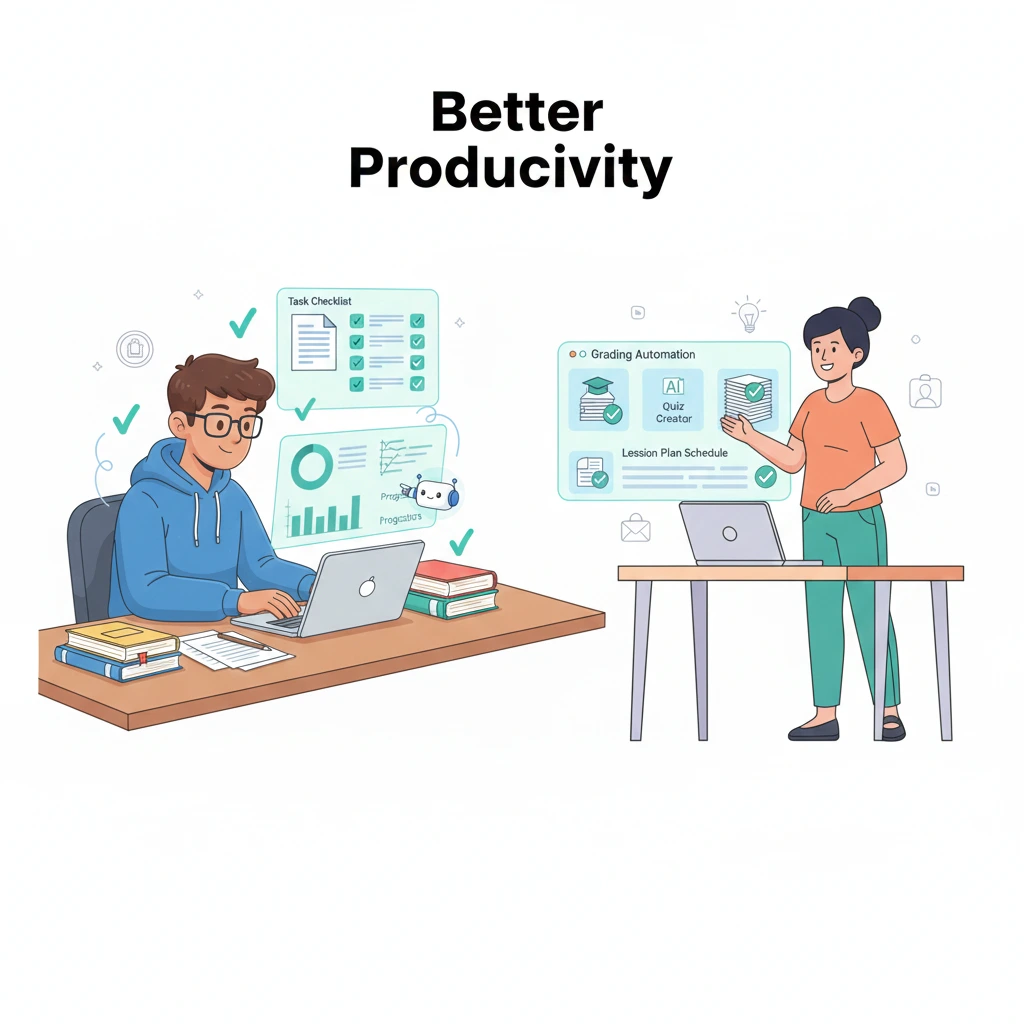
The short answer is a resounding yes, but their true value and worth depends on how you use them. These AI study tools are adept at handling time-consuming, repetitive tasks. They can transcribe a lecture while you focus on understanding the material, create a study schedule based on upcoming deadlines, or rephrase a heavy paragraph for better clarity. This frees up your mental energy for what really matters: deep learning, critical thinking, and creative synthesis. The key is to use them as a launchpad for your understanding, not as a shortcut to avoiding work. When used responsibly, these are incredibly helpful AI tools that can help improve productivity and boost learning. These are real AI tools that actually help students.
Why Students Are Using AI for Studying
Students are turning to AI in their studies for one main reason: it creates more time and mental space for actual learning. Faced with a heavy workload, learners use AI apps for college students to handle the “administrative” tasks of studying — like organizing notes, checking references, organizing essays — so they can focus on understanding concepts. Additionally, these tools offer personalized, non-judgmental support at any time. Whether you’re stuck on a problem in the middle of the night or need a concept explained three different ways, your AI study assistant for college students is always there, providing the patience and flexibility that can reduce stress and build real confidence. This is the key to AI for stress-free studying.
Top 10 AI Tools for Students
This curated list highlights the most versatile and powerful AI-powered tools for students in 2025–2026. Each serves a distinct purpose in your academic toolkit and represents the best AI apps to manage your study schedule. Whether you need help with writing, research, organization, or exam prep, these tools will transform how you learn.
1. ChatGPT – The All-Round Study Buddy
What it does: ChatGPT for students remains a top choice as a general-purpose AI learning assistant. It's fantastic for brainstorming essay topics, breaking down complicated topics into simple explanations, and practicing with self-generated quiz questions. You can converse naturally, asking follow-up questions until a concept clicks. Remember, it's a starting point for thought; always verify its facts, as it can occasionally present incorrect information with confidence.
Best for Students: Homework, Writing & Study HelpFree vs Paid: Free plan available, premium version offers advanced AI models.
- Easy to use
- Fast answers
- Great for explanations
- Needs internet
- Advanced features paid
2. Notion AI – Stay Organized Without Stress
What it does: Notion AI for students transforms the popular workspace app into a central command hub for your student life. It combines notes, databases, to-do lists, and calendars. The AI productivity features can summarize your lengthy lecture notes, generate action items from meeting transcripts, and even help draft project plans. It's ideal for visual learners who thrive on seeing all their responsibilities in one interconnected, customizable space.
Best for Students: Notes & ProductivityFree vs Paid: Limited free plan, paid features unlock AI automation tools.
- All-in-one workspace
- Smart summaries
- Task management
- Learning curve
- AI limits on free plan
3. Grammarly – Write with Confidence
What it does: Go beyond basic spell-check with Grammarly AI. This tool integrates directly into your browser and documents, offering real-time suggestions for grammar, tone, and clarity. For academic work, its premium version includes a powerful plagiarism checker and an "AI Grader" feature that can estimate your potential score based on a rubric, helping you refine submissions before they reach your professor.
Best for Students: Writing & ProofreadingFree vs Paid: Free version offers basic grammar checks; premium includes tone suggestions and plagiarism detection.
- Real-time feedback
- Plagiarism checker
- Browser extension
- Premium is costly
- Over-simplifies sometimes
4. QuillBot – Rewriting Made Simple
What it does: QuillBot for students is a specialist in refining language. Its core strength is paraphrasing: paste a dense paragraph from a source, and it will rephrase it for better clarity or originality while preserving meaning. It also includes a summarizer for condensing long texts, a grammar checker, and a citation generator, making it a Swiss Army knife for the research and writing process.
Best for Students: Paraphrasing & SummarizingFree vs Paid: Free version has limited words; premium offers more modes and faster processing.
- Easy to use
- Multiple writing modes
- Summarizer included
- Word limit on free
- Needs manual review
5. Google Gemini – AI Inside Google Tools
What it does: If you live in Google Docs and Slides, Google Gemini AI (formerly Bard) is your seamless assistant. Integrated directly into Workspace, it can help draft emails, generate presentation outlines, or brainstorm research questions without switching tabs. Its "Gemini Advanced" tier offers deeper research capabilities, analyzing and synthesizing information from across the web to provide comprehensive reports.
Best for Students: Research, Writing & PresentationsFree vs Paid: Free basic version; Gemini Advanced available with paid subscription.
- Integrates with Google tools
- Powerful research
- Easy to access
- Advanced features paid
- Not available everywhere
6. NotebookLM – Your Smart Study Notebook
What it does: NotebookLM AI, developed by Google, takes a unique source-based approach. You upload your own documents—PDFs, lecture notes, research articles—and it creates a personalized AI that answers questions based solely on that material. This makes it an exceptional tool for exam preparation from your own notes or quickly interrogating a complex textbook without flipping through hundreds of pages.
Best for Students: Research & Source AnalysisFree vs Paid: Currently free to use with Google account.
- Source-based answers
- No hallucinations
- Perfect for research
- Limited to uploaded docs
- Still in development
7. ChatPDF – Talk to Your Textbooks
What it does: ChatPDF applies a simple but powerful idea to a universal academic problem: daunting PDFs. Upload any textbook, paper, or manual, and you can instantly "chat" with it. Ask for summaries of specific chapters, clarifications on key terms, or have it find all arguments related to a certain theme. It provides page references, making it perfect for efficient last-minute revision or deep research dives.
Best for Students: PDF Interaction & SummariesFree vs Paid: Free plan with limits; paid for more uploads and features.
- Saves reading time
- Provides page references
- Easy to use
- Free version limited
- Not all PDFs work perfectly
8. Otter.ai – AI-Powered Transcription
What it does: Never miss a word in a lecture again. Otter.ai records audio and provides real-time, searchable transcriptions. It identifies different speakers, allows you to highlight key moments, and generates summaries. This lets you engage fully in class discussions while knowing you have a perfect text record to review later — a major benefit for auditory learners and those in lecture-heavy courses.
Best for Students: Lecture Transcription & NotesFree vs Paid: Free plan includes 300 minutes/month; paid offers more hours and advanced features.
- Accurate transcription
- Searchable notes
- Easy sharing
- Background noise issues
- Free limit low
9. Tutor AI – Your Personal Teacher
What it does: Tutor AI aims to provide a structured, curriculum-like learning experience. You input a topic, and it generates custom mini-lessons complete with examples, explanations, and quizzes to test your understanding. It's like having an on-demand personalized tutor for niche subjects or for reinforcing classroom material in a different, more interactive format.
Best for Students: Personalized Learning & TutoringFree vs Paid: Free basic access; premium for advanced subjects and features.
- Personalized lessons
- Interactive quizzes
- Great for self-study
- Limited subject depth in free
- Still growing
10. AskCodi – AI Coding Assistant
What it does: For computer science and engineering students, AskCodi is a game-changer. It helps generate code snippets, explains what existing code does line-by-line, and debugs errors in multiple programming languages. Think of it as a pair programmer that helps you learn through doing, turning frustration into a teachable moment and accelerating your coding proficiency.
Best for Students: Coding Help & DebuggingFree vs Paid: Free tier available; paid plans for more advanced features.
- Multiple languages
- Explains code
- Great for beginners
- Free version limited
- Not perfect for complex code
11. Perplexity AI
What it does: AI search engine that provides direct answers with sources, perfect for research and fact-checking.
Best for Students: Research & Quick AnswersFree vs Paid: Free version with basic search; Pro adds more features and file uploads.
- Sources cited
- Fast and accurate
- No ads
- Limited advanced features
- Needs internet
12. Wolfram Alpha
What it does: Computational AI that solves math problems, generates step-by-step solutions, and answers science questions.
Best for Students: Math & Science CalculationsFree vs Paid: Free basic queries; Pro offers step-by-step solutions and more compute time.
- Step-by-step solutions
- Trusted data
- Covers many subjects
- Interface not modern
- Paid for advanced
Explore Ai Tools For Study
Unlock a smarter way to study with AI tools that work alongside you. Get instant explanations, create customized study guides, and test your knowledge with AI-generated quizzes. Explore tools that save you time and boost your grades.
📊 Compare Top AI Tools for Students
| Tool | Primary Strength | Ideal For | Cost Model |
|---|---|---|---|
| ChatGPT | General Explanation & Brainstorming | Understanding concepts, essay outlines | Freemium |
| Grammarly | Writing Polish & Plagiarism Check | Finalizing essays, formal emails | Freemium |
| Notion AI | Centralized Organization & Planning | Managing projects, notes, deadlines | Freemium |
| QuillBot | Paraphrasing & Summarization | Rewriting sources, simplifying text | Freemium |
| Google Gemini | Research & Workspace Integration | Research, drafting within Google Docs | Freemium |
| NotebookLM | Studying from Personal Documents | Exam prep from own notes & textbooks | Freemium |
| ChatPDF | Interacting with PDFs & Textbooks | Analyzing long readings, research papers | Freemium |
| Otter.ai | Lecture Transcription | Capturing live audio, reviewing discussions | Freemium |
| Tutor AI | Structured Lesson Creation | Learning new topics step-by-step | Freemium |
| AskCodi | Code Generation & Explanation | Programming homework, debugging | Freemium |
⚡ Data updated for 2026 — Free plans may change, always check official website.
How I Recommend Students Use AI
(Without Cheating Themselves)
Look, I get it — AI tools are incredibly tempting. You can type a prompt and get a full essay in seconds. But here’s the thing I always tell students: use AI as your study buddy, not your replacement.
First, ethical use matters
I never recommend copying and pasting AI output directly into your assignments. Not only is it dishonest, but you’re also cheating yourself out of learning. Instead, I use AI to explain concepts I’m struggling with — like asking it to break down a complex topic in simpler terms. It’s like having a patient tutor who never gets tired.
How to avoid plagiarism the smart way
When I use AI for research or writing help, I treat it like a brainstorming partner. I read what it generates, then close the tab and write in my own words. If I want to keep specific phrases, I quote them and cite the original source. Some tools even help you find proper citations — use that feature!
My favorite smart learning tips
I ask AI to create practice quizzes from my notes, generate flashcards for memorization, or summarize long readings into bullet points. For math and science, I use it to show me step-by-step solutions so I actually understand the process. And when I’m stuck on an essay, I ask for outlines or counterarguments to get my brain flowing again.
The bottom line? AI is amazing when you work with it, not let it work for you. Use it to fill gaps in your understanding, save time on repetitive tasks, and explore ideas more deeply. That’s how you learn smarter and still feel proud of the work you submit.
How to Use Them Together
The real power emerges when you combine these AI study tools to pass exams into a seamless workflow. Start by using Otter.ai or ChatPDF to capture and digest your course materials. Send key insights to Notion AI to organize them into structured notes and a study schedule. Use ChatGPT or Tutor AI to clarify difficult points. Draft essays with Google Gemini, refine your prose with QuillBot, and finally, polish everything with Grammarly before submission. This integrated system of AI tools for studying efficiently turns isolated tasks into a smooth, efficient learning pipeline.
How to Create an Efficient AI Prompt
Your output depends heavily on your input. To get great results from any AI study assistant, use specific, contextual prompts. Instead of “Explain economics,” try “Explain the law of supply and demand to a beginner, using the example of concert ticket prices.” Provide context: “You are an expert tutor helping a college freshman. Summarize the key arguments from the attached PDF on climate policy, highlighting three points of debate.” The more detail and direction you give, the more accurate and useful the response will be for AI for summarizing notes.
What Students Actually Ask About AI Tools
Students often have practical, nuanced questions about integrating AI apps for studying into their studies. They don’t just want a list of tools; they want to know which free AI tools for students are genuinely useful for daily tasks like managing ADHD-related focus challenges or overcoming procrastination. They seek AI tools for personalized learning that explain concepts deeply, not just give answers, reflecting a desire to learn, not cheat. Common queries also explore whether AI coaching apps can truly boost memory and focus, or if AI productivity tools for students can replace traditional planners. Underlying it all is a critical question from how to study smarter with AI: “Is this making me more productive, or just busier?”.
Frequently Asked Questions
Are AI tools allowed for students?
Honestly, it depends on your school and your teacher. Some professors encourage using AI as a learning aid, while others have strict rules against it. My advice? Always check your course policy first. When in doubt, ask your teacher. The key is transparency — if you use AI to help brainstorm or understand a topic, that’s usually fine. If you’re submitting AI-generated work as your own, that’s where you cross the line. Most schools are updating their policies, so stay informed.
What are the best free AI tools for students?
There are so many good free options out there! ChatGPT has a solid free plan that’s great for explanations and brainstorming. Grammarly’s free version helps with basic writing mistakes. Quizlet lets you create flashcards without paying. Perplexity AI is completely free and perfect for research with cited sources. And Otter.ai gives you 300 free minutes of transcription each month — a lifesaver for lecture recordings. I’d recommend starting with these and upgrading only if you need advanced features.
Can AI really help with homework?
Yes, but with a big caveat — it should help you learn, not do the work for you. I use AI to explain concepts I’m stuck on, like asking it to break down a math problem step by step. It’s great for generating practice questions before an exam or summarizing long readings. For writing, I might ask for outline ideas or counterarguments to strengthen my essay. But the actual work? That should still come from you. Think of AI as a study partner, not a homework machine.
Are AI tools safe for students to use?
Most mainstream tools like ChatGPT, Grammarly, and Quizlet take privacy seriously. But here’s what I always tell students: never share personal information like your full name, address, or school ID when using AI. Don’t paste entire essays or sensitive documents into random free tools — you don’t know how they handle your data. Stick to well-known platforms with clear privacy policies. And if you’re under 13, definitely check with a parent first, as many tools have age restrictions.
Do AI tools replace actual learning?
Not at all — in fact, they can actually deepen your learning when used right. I’ve seen students use AI to quiz themselves, explore topics they’re curious about, and get unstuck when they’re confused. The magic happens when you engage with the material, ask follow-up questions, and make connections yourself. AI is a tool, like a calculator or a search engine. It’s how you use it that matters. Use it to enhance your understanding, not bypass it.
Can teachers tell if I used AI?
Sometimes yes. Many schools now use AI detection tools, and experienced teachers can often spot AI-written work — it has a certain style that feels impersonal or overly generic. Plus, if you suddenly turn in work that sounds nothing like your usual writing, that’s a red flag. My honest take? Don’t risk it. Use AI to support your learning, but let your own voice and ideas shine through in your assignments. That’s what actually builds skills you’ll need later.
What subjects is AI actually good for?
Pretty much all of them, honestly! For writing and language arts, AI helps with brainstorming, grammar, and structure. For math and science, tools like Wolfram Alpha walk you through problem-solving. For history and literature, AI can summarize readings and explain context. For foreign language practice, you can literally have conversations with AI. The trick is knowing which tool fits which task — that’s why I created this site, to help you match the right AI to your specific need.
How do I start using AI without feeling overwhelmed?
Start small. Pick one tool — maybe ChatGPT since it’s free and easy — and use it for one subject you’re struggling with. Ask it to explain something you didn’t understand in class. See how it feels. Once you’re comfortable, try another tool for a different task. The goal isn’t to use every AI out there; it’s to find the ones that genuinely make your student life easier. And hey, that’s exactly why I’m building this site — to help you figure it out without the overwhelm.
Best AI Tools for Students – Final Thoughts
Embracing AI tools for students 2025–2026 is about strategically enhancing your unique learning process. The landscape in 2025-2026 offers everything from broad assistants like ChatGPT to specialized helpers for AI apps for coding and programming students, writing, and organization.
The goal isn’t to use every tool, but to thoughtfully select a few that solve your specific challenges—freeing you to focus on deeper understanding, creativity, and critical thinking. Start with one tool that addresses your biggest pain point, use it responsibly as a learning aid, and build your system from there.
Your academic journey is yours to command; let AI tools for academic performance be the tool that helps you navigate it with greater confidence and success. This is the path to AI tools to improve study efficiency and AI tools for research and writing.
Hi, I'm the person behind AI Teach Easy
🎓 Master's Student in Data ScienceI'm a student, currently pursuing my master's in Data Science. I have a deep interest in how AI can transform learning, and I spend my time testing and analyzing AI study tools like ChatGPT, Notion AI, Grammarly, and QuillBot. My goal is to help students use these tools effectively to save time, improve understanding, and achieve better academic results. Through my guides, I combine my technical knowledge with practical strategies that make studying more efficient and productive.
I write regularly about AI in education, productivity strategies, and data-driven learning, sharing insights that help students navigate modern learning with confidence.
